E-Paper



Punjab, Haryana farm fires account for 20% of Delhi PM2.5 from Nov 4-6: DSS data
Calculating the actual contribution of stubble smoke by factoring in the fire count recorded a day earlier, DSS said it accounted for 22.77% of Delhi’s PM 2.5 on Wednesday

 Prefer HTon Google


New Delhi
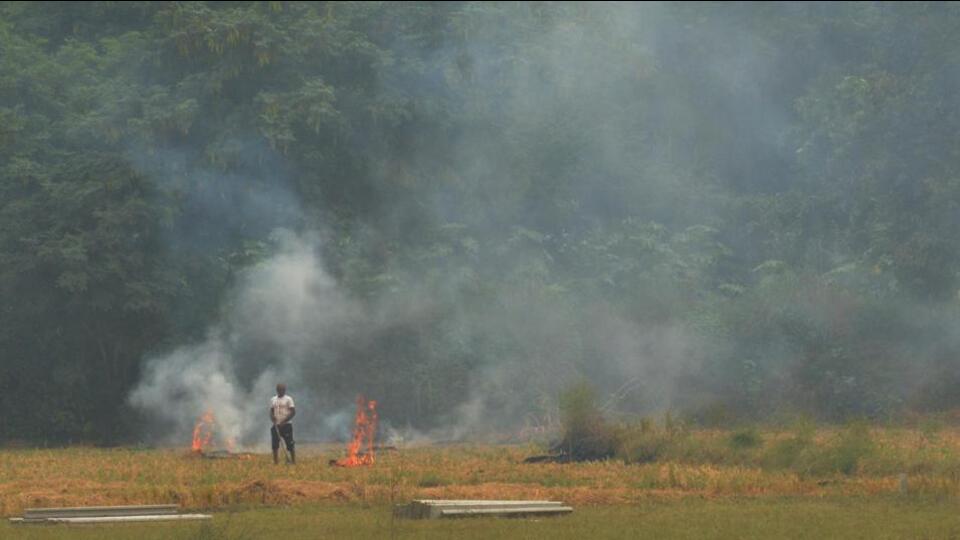
Despite fewer farm fires in Punjab and Haryana this year compared to 2023, they still accounted for over 20% of Delhi’s total PM 2.5 (particulate matter with a diameter of less than 2.5 microns) over the past three days, according to the Centre’s Decision Support System (DSS). It estimated the transport sector as the next biggest contributor, at over 11%, over the past two days.
Calculating the actual contribution of stubble smoke by factoring in the fire count recorded a day earlier, DSS said it accounted for 22.77% of Delhi’s PM 2.5 on Wednesday, 20.38% on Tuesday and 23.3% on Monday — a key factor that has helped keep Delhi’s air quality index above 350 (“very poor”) during this period. At the same time, even though transport-level winds, which blow at a height of over 1km are northwesterly and strong, surface-level winds in Delhi, which blow below 100 metres in height, have largely remained calm.
A season-high contribution of 35.1% from farm fires was recorded on November 1, but surface winds were strong that day, not letting Delhi’s AQI touch “severe” levels, experts said.
“Surface winds became calm around November 3 and since then, we have not seen enough dispersion. Both local pollutants and those coming from afar are getting trapped over the Capital,” Mahesh Palawat, vice president at Skymet meteorology, said.
DSS said after stubble burning, the transport sector was the second largest contributor on Wednesday, at around 11.50%. The estimated contribution of the transport sector was 11.1% on Thursday, with forecasts showing it is likely to be over 12% on Friday and around 10.8% on Saturday.
Data from the Indian Agricultural Research Institute (IARI) showed Punjab and Haryana recorded 5,041 and 888 farm fires between September 15 and November 6 — down respectively from 19,463 and 1,579 recorded in the same period last year.
Sunil Dahiya, founder and lead analyst at think-tank Envirocatalysts, said lower fire counts have helped Delhi, as peak contribution often shoots up to over 40%. “If we had the same fire counts that we did last year, the contribution would have been similar and the AQI would be in ‘severe’ by now,” said Dahiya, adding variable wind direction at the surface level was also helping Delhi.
“If winds remain northwesterly for a sustained period, again, the contribution of stubble burning can be higher,” he said.