E-Paper



Residents grapple with tough rules on tree pruning
RWAs across the city said that over a year after the Delhi high court mandated that only tree officers from the forest and wildlife department can give permission to carry out pruning

 Prefer HTon Google


As the first monsoon rain hit the Capital, residents of S block in GK-1 were concerned about overgrown trees, including a large Gulmohar tree, and were apprehensive of the possibility that its branches may fall, injuring people. Last October, the resident welfare association (RWA) had requested the Municipal Corporation of Delhi (MCD) to prune the branches of the Gulmohar tree along with 61 others. However, on June 28, as torrential rain lashed Delhi, which recorded over 200mm of rainfall, the Gulmohar tree fell down and blocked the entire road outside S-266, bringing down electricity cables and leading to a localised power cut.
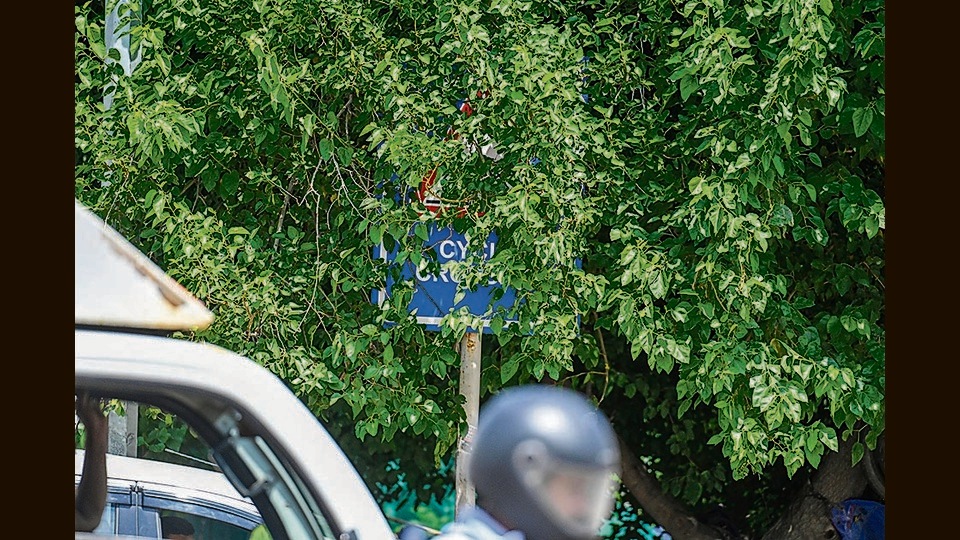
RWAs across the city said that over a year after the Delhi high court mandated that only tree officers from the forest and wildlife department can give permission to carry out pruning, the process is time-consuming because systems are not in place. Instead of the expected 15 days, RWAs claim that the process often takes several months, if at all.
Last May, the Delhi high court made it mandatory for any civic body or individual to get permissions from a “tree officer” of the forest department, without which no pruning can be carried out. So, even civic bodies and road-owning agencies approach the department before pruning any tree. Earlier, the agencies could carry out pruning on their own – up to 15.7cm for a fully-grown tree. However, experts argued that there was no mechanism in place that only 15.7cm or less was being pruned.
“The Gulmohar tree which was left to be pruned collapsed as it became top heavy. The exercise of tree pruning should have been completed last year, but it is still not complete,” said MK Gupta, president of the GK-1 S-block RWA. The delays were caused due to several reasons, including the forest department’s permission process and lack of availability of MCD’s trucks at the time.
Similar problems are being faced in Vasant Vihar. The RWA, till 2023, used to prune its own trees using association funds. “Several trees have become overgrown and have covered streetlights and traffic lights,” said Gurpreet Bindra, the RWA president.
An MCD official on condition of anonymity said that things were stuck because the corporation could not carry out pruning on its own and needed the forest department’s approval.
“We carry out pruning as soon as permission from the tree officer is received. Residents need to apply on the online portal, but in some cases, we also file applications based on complaints received from RWAs,” the official cited above said.
MCD has said that there is no time limit on the forest department to clear the application. According to the data from the civic body, 1,986 requests pertaining to tree pruning were received during this year out of which 916 applications were approved by the forest department and 158 applications were rejected.
The problem is exacerbated by the fact that Delhi only has five tree officers at present – four in each forest division, and the Delhi conservator of forest. Rules mandate that the tree officer cannot be below an IFS-rank position, narrowing the pool. The department, however, said it was utilising Section 6 of the Delhi Preservation of Trees Act, 1994, where assistant tree officers can also be appointed on a temporary basis, to carry out ground-level inspections.
According to the Delhi government’s tree felling or pruning portal around 129,851 trees have been pruned so far since last year.
Atul Goyal, who heads URJA, a collective body of over 2,500 RWAs in Delhi, suggests that the number of tree officers in Delhi should be increased, so that the process becomes smoother. “The problem is mainly acute during the monsoon,” he said.
Experts said that unless Delhi involves arborists and horticulturists, the entire process remains flawed. “To determine whether the tree needs pruning and how much should be pruned, we need arborists or at least a horticulture official... For scientific pruning and protection of trees, we need more tree officers and more experts on the ground,” said environmental activist Bhavreen Kandhari.