
 E-Paper



Return of liquor rebates in Capital sets off a price war with Gurugram
Retailers in Gurugram said they have no option but to cut prices, as sellers in Delhi sold cheaper bottles using catalogues and pamphlets, one of which was headlined: “Ab Gurgaon kyun?” (Why Gurgaon now?). The pamphlet, put out by a liquor store chain, listed all the available liquor brands, and their discounted rates.

 Prefer HTon Google


The Delhi government’s decision to allow discounts up to 25% on liquor bottles has set off a fresh price war with Gurugram, which previously boasted of the National Capital Region’s (NCR) cheapest liquor, with retailers in the neighbouring city slashing their rates and offering a slew of offers in a bid to avoid losing business
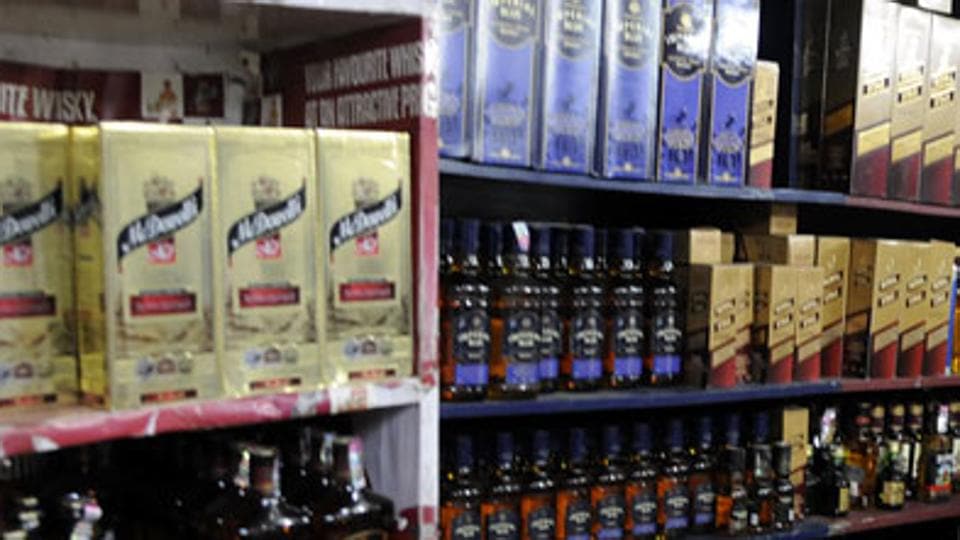
Retailers in Gurugram said they have no option but to cut prices, as sellers in Delhi sold cheaper bottles using catalogues and pamphlets, one of which was headlined: “Ab Gurgaon kyun?” (Why Gurgaon now?). The pamphlet, put out by a liquor store chain, listed all the available liquor brands, and their discounted rates.
This is the latest chapter in a story that has unfolded since mid-November last year, when Delhi’s new excise policy came into effect, allowing liquor discounts in the Capital for the first time ever. Retailers in Gurugram at the time shot back and offered lower prices, at which point several stores across Delhi began offering buy-one, get-one free offers on bottles, leading to winding queues outside shops.
Delhi’s tryst with cheap liquor came to a halt on February 28 this year, as the state government disallowed all discounts on liquor in the city, citing after a rush of buyers led to unruly scenes and overcrowding at retail outlets in violation of Covid-19 guidelines.

As a result, retailers said, stores in Delhi lost business to Gurugram again. However, the state government on Friday allowed stores to offer discounts at a cap of 25% on liquor again, a move that has reignited the tussles between liquor vends in the two cities.
Rahul Singh, trustee of the National Restaurants Association of India (NRAI), said, “Pricing driven by market forces is very powerful in producing economic prosperity and innovation. But the government needs to ensure that these forces act in the larger public interest as well. Having a MRP mechanism for consumer price protection with a cap on discounting is fair trade for regulated products such as liquor,” he said.
Store owners in Gurugram on Monday said they have received several calls and messages from regular customers reading out messages from Delhi’s stores regarding discounts.
Varun Singh, owner of a vend in Sector 56, said that while Delhi shopkeepers are promoting their prices on social media platforms, liquor was still cheaper in Gurugram.
“Even after offering discounts, Gurugram has cheaper IMFL (Indian-made foreign liquor). Only beer is cheaper in Delhi, and most people buying liquor from Gurugram are residents of Delhi. We will also start promoting liquor prices and will send price updates to regular customers,” he said.
Bhim Singh, owner of liquor vends at Hero Honda Chowk, said they stopped all discounts in March — after Delhi banned discounts on February 28 — but since Delhi has started offering discounts again, they, too, have started offering discounts and are ready to keep profit margins to a minimum in order remain in competition. “Due to the price war between Gurugram and Delhi, liquor shops are finding it difficult to make a profit, but we are helpless and have to give maximum discounts as customers are taking advantage of the situation,” he said.
Some popular brands such as Red Label and Ballantine’s (whisky ) and Absolut Blue (vodka) that were sold for ₹1,150 per 750ml bottle will be sold for ₹1,000 each. Jacob’s Creek red and white wine— sold at ₹1,000 per 750ml — will be sold for ₹850.
Jameson Irish (whisky) will be sold for ₹1,450 per 750ml bottle down from ₹1,740 per bottle, Tanqueray (gin) at ₹1,375 per 750ml bottle instead of ₹1,575, Bombay Sapphire (gin) at ₹1,400 per 750ml bottle in place of ₹1,700, and other whisky brands such as Chivas Regal (12 years) at ₹1,900 750ml bottle from the earlier rate of ₹2,200, Jack Daniel’s at ₹2,000 per 750ml bottle, down from ₹2,250, Glenfiddich and Glenlivet at ₹2,600 per 750ml bottle, down from ₹2,250 and Monkey Shoulder at ₹2,600 per 750ml bottle, down from ₹3,000.
A liquor trader in Delhi, who runs a large store in Mayur Vihar, said they were hamstrung by the 25% cap on discounts and would have offered bottles for even cheaper, if they could.
“We lost a significant volume of business to Gurugram due to the Delhi government’s decision to discontinue discounts in February. In the ensuing price war, Delhi’s retailers will be at a disadvantage,” said the trader, who asked not to be named.
Retailers in Gurugram complained that they were not allowed to display the discounts to attract customers, despite several requests to the excise officials.
VK Beniwal, deputy excise and taxation commissioner (east), said since liquor in Haryana does not have a MRP, shopkeepers can sell it at any price but cannot sell below the minimum price. “The liquor vends in Gurugram are trying to give better deals than Delhi to remain in competition, but if the situation stays the same, many will not come forward for bidding and will leave this business altogether due to low margins,” he said.
Many store owners said they suffered losses over the past two years due to the pandemic and had hoped to make good the losses now that all curbs have been lifted. But Delhi allowing discounts on liquor has ruined their plans.
Vinod Giri, director general of Confederation of Indian Alcoholic Beverage Companies, a representative body of alcoholic beverage companies, said major price cuts in Gurugram and Haryana are not expected because there is a limit to how much discounts retailers can offer to increase the sales volume, even with lower margins.”
“With the discounts being offered, prices in Gurugram are getting closer to bottoming out,” said Giri.


