
 E-Paper



The paying guest: Delhi’s temporary tenant
Every excavation in Delhi turns up the same story at a different depth

 Prefer HTon Google


Every excavation in Delhi turns up the same story at a different depth. Scrape past the mound at Purana Qila and you find layer upon layer of people who came, held the ground for a dynasty or two, and left the next occupant to build straight over their floor. Nobody in this city has ever owned the ground for very long. They have leased it, for a reign, for a posting, for a five-year exam cycle, and then someone else has laid a fresh course of brick on top.
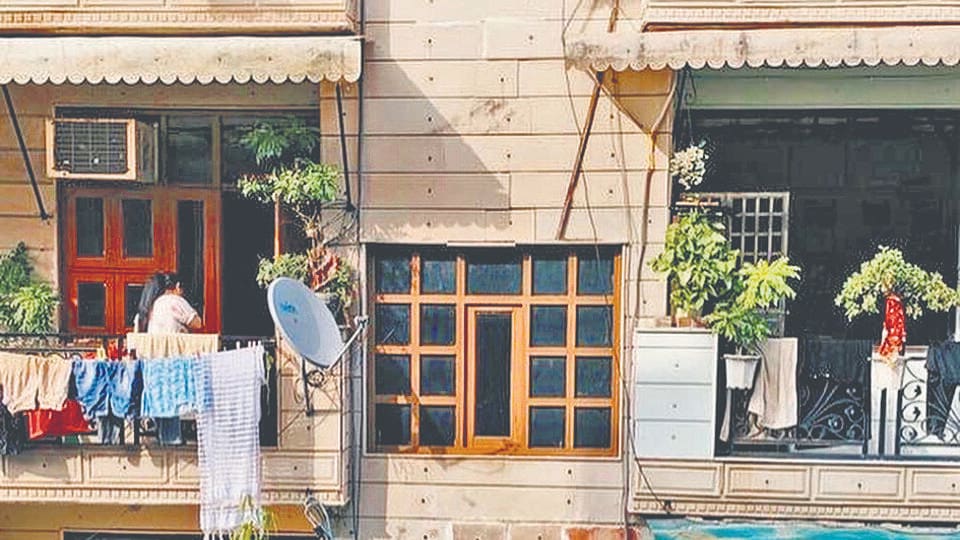
The paying guest is that same stratigraphy, just faster and above ground. A single room, a cot, a steel almirah, a landlady who ran the house like a small republic. The paying guest was a tenant with no tenancy rights -- let in, watched, fed on schedule, and expected to be grateful. This is a social contract older than most coaching centres now built on top of it.
PG culture has never been uniform across the city, but its policing has. Kamla Nagar and Vijay Nagar rent to North Campus students who are, at least, enrolled somewhere. Satya Niketan and Munirka do the same for South Campus. These students exist on a college roll. Someone, somewhere, is accountable for them.
Coaching colonies operate on a different register. Mukherjee Nagar and Old Rajinder Nagar for UPSC and SSC. Gautam Nagar, behind AIIMS, for NEET and FMG hopefuls, home to more than 10,000 medical aspirants. Laxmi Nagar for chartered accountancy. A student here is enrolled nowhere but a coaching institute’s fee register. No dean knows his name. The landlord becomes warden, informant, and moral guardian in one, and surveillance tightens exactly where institutional accountability thins out.
On paper, these remain ordinary residential colonies. In practice, ground floors were gutted into lecture halls and basements became libraries -- an entire informal university built room by rented room because the state never built the real one. Ask any landlord in Mukherjee Nagar what he built his second floor for. He will not say classroom. He will say investment.
“Every third building in this area had a library in the basement,” Shashank, a NEET-PG aspirant, told the Tribune. “The smallest had a seating capacity of 30-40 students, while some had 100 students.” That whole basement economy shut down overnight in July 2024, after three UPSC aspirants drowned in a flooded Old Rajinder Nagar library and authorities sealed every basement they could find. “Earlier, owners used to charge ₹2,000- ₹3,000 per month, but now they have doubled their fees,” Pankaj, a UPSC aspirant, told Deccan Herald. He said the rooms students live in are too small to study in. That was always the point of the library. The room was only ever built for sleep.
A Japanese capsule hotel, a PG in Gautam Nagar, and a minister’s bungalow on Teen Murti Marg have more in common than any of their occupants would admit.
Start with the capsule hotel. Japan built it for the salaryman who missed his last train home after working past midnight. The unit gives him a shelf to lie on, a reading light, a curtain instead of a door. Japan has a specific term for death from overwork – karoshi – and the capsule hotel is basically what that policy failure looks like in furniture.
Now go to Gautam Nagar. The room is bigger than a capsule, but the logic is identical. A bed, a cupboard, sometimes no chair. The student is out at a library or coaching hall for 18 hours a day and comes back only to sleep. Nobody calls this a capsule hotel. It’s rented by the month and called a PG, which makes the same arrangement sound like a lifestyle instead of a decision made to minimise cost per square foot.
In Tilak Marg, or Teen Murti, the house is much bigger, the lawn is real, and there’s a chowkidar instead of a landlady. But the bungalow is allotted, not owned. The minister moves in on tenure and has to vacate within a month of leaving office, same as any PG tenant who stops paying rent -- just with more furniture to move out.
Here is what the three share. None own the room. All three are there because of a job, not a life, and the room stops being theirs the day the job ends. The only difference is square footage and who is watching whom. The salaryman is watched by nobody. The student is watched constantly by a landlord who has appointed himself moral guardian. The minister is watched by the press and the opposition. Strip out the marble, the curtain, and the almirah, and it is the same real estate product at three price points: a room the state or the market gives you strictly for as long as you’re useful to it.
The paying guest, in the end, is a category of the temporary. Somewhere between a coaching-hub capsule and a colonial bungalow, Delhi has always run the same scheme: house the ambitious just long enough to use them, then hand the room to the next one in line.
Anica Mann works on archaeology and contemporary art in Delhi. The views expressed are personal
Stay updated with all top Cities including, Bengaluru, Delhi, Mumbai and more across India. Stay informed on the latest happenings in World News along with Delhi Election 2025 and Delhi Election Result 2025 Live, New Delhi Election Result Live, Kalkaji Election Result Live at Hindustan Times.


