
 E-Paper



CAQM proposes clean-air zone in Connaught Place inner circle | Urban Adda 2026
A proposal for Connaught Place to be created into a clean air zone has been suggested to the Delhi government.

 Prefer HTon Google


The inner circle of Connaught Place could be the starting point for a clean-air or low emission zone (LEZ), with vehicles being kept out of the area and the space be redesigned to encourage walking and public movement, Commission for Air Quality Management (CAQM) member secretary Tarun Kumar Pithode said on Tuesday.
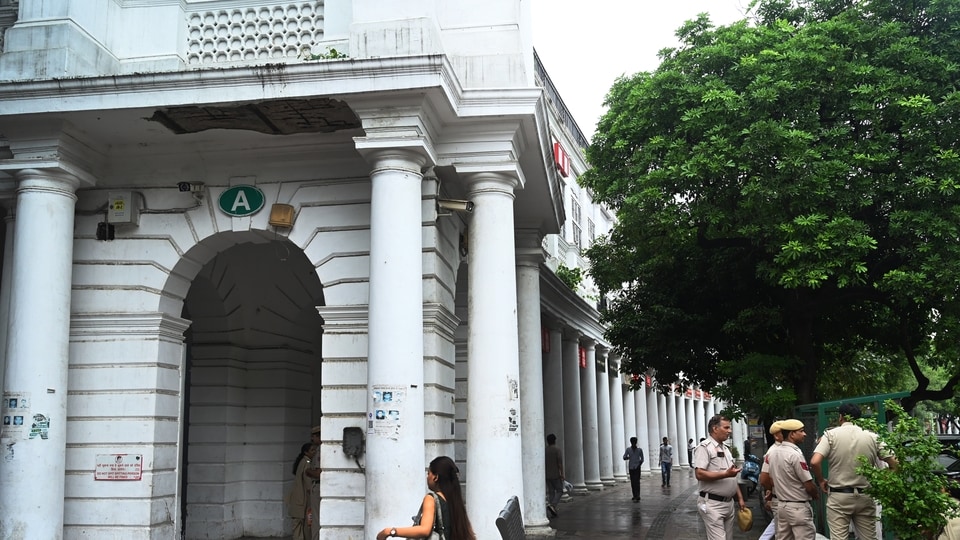
Pithode said a proposal for Connaught Place to be created into a clean air zone has been suggested to the Delhi government and could eventually be expanded into a larger low-emission zone in the Capital — if implemented well.
He, however, stressed the move would require ample preparation, seamless access to multi-level parking facilities and adequate safety and security arrangements.
Speaking on day two of the Urban Adda 2026 at the India Habitat Centre in Delhi at a session “From Tailpipes to Treelines: Reimagining Urban Air through Clean Air Zones,” Pithode said other cities in NCR have similarly been recommended to look at possible LEZs where citizens can walk freely and breathe cleaner air.
“Why do we need to go by vehicle to the centre-most point in Connaught Place? Why don’t I just walk for 500 metres if I can? However, I need to design my infrastructure in such a way that even a person who is not able to walk can also reach that particular place,” he said during the session, which included other air pollution experts.
Also Read | CAQM plans to launch own air quality rankings for NCR, Punjab cities
“We are creating a kind of ecosystem which shows to the people that it is possible to have those places where emissions are drastically reduced and clean air zones is one such concept,” Pithode said, adding the concept fitted into CAQM’s larger airshed approach to tackling air pollution across NCR.
The session also marked the release of a report on clean air zones around schools, emphasising that localised spatial interventions, year-round enforcement, and targeted zero-emission school boundaries are essential to protect children from harmful vehicular emissions.
Swagata Dey, a policy specialist leading the Air Quality Policy and Outreach group at the Center for Study of Science, Technology and Policy (CSTEP), part of the discussion, said it was first important to define the parameters of a LEZ, before carrying out a pilot.
“The area should be large enough to make a difference. One also needs to actually test the efficacy and possible reduction in emissions in such an area. One has to also ensure that the area should not only be a hotspot, but also large enough to make a dent in the air pollution,” Dey said. In addition to vehicles, a LEZ also needs to look at all other sources locally, including diesel generators, road dust and the kind of fuel being used by vendors there.
For Connaught Place, Pithode said the availability and accessibility of parking would be critical before restricting vehicles from the inner circle. Multi-level parking facilities would need to be connected to the pedestrian zone in a way that made the transition seamless for visitors, he said.
Other experts said high exposure to pollutants should be the basing factor to determine where a clean air or low-emission zone gets designated.
“The goal is to reduce exposure so it benefits the health of the people, so Delhi’s 13 hotspots are a good idea,” said Sagnik Dey, Professor from IIT Delhi’s Centre for Atmospheric Sciences, who was also speaking as a panellist. “Connaught Place also comes to mind, due to the high footfall, but in order for such a clean air zone to work, you have to provide alternatives to the people and I think this is where things fall – when you try to implement something without giving alternatives to the people.”


Stay updated with all top Cities including, Bengaluru, Delhi, Mumbai and more across India. Stay informed on the latest happenings in World News along with Delhi Election 2025 and Delhi Election Result 2025 Live, New Delhi Election Result Live, Kalkaji Election Result Live at Hindustan Times.


