E-Paper



Varied, increased sightings: Bird Day goes bigger this year
For this year’s edition of BBD, a total of 97 locations were covered across Delhi-NCR. While the overall bird density was lower than last year, largely owing to a premature rise in temperatures, birders say that the region still recorded an impressive diversity of bird species.

 Prefer HTon Google


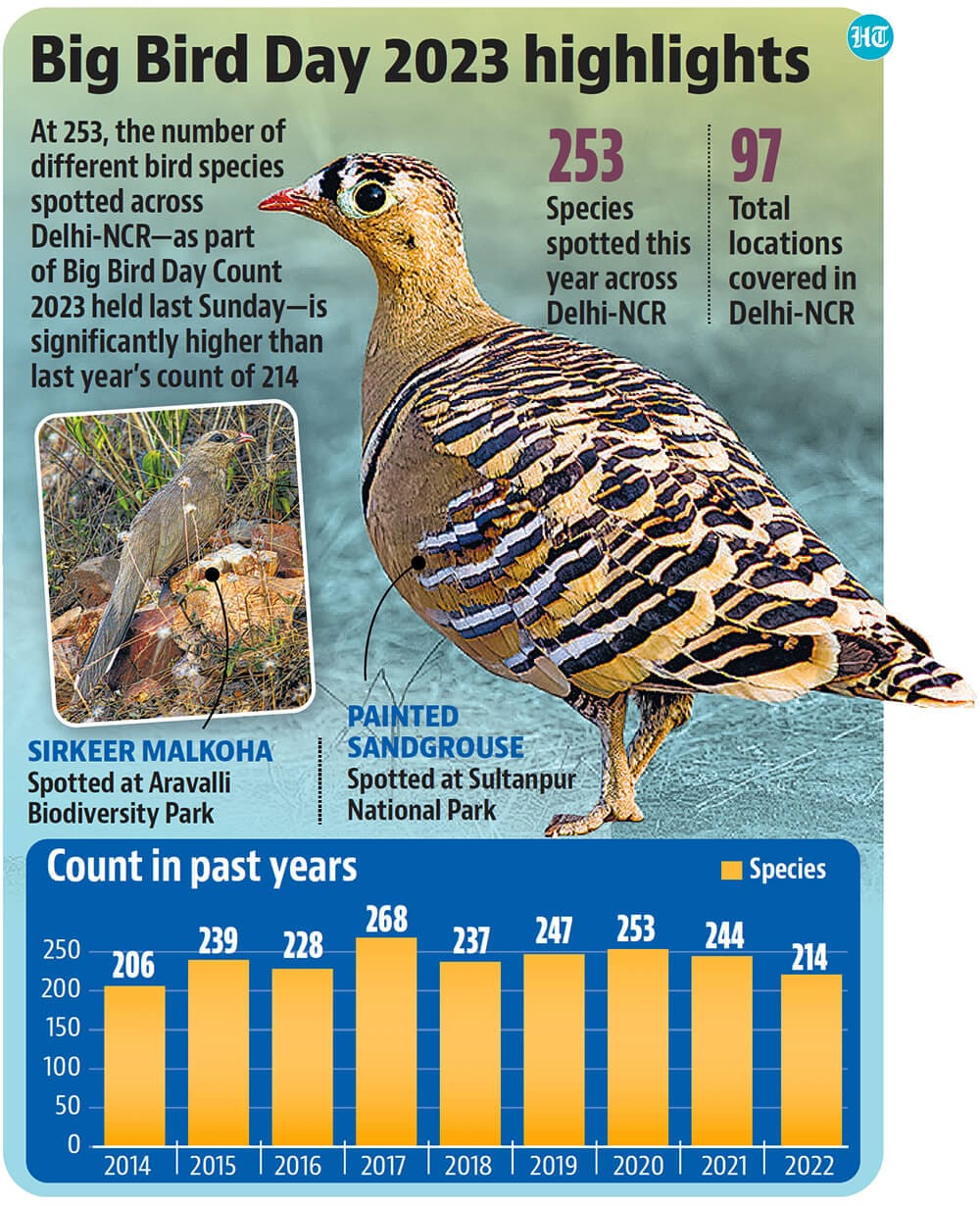
A total of 253 different bird species were recorded across Delhi and the national capital region (NCR) as part of this year’s Big Bird Day (BBD) count held last week, the results of which were released on Saturday.
The count is significantly higher than last year’s figure of 214 species -- including 23 rare ones — but equal to what was recorded in 2020. The highest count so far was in 2017 when 268 bird species were recorded.
For this year’s edition of BBD, which was held on February 5, a total of 97 locations were covered across Delhi-NCR. While the overall bird density was lower than last year, largely owing to a premature rise in temperatures, birders say that the region still recorded an impressive diversity of bird species.
“It is surprising that while we have recorded a much higher count of species this year, the overall density is not that high. Temperatures have started rising earlier than normal this year and that may be a factor behind the same,” said Nikhil Devasar, one of the organisers of the annual bird count which is held in February each year. He also attributed the improved sightings to better participation as compared to last year.
“Post the Covid-19 pandemic, people are more enthusiastic to get out there and experience nature. Over 100 lists were sent in by various teams and individuals with recordings of the sightings from all across Delhi-NCR, which saw 97 locations being covered in total. With more people out there, we were able to observe and record some important species.” he said.
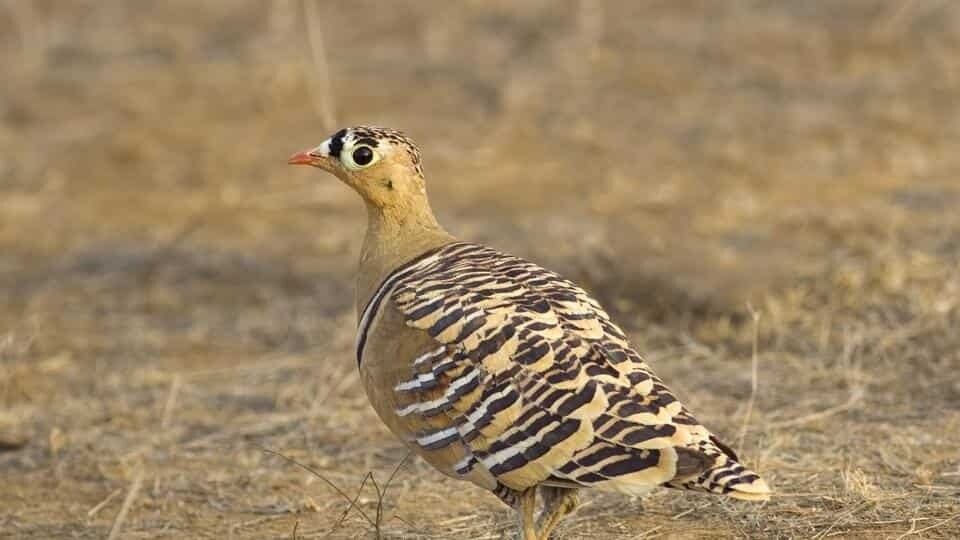
Out of the 253 species, a total of 23 species were rare, as they were recorded at just one location across Delhi-NCR. These included the dunlin, great-crested grebe and hen harrier at Budhera; merlin at Jhanjhraula; the brown boobook (also known as brown hawk-owl), crested serpent eagle, painted sandgrouse, short-toed snake eagle and the white-tailed eagle at Sultanpur national park and its surrounding areas. Other rare sightings included the white-browed fantail and the white-bellied drongo, both of which were recorded at Mangar, the sirkeer malkoha, which was recorded at the Aravalli Biodiversity Park in Vasant Kunj, a Blyth’s pipit recorded at Shiv Nadar University and a barred buttonquail was recorded in Faridabad’s Sector 78. A besra was also recorded at Mangar bani.
In 2021, 244 species were recorded on BBD, which was held on February 21. In 2020, 253 species were recorded; 247 species were recorded in 2019, while the number of species spotted was 237 in 2018.
Delhi’s seven biodiversity parks — Aravalli, Neela Hauz, Tilpath Valley, Neela Hauz, Kalindi Kunj, Yamuna and Kamla Nehru ridge — also witnessed a considerable bird diversity. At the Yamuna Biodiversity Park, the interesting sightings included the red-crested pochard, the Eurasian wigeon, white-tailed lapwing and orange-headed thrush. At the Aravalli Biodiversity Park, other than the sirkeer malkoha, a sulphur-bellied warbler and the orange-headed thrush were also seen.
“The Tilpath Valley biodiversity park, known for its mythological value and valleys with various ecological niches, recorded the white-capped bunting, while Tughlagabad biodiversity park recorded the taiga flycatcher as a noteworthy sighting. We also recorded a booted eagle and the grey-headed canary-flycatcher at the Kamla Nehru biodiversity park,” said Faiyaz Khudsar, scientist in-charge at the Yamuna Biodiversity Park.
The highest count recorded by a single team was 195. The team was led by birder Colonel Pankaj Sharma.
“We covered Mandothi, Sultanpur flats and the Chandu Budhera areas. Our highlight was the black-necked grebe, which is generally not seen in this region.” Sharma said, adding that an early rise in temperatures this year has led to some birds arriving early as well. “Garganey, for instance, is a duck that generally arrives in March, but this year, it has already reached NCR in the first week of February. Pelicans were also missing at Mandothi this year, but we spotted them last year.”