
 E-Paper



What Delhi wants: On the new govt’s agenda
The coming months will be crucial in determining whether Delhi’s new government can deliver on its promises. Residents now expect action rather than excuses.

 Prefer HTon Google


The oath ceremony is over, the council of ministers is in place, and the secretariat is ready. Delhi’s new government is now set to begin its five-year term.
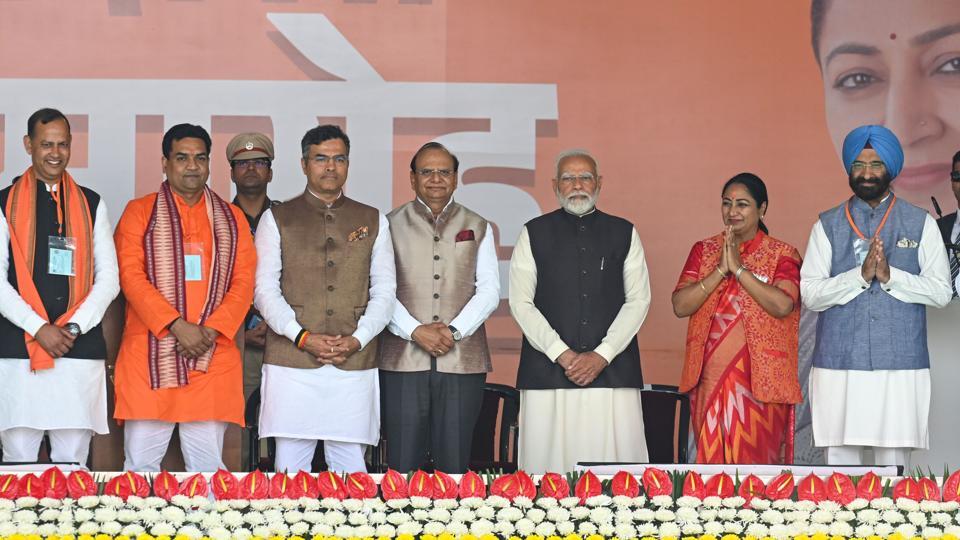
After nearly a decade of relentless power struggle between the Aam Aadmi Party (AAP) government and the lieutenant governor, Delhi finally has alignment in its power centres. With the Bharatiya Janata Party (BJP) now in charge of both the elected government and the central administration, and the Municipal Corporation of Delhi (MCD) expected to follow suit, city residents and stakeholders hope that governance will become more streamlined.
The coming months will be crucial in determining whether Delhi’s new government can deliver on its promises. Residents, exhausted by years of political gridlock, now expect action rather than excuses.
Infrastructure: roads, drains, and sewage
From pothole-ridden roads and inadequate drainage systems to sanitation issues and garbage heaps littering the city, the overall dilapidation of urban infrastructure was one of the BJP’s key campaign points.
Both arterial and colony roads remain in poor condition, while drainage systems have reached a critical point — last year’s monsoon season saw more than 50 deaths due to electrocutions, drowning, and building collapses. Each episode was followed by the elected government, civic body and administration enmeshing themselves in a bitter back-and-forth of blame.
The city’s road network is overseen by multiple agencies, including MCD, the Public Works Department (PWD), and the Delhi Development Authority (DDA), leading to bureaucratic delays and disputes over ownership and responsibility for maintenance. This lack of coordination has only worsened the state of roads and other public infrastructure.
Residents now hope that the new government will begin tackling these longstanding problems.
Atul Goyal, who heads URJA, an umbrella body of residents’ welfare associations, said that while there are multiple challenges in Delhi, the priority must be road restoration and infrastructure repair. “Infrastructure has been neglected for far too long. Both arterial and colony roads are in terrible shape, which also contributes to congestion, vehicular pollution, and dust. The government must start working immediately on pre-monsoon preparations to prevent flooding,” he said.
Air pollution
Delhi’s deteriorating air quality, another issue that the BJP used as a major poll plank, is expected to be a top priority for the new administration.
The national capital consistently ranks among the world’s most polluted cities, with air quality frequently plunging to hazardous levels. On November 18, 2023, Delhi’s air quality index (AQI) touched 494 (severe), the second-highest since 2015. The city’s annual battle with smog, largely attributed to vehicular emissions, industrial pollution, and stubble burning in neighbouring states, remains unresolved.
With the BJP now in power in all states of the National Capital Region (NCR), experts believe that this is an opportunity for coordinated policymaking across state lines.
“This is perhaps the best opportunity to treat the region as a single airshed,” said Sunil Dahiya, founder of Envirocatalysts. “We already have scientifically established regulations for all contributing factors. What we need are interim milestones and an emission-based approach. More importantly, we need to fix accountability for each city or state.”
Water supply and Yamuna pollution
Delhi faces a dual crisis when it comes to water: a severely polluted Yamuna, and a perennial shortage of raw water during summers. One such ammonia spike episode occurred in the middle of the election campaign, leading yet again to political blame games between the AAP government and the BJP.
The pollution of the Yamuna has long been a festering issue. The river’s short 2% stretch within Delhi contributes to nearly 75% of its pollution load, as untreated sewage and industrial effluents enter its waters roughly every 1.2km. By the time the Yamuna exits Delhi, it transforms into a dead sewage canal with zero dissolved oxygen.
The AAP, in the run-up to the elections, accused the BJP government in Haryana of releasing “poisoned water” into the river. Now, with the BJP in power in both Delhi and Haryana, there is hope for meaningful action to clean up the river and improve the city’s water supply.
Bhim Singh Rawat, a Yamuna activist and a member of the South Asia Network on Dams, Rivers and People (SANDRP), said that the upcoming months will reveal how serious the government is about river rejuvenation. “The Upper Yamuna River Board agreement is up for renewal in the next two to three months. With BJP now governing all these states, they must work to restore the river’s ecological flow if they want to achieve even bathing-quality water levels,” he said. “Secondly, the Yamuna’s floodplain must be demarcated without its definition being diluted.”
Key manifesto promises and budget
In its Sankalp Patra, the BJP has pledged to continue existing welfare schemes related to free water and electricity while introducing new benefits. These include a promise to provide ₹2,500 monthly financial assistance to poor women under the Mahila Samriddhi Yojana, the first instalment of which is due by March 8, 2025. Other welfare promises include offering LPG cylinders for ₹500 to poor women and providing free cylinders on Holi and Deepawali. Additionally, pregnant women are to receive a ₹21,000 assistance package.
Delhi’s new chief minister Rekha Gupta confirmed that the government will fulfil these commitments. “The first instalment of the ₹2,500 financial assistance will be credited to eligible women’s accounts by International Women’s Day,” Gupta said.
She also said that the AAP “would be held accountable” for its actions during its tenure.
However, implementing these welfare schemes in such a short time frame will be a challenge, especially given Delhi’s fiscal constraints. The new administration must also begin preparations for the annual budget, which is typically presented in March.
On February 13, HT reported that the chief secretary has already asked all departments in the Delhi government to prepare a 100-day action plan, specifically instructing the health department to prepare a cabinet note to implement “Ayushman Bharat Yojana”, a central government scheme that provides free treatment up to ₹5 lakh and additional ₹5 lakh cover from the state government.


Stay updated with all top Cities including, Bengaluru, Delhi, Mumbai and more across India. Stay informed on the latest happenings in World News along with Delhi Election 2025 and Delhi Election Result 2025 Live, New Delhi Election Result Live, Kalkaji Election Result Live at Hindustan Times.


