
 E-Paper



Yamuna water quality in Delhi worsens: Report
Samples of the Yamuna lifted on May 1 showed a faecal coliform level of 2.3 million MPN/100ml, up from 1.5 million MPN/100ml clocked in April

 Prefer HTon Google


Water quality of the Yamuna has worsened in May, clocking a spike in biological oxygen demand (BOD) and faecal coliform levels from April, according to the monthly water quality report of the Delhi Pollution Control Committee (DPCC).
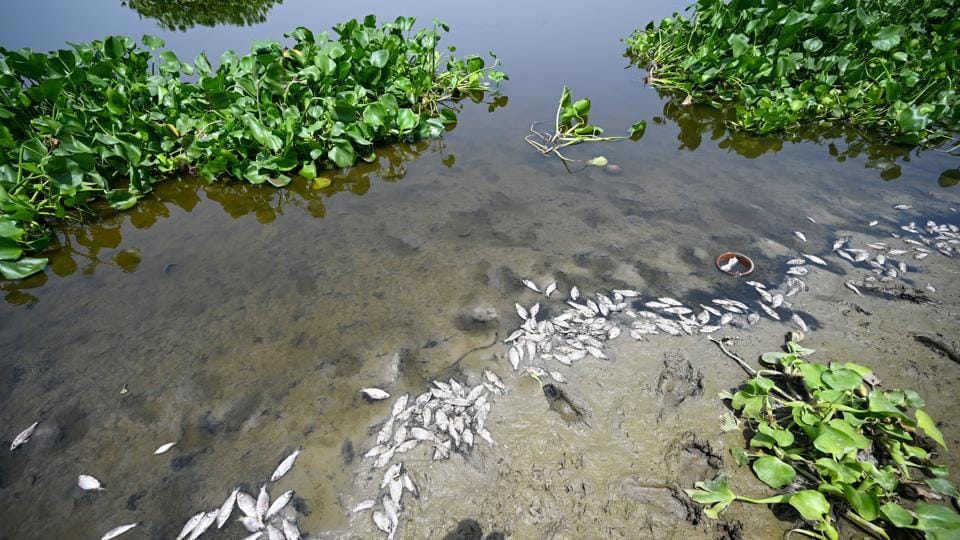
According to the report dated May 16, samples of the Yamuna lifted on May 1 showed a faecal coliform level of 2.3 million MPN/100ml, up from 1.5 million MPN/100ml clocked in April. The safe limit, according to DPCC, is 2,500 MPN/100ml, indicating the May readings were 920 times higher.
The report showed while the reading was 1,700 MPN/100ml at Palla, where the Yamuna enters Delhi, it increased to 3,300 MPN/100ml at Wazirabad, the next stop downstream, before spiking to 160,000 MPN/100ml at ISBT bridge. The faecal coliform of 2.3 million MPN/100ml was recorded at Asgarpur, where the Yamuna exits Delhi.
The monthly reports comply with a National Green Tribunal (NGT) order, based on readings from eight points of the Yamuna in the Capital.
Meanwhile, the Yamuna’s biological oxygen demand (BOD), a key indicator of the river’s ability to sustain aquatic life, also worsened. Against a safe limit of 3mg/l, a peak reading of 64mg/l was recorded at the ITO Bridge, before improving to 38mg/l at Asgarpur. In April, a peak BOD level of 56mg/l was recorded, at Asgarpur.
Among other pollutants are ammoniacal nitrogen—discharge from industrial effluents and sewage—which clocked a peak of 5.75mg/l at Nizamuddin Bridge, over two times the April high of 2.36mg/l. High levels of ammoniacal nitrogen in the Yamuna, particularly at the Wazirabad Barrage, where Delhi draws its water, impact the water supply of Delhi as treatment plants cannot treat a level over 1mg/l.
Experts say the water samples were lifted on May 1, before the spells of rain and thunderstorms. For a flush-out effect, significant rain is required in the river’s higher reaches, including in Himachal Pradesh and Uttarakhand.
Pankaj Kumar, a Yamuna activist, said that while faecal coliform levels have been on the rise in the river for the past three months, a spike in BOD in the middle of the river needs to be reassessed. “The faecal coliform data is consistent and keeps rising as we move downstream. While the faecal coliform is at its peak when the river is exiting Delhi, generally, BOD, is at its peak too as there is a lot of organic matter in the water. A rise in BOD in the middle of the river and an improvement at Asgarpur is a little surprising,” said Kumar.
The river generally starts to swell in early July, following the arrival of the monsoon. Water quality tends to be at its best in the river during monsoon, due to increased flow.

Stay updated with all top Cities including, Bengaluru, Delhi, Mumbai and more across India. Stay informed on the latest happenings in World News along with Delhi Election 2025 and Delhi Election Result 2025 Live, New Delhi Election Result Live, Kalkaji Election Result Live at Hindustan Times.


