
 E-Paper



From notoriety to glory, a village on border that changed its fate
The constant persuasion of villagers led to the setting up of a Rs 5-crore power grid in the panchayat land that is expected to resolve the problem of power outage in six nearby villages.


Once a hotspot of terrorism and infamous for drug peddling activities, Jalaldiwal village in Raikot block is set to restore its glory and change its fate.
Villagers are setting an example for the country by showing how communities and NGOs can work together to conserve the environment, help the needy and check the drug menace.
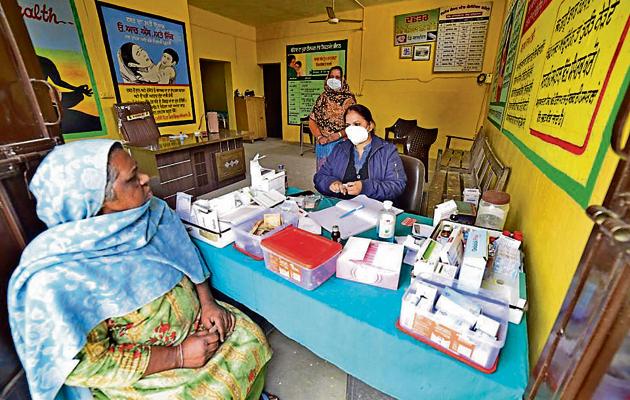
Villagers, who formed the social organisation Giani Nihal Singh Sewa Society, have distributed medicines worth Rs 2 lakh to the needy from the village dispensary in the past one year. The dispensary remained open even during the lockdown to cater to the villagers.
Besides, the constant persuasion of villagers led to the setting up of a Rs 5-crore power grid in the panchayat land that is expected to resolve the problem of power outage in six nearby villages.
In order to protect the environment, 90% of villagers have decided not to set the paddy stubble on fire. Further, they are milking profits as the cooperative milk society of the village has made a whooping annual profit of Rs 8 lakh from the sale of dairy products.
Not only this, the village, having a population of over 5,000, is also promoting sports among girls. Currently, over 20 girls, most of them from underprivileged backgrounds, are being trained for free in government-run sports institutions.
“The hockey wing for under-14 and under-17 age group was set up in this village in 2013. Since then, the girls’ teams from the village are continuously bagging the first or second position at district-level competitions. Besides, six students have participated in the state-level competition,” said government-appointed hockey coach Baljeet Kaur.
Sarpanch of the village Jagjit Singh Jagga said that Jalaldiwal has a glorious history with many freedom fighters hailing from the village. “But during the dark days of militancy, our village was targetted by terrorists. In 1991, a bomb was lobbed in the bank, where the dispensary is now located. One person was killed in the explosion. Besides, cannabis was grown in the vacant land which also attracted drug addicts. This brought a bad name to our village,” said Jagga.
He credited homeopath turned progressive farmer Harminder Singh for being a catalyst for change.
“Had he not persuaded all of us, this development would not have been possible. Harminder channelised the energies of the youth towards creative works. He formed a society that played a pivotal role in setting up development projects in the village,” said Jagga.
Harminder Singh said that bringing social change was an easy task. “Initially, we faced a lot of criticism for our initiatives including management of stubble. There were times when I was told that I am a maniac and youngsters were asked to stay away from me. But, staying positive is the only way forward. Now, things are going in the right direction,” he said.
Surinder Singh (75), the founder of Giani Nihal Singh Sewa Society, who is also running a library consisting of over 1,000 books said, “We kept the society apolitical. We have encouraged the participation of youngsters in development activities which proved to be a boon.”
Rural medical officer Dr Deepak Bakshi said that the initiative by the villagers also intrigued NRIs to participate. Now, patients from nearby villages are also visiting the dispensary for treatment, he said.
Appreciating the efforts of villagers SDM Raikot Himanshu Gupta said that these developmental works would not have been possible without the active participation of villagers, particularly youngsters.
“The power grid being set-up in the village will resolve the problem of low voltage and breakdown,” said Gupta.


