
Sign in

Auto-rickshaws in Gurugram and Faridabad to get unique IDs

Auto-rickshaw drivers in Gurugram and Faridabad will receive unique identification stickers with serial numbers registered with the regional transport authority (RTA) and driver's pictures. The move aims to curb crime and ensure passenger safety. Auto-rickshaws without these stickers will not be permitted on the roads from November onwards. The initiative will be implemented in different phases across Haryana state.

Updated on: Sep 22, 2023, 23:05:31 IST
Share
Share via
  • facebook
  • twitter
  • linkedin
Copy link
  • copy link

Auto-rickshaw drivers in Gurugram and Faridabad are now set to receive their own unique identifications.
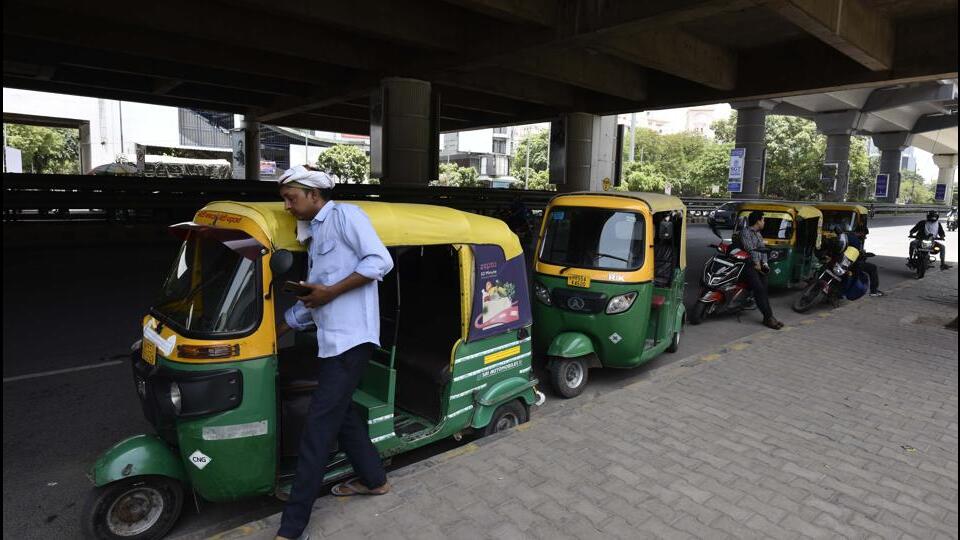
Police said the drivers will get a sticker that would have the serial number registered with the regional transport authority (RTA) along with the driver’s picture on it. (HT Archive)

Police in the two cities will start a verification drive of all the registered auto-rickshaws to equip them with unique IDs, officers said, adding that this would help authorities keep a check on any illegal or criminal activity.

Police said the drivers will get a sticker that would have the serial number registered with the regional transport authority (RTA) along with the driver’s picture on it. This sticker will be pasted on the inside of the vehicle’s windshield, police said, adding that the process will begin in Gurugram and Faridabad on Saturday.

A decision has been taken by the Haryana Police for all the districts in the state and it will be implemented in different phases, said police.

Officers said that auto-rickshaws without these serial numbers will not be allowed to ply on city roads starting November.

Deputy commissioner of police (traffic) Virender Vij said that the move is aimed at curbing crime involving alleged auto-rickshaw gangs in the city and to ensure safety of passengers. “We have launched several awareness drives to inform auto-rickshaw drivers and commuters about the serial numbers. The passengers should also check these IDs before boarding the vehicle,” he said.

Vij added that vehicles without these stickers will be issued challans.

“We had a meeting with auto-rickshaw drivers’ unions and directed them to submit the details within 10 days,” added Vij.

Vij said that they have outsourced a vendor who will prepare a sticker with all the details of the vehicle and its driver. “There will be a serial number on each sticker. We will create a database so that if we receive any complaints, we can seamlessly check the credentials of the driver,” he said.

According to the RTA data, Gurugram has nearly 60,000 registered auto-rickshaws while Faridabad has around 45,000.

Police said out of the 60,000 registered auto-rickshaws in Gurugram, only 20,000 are plying on the road.

Amit Yashvardhan, deputy commissioner of police (traffic), Faridabad, said that their teams are deployed at all major spots to collect data of the auto-rickshaws plying in the city. “We have already collected data of over 6,000 vehicles and will complete the remaining data within a month,” he said.

  • Leena Dhankhar
    ABOUT THE AUTHOR
    Leena Dhankhar

    Leena Dhankhar is Senior Editor and Bureau Chief, Gurugram, at Hindustan Times, where she has spent over 17 years chronicling the transformation of one of India's fastest-growing urban regions. From starting her career as a crime reporter to leading the Gurugram bureau, her journalism has been defined by investigative reporting, in-depth storytelling and an unwavering focus on public interest. Over nearly two decades, she has reported extensively across crime, politics, civic governance, elections, real estate, environment, courts, sports, education and entertainment, covering Gurugram, Faridabad, Nuh and Palwal. Her reporting has exposed several major scams and systemic failures, including insurance frauds, waste management irregularities, illegal arms manufacturing units in Nuh, illegal mining in the Aravallis, organised crime networks and governance lapses affecting millions of residents. Known for her investigative work and exclusive stories, Leena has reported on high-impact national issues, including the Nicaragua charter flight carrying Indian migrants that was turned back amid allegations of human trafficking, exposing the growing network of illegal immigration rackets. Her work has also focused on gang wars, prison administration, juvenile crime, women and child protection systems, the functioning of the Juvenile Justice Board and Child Welfare Committee, and environmental challenges such as pollution, waterlogging and deteriorating civic infrastructure. Beyond hard news, Leena has extensively documented Haryana's rich heritage, forests and wildlife, bringing attention to the state's historical landmarks, biodiversity, conservation efforts and ecological challenges through immersive reportage and feature writing. Her journalism has consistently gone beyond breaking news. She has documented Gurugram's rapid urbanisation through long-form narratives and enterprise reporting on issues ranging from pothole-ridden roads, flooding and waste management to the changing social fabric of India's Millennium City. She also writes widely read feature columns, including The Outsider, Changemaker, and Concern for Gurugram, profiling people, places and ideas shaping the city's identity. Leena is the author of Gurugram School Murder, published by Juggernaut Books, a deeply reported account of one of India's most high-profile school murder investigations. She is currently working on her second book, an investigative work exploring some of India's most significant scams and fraud investigations. Beyond print journalism, she has expanded her storytelling through public speaking and digital media. She is a TEDx speaker and has produced podcasts exploring Gurugram's transformation, civic challenges and untold stories. Her work reflects a commitment to narrative journalism that combines rigorous reporting with compelling storytelling. A law graduate with an MBA in Human Resources, Leena brings a multidisciplinary perspective to her reporting, particularly on governance, public policy and legal affairs. She has travelled extensively across India to pursue investigative assignments, often reporting from remote locations and conflict-prone areas in search of stories that matter.Read More