
 E-Paper



Dengue: MCG to carry out fogging under residents’ supervision
The MCG decided to carry out fogging and larviciding operations in the presence of residents’ welfare associations (RWAs) and local ward councillors, following complaints of poor preventive actions by the civic body


The Municipal Corporation of Gurugram (MCG) decided to carry out fogging and larviciding operations in the presence of residents’ welfare associations (RWAs) and local ward councillors, following complaints of poor preventive actions by the civic body.
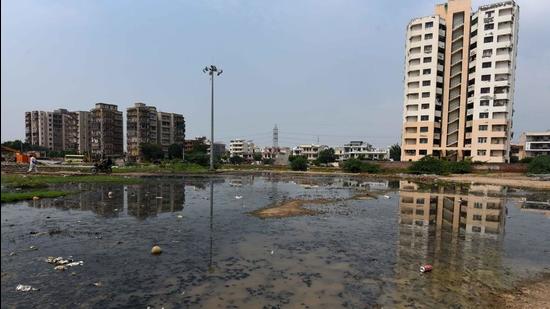
A senior MCG official, who attended a meeting held in this regard on Monday, said, “We had received complaints from various RWAs, councillors and residents that workers had not carried out fogging or anti-larvae activities in various areas despite stating otherwise. Hence, to ensure there is greater accountability, it was decided that such operations should now be conducted in the presence of RWAs and local councillors.”
The MCG’s meeting at its Sector 34 office on Monday was aimed at strategising plans to curb the spread of dengue cases, under the National Vector Borne Disease Control Programme.
The city has seen a surge in dengue cases this month. On October 6, the first time that the district administration issued a dengue and malaria bulletin, the city’s dengue count stood at 83, which has rapidly increased to 217 as of Monday, when five fresh cases were reported. The tally is also a six-year high, as reported by HT on Monday.
The MCG started its citywide fogging drive on October 20, before which it was only acting on complaints received from residents.
As per the agenda list of the meeting, a copy of which is with HT, the MCG has deputed 156 workers for fogging and anti-larvae operations. Of the 156, 39 are multi-purpose health workers (MPHW) and 117 are multi-task workers (MTW).
In the meeting, officials said that 19 MPHWs and 57 MTWs, each, would be assigned to carry out the activities in two shifts, from 9am to 5pm and from noon to 8pm. The MCG has set a target of covering 54 RWAs per day.
“Including RWAs will not only increase accountability, but also ensure fogging and anti-larvae operations are carried out properly. RWAs have local knowledge of mosquito breeding spots as well as areas with stagnant water, which will further help MCG eradicate and reduce mosquito-borne diseases,” Dhruv Bansal, spokesperson, Gurgaon Citizens Council (GCC), an umbrella body of RWAs in the city, said.
For carrying out fogging drives, the MCG has 35 handheld fogging machines and 10 vehicle-mounted fogging machines. Besides these, they also have 43 hand-held machines for spraying anti-larval solutions and 43 three-wheelers for carrying out the drives.
“During the meeting, workers were directed to add black oil (mosquito larvicidal oil) to stagnant water or water bodies for anti-larvae purposes. The oil will be procured from the health department’s malaria office,” a second MCG official, who also attended the meeting, said.
In the meeting officials also disclosed that so far, the MCG carried out fogging activities at 212 locations in August, 197 in September, and 309 this month.

Stay updated with all the Breaking News and Latest News from Mumbai. Click here for comprehensive coverage of top Cities including Bengaluru, Delhi, Hyderabad, and more across India along with Stay informed on the latest happenings in World News.


