
 E-Paper



French expat cleans dirt-filled Gurugram streets, one at a time
Her journey into civic activism began almost by chance. As a volunteer with Friendicoes, an animal welfare NGO, she would spend weekends walking abandoned dogs in the Aravallis.

 Prefer HTon Google


Every weekend, while many residents of Gurugram retreat indoors, a small group gathers in different parts of the city with gloves, garbage bags, and determination to wage a quiet battle against litter. At the centre of these efforts is Mathilde Rateria, a 38-year-old French expatriate, former journalist, and television director who has made the Millennium City her home and her mission.
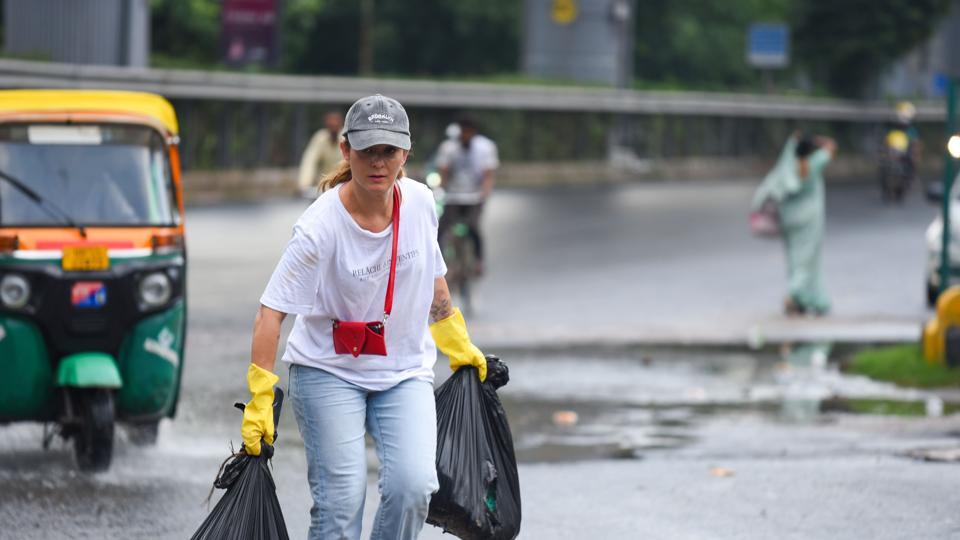
Rateria first came to India eight years ago as a correspondent for French television. She says she fell in love not only with the country’s landscapes and cultures, from the cleanest village in Meghalaya to the tea plantations of Munnar, but also with its people. After returning briefly to France to host an environmental show, she moved back two years ago, married her husband in a Hindu wedding, and shifted to Gurugram.
Her journey into civic activism began almost by chance. As a volunteer with Friendicoes, an animal welfare NGO, she would spend weekends walking abandoned dogs in the Aravallis. “The forest is magical, but I was disheartened to see it getting dirtier, with construction waste piling up. That’s when the idea struck me, we cannot just wait for others to clean up, we must start ourselves,” she said.
Along with a few like-minded residents, Rateria posted an open call on social media for a cleanliness drive. To her surprise, 20 people turned up for the first effort. “It was heartwarming. Everybody wanted to do their bit. I don’t think I would have met the same enthusiasm in France. Indians are like a herd of elephants, when they decide to move together, they are unstoppable,” she said with a laugh.
The momentum grew. Their second clean-up, at HUDA Market, drew 40 volunteers, double the first. Over time, the model evolved into a simple but powerful one: identify dirty spots, mobilise volunteers, clean the area, and spread awareness among shopkeepers and residents about keeping public spaces tidy.
For Rateria, however, the mission is about more than removing litter. “We take care of our homes, but the streets are our shared home too. If we keep them clean, people will enjoy walking, cycling, or just spending time outdoors. It creates a virtuous cycle,cleaner spaces mean better quality of life, less pollution, and healthier habits,” she explained.
She often draws comparisons with her hometown in France, where dedicated cycling and walking infrastructure has brought pollution levels down drastically. “The PM2.5 there rarely crosses 20. That’s the quality of life I dream of for Gurugram,” she said.
Her efforts have already inspired NGOs, schools, and resident groups to join in. Several neighbourhood associations now organise their own drives after seeing her group’s work. “We never wanted to be just cleaners,” Rateria said. “Our goal is to spread awareness and encourage others to take pride in their public spaces.”
For many residents, the sight of a foreigner working tirelessly to clean their city has been a wake-up call. “If she can do this for us, why can’t we?” said a local shopkeeper at one of the clean-up sites, asking not to be named.
As Gurugram grapples with waste management and crumbling infrastructure, Rateria’s movement remains small but symbolic. Every Sunday, with a broom and a smile, she shows that change need not wait for government orders. It can begin with one determined person. Her story showcases how even the smallest acts of care can spark collective change, and that Gurugram’s future can be cleaner, greener, and kinder if citizens choose to walk that path together.


Stay updated with all the Breaking News and Latest News from Mumbai. Click here for comprehensive coverage of top Cities including Bengaluru, Delhi, Hyderabad, and more across India along with Stay informed on the latest happenings in World News.


