
 E-Paper



Gurugram admin orders three-hour break for labour to alleviate heat stress
The Municipal Corporation of Gurugram (MCG) has been asked to ensure gig workers are minimally exposed to heat, and joint commissioners have been asked to keep a check and communicate with their employers, DC Nishant Kumar Yadav said

 Prefer HTon Google


Gurugram
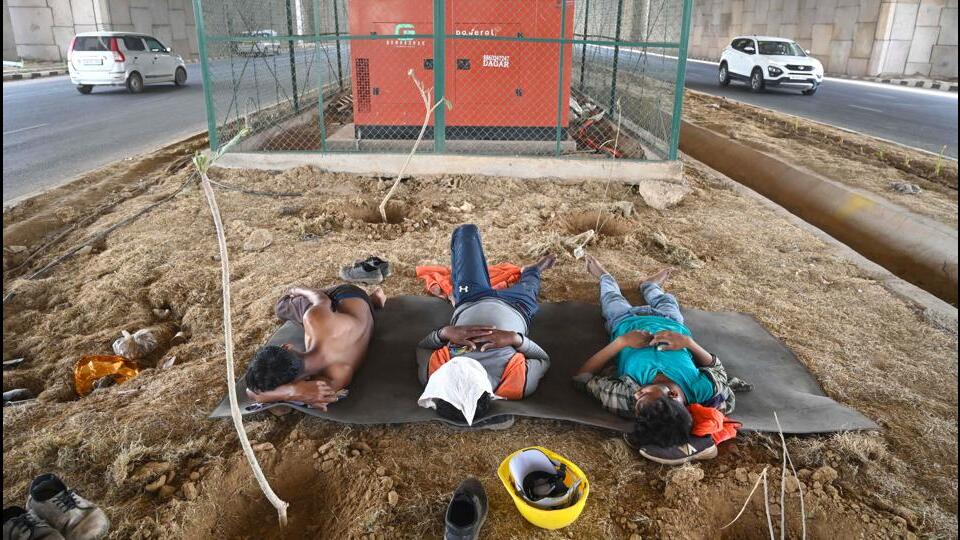
A day after Delhi ordered an afternoon break, from noon to 3pm, for all construction labourers employed by government agencies due to an ongoing heatwave, the Gurugram administration followed suit on Thursday and issued directives for construction workers to take a three-hour break during peak sun, officials said.
India Meteorological Department (IMD) officials said that the maximum temperature on Thursday was 46.5°C and the minimum was 29.3°C, with forecast of a partly cloudy sky on Friday.
Gurugram deputy commissioner (DC) Nishant Kumar Yadav said directives were issued to all departments concerned to ensure the rule is effectively implemented.
“The Municipal Corporation of Gurugram (MCG) has been asked to ensure gig workers are minimally exposed to heat, and joint commissioners have been asked to keep a check and communicate with their employers. The labour department has been asked to ensure daily wage labourers are provided with sheds, water and rest during the afternoon. Similarly, the district food and supply controller has been instructed not to assign work to labourers during the designated time bracket, as well as ensure they are not exposed to direct sunlight,” Yadav said.
Yadav said developers, builders or residents getting construction work done must cover any medical costs that arise due to heat-related illnesses. “Those in charge of construction sites, including owners and contractors, must ensure that workers get a break in the afternoon, are well hydrated, and are taken care of in case of any complication,” he said.
Yadav said: “Contractors should arrange for refreshments and electrolytes for workers. RWAs (residents’ welfare associations) have been asked to collaborate with employers to monitor the well-being of domestic workers in their areas. We have also appealed to residents to avoid placing online orders during peak summer hours to reduce the strain on gig workers who deliver goods and services in the sweltering heat.”
The administration also urged RWAs not to call their domestic helps during peak hours and avoid ordering food, which gig workers will deliver. It also asked the e-commerce companies not to send deliveries in the afternoon.
Nilesh Tandon, president of Fresco Apartments RWA in Sector 50, said they have kept earthen pots at the entry and exit points, and have requested residents to keep bottles filled with water in fridge for persons delivering goods. “Many residents voluntarily give lemon water or soft drinks to security guards deployed in the condominium. This is a good suggestion by the administration, and residents will be happy to extend help. We will issue a circular,” he said.
Yadav said they are also working with the health department to provide first-aid training to supervisors and RWA representatives. “This initiative will help in immediate response to any heat-related emergency. Our goal is to create a safe and supportive environment for all workers in Gurugram,” he said.
Rajesh Kumar, 38, a food delivery executive, said, “The heat is unbearable during peak afternoon hours. During the afternoon, deliveries are more frequent due to lunch timings and we cannot avoid them as it will end up deducting our salaries. It is becoming tougher for us to be on roads in this temperature.”
Another gig worker, Sita Ram, 28, who works with an e-commerce company, said, “Three of my roommates have fallen sick due to the heat, but we are helpless. We have more than 30 deliveries a day and at times, we have to ride a motorbike for more than 200 kilometres in scorching heat without drinking water. We should be given rest in the afternoon at least this month.”


