
 E-Paper



Heavy rain leads to waterlogging in Gurugram; traffic disrupted, subways closed
The district administration reported that Gurugram received 53mm of rainfall by 8:30am, causing water to accumulate in multiple sectors and on major roads

 Prefer HTon Google


Gurugram: Overnight heavy rainfall wreaked havoc across Gurugram on Sunday, leading to widespread waterlogging that crippled the city’s roads and highways.
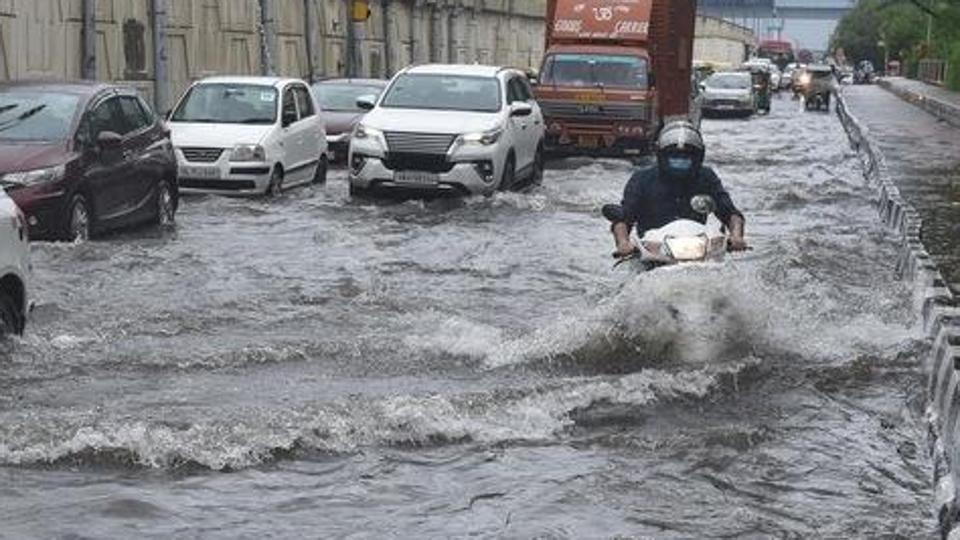
Key areas, including the Gurugram-Delhi Expressway, and many subways were severely impacted, making travel a nightmare for commuters. The district administration reported that Gurugram received 53mm of rainfall by 8:30am, causing water to accumulate in multiple sectors and on major roads. Some areas also recorded over 80mm of rainfall.
The waterlogged streets and clogged stormwater drains also led to significant traffic congestion. “The rainwater submerged key intersections and service lanes, leaving vehicles stranded and commuters wading through knee-deep water,” said a traffic police official.
The deluge resulted in the closure of several underpasses and subways, including those at DLF phases 1 and 3, Sector 4, 5, Palam Vihar, and Suncity Township, as authorities prioritised the safety of commuters.
Gurugram deputy commissioner Nishant Kumar Yadav said emergency teams were deployed across the city to manage the situation. “We have stationed cranes and police vans at key stretches to assist with vehicle breakdowns, and our teams are working round the clock to pump out water from flooded areas,” he said. Yadav urged residents to avoid potholed roads and stay indoors unless necessary.
Siddhant Jain, deputy commissioner of police (south), said that they have deployed teams at all key stretches to help commuters and have advised not to move out if not important. “We have barricaded underpasses since there are potential chances of waterlogging. The areas are waterlogged, and the condition will be improved once the rain stops. Till then, all the civic agencies are doing their but,” he said.
With subways and underpasses closed for non-motorised transport (NMT) and pedestrians, residents had no choice but to stay indoors and reschedule their weekend plans. “We had planned a picnic at Damdama Lake, but the roads are flooded, and it’s too risky to venture out,” said Karan Mehta, a Sector 48 resident.
The situation was equally grim on the Delhi-Gurugram Expressway, where commuters faced severe challenges crossing the Narsingpur stretch as both the main carriageway and service lanes were submerged. “I was stuck for nearly two hours on the expressway. The waterlogging was so severe that I had to push my car through a flooded area. It was a harrowing experience,” said Raghav Sharma, a commuter traveling from Delhi to Gurugram.
Despite the authorities’ efforts, residents expressed frustration over the city’s drainage system, which they claimed was ill equipped to handle such downpours. “We had to cancel our trip to Jaipur because the roads were completely inaccessible,” said Sunil Verma, a resident of Sushant Lok.
Ajay Sharma, member of Tulip Ivory Residents Welfare Association in Sector 70, criticised the builders and the administration for the recurring waterlogging issues. “For years, builders neglected the desilting of drains, and even after the MCG took over, there’s been little improvement. Two monsoons have passed, and we are still dealing with the same problems. SPR and Darbaripur Road are not in condition for commuters to use during monsoons,” she said.
Many residents took to social media to express their anger and share photos of the flooded roads. “The stormwater drains are choked with garbage and plastic. It’s the same story every year—flooded roads and water seeping into our homes,” said Baljeet Singh Rathee, president of the DLF Qutub Enclave Residents Welfare Association (QERWA).


