
MCG inducts 57 inspectors to boost cleanliness, tackle waste in Gurugram
Of the 57 inspectors, 15 have been assigned to Zone 1, while Zones 2, 3, and 4 will each have 14 inspectors
The Municipal Corporation of Gurugram on Friday held a meeting with 57 newly appointed assistant sanitation inspectors, urging them to perform their duties with diligence, responsibility, and complete transparency.
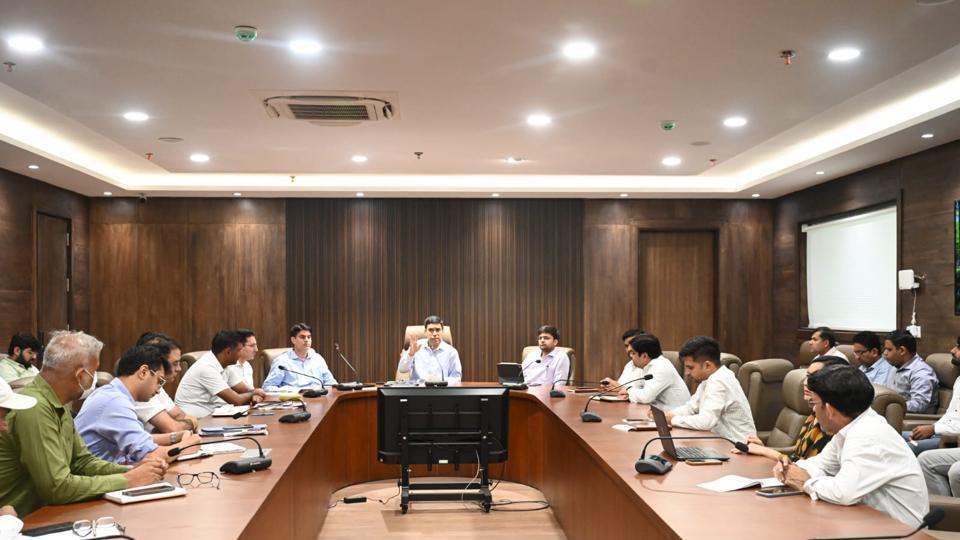
“You have been given an opportunity to serve in a government department—consider it a mission and set a positive example through your work. Any negligence or laxity in duty would invite strict action,” MCG commissioner Pradeep Dahiya told the new officials, who were recently recruited through the Haryana Skill Employment Corporation.
The sanitation inspectors were appointed amid the rising concerns in the city and residents widely sharing pictures and videos of garbage piles, blocked drains, and overflowing waste bins on various social media platforms. These visuals have drawn public attention to the poor state of cleanliness in several neighbourhoods, with many urging the MCG to take swift measures.
Of the 57 inspectors, 15 have been assigned to Zone 1, while Zones 2, 3, and 4 will each have 14 inspectors. The commissioner directed that all inspectors must reach their designated areas by 7am daily and record sanitation workers’ attendance on the Solid Waste Management (SWM) portal.
Key responsibilities of the officials include ensuring cleanliness in their assigned areas, preventing litter, debris, and polythene waste, and monitoring the door-to-door waste collection system. Inspectors must liaise with local councillors, RWA representatives, and residents to address complaints and ensure prompt solutions. Any issues such as sewerage blockages must be reported immediately to the junior engineer concerned.
Inspectors are also tasked to ensure that garbage-vulnerable points are cleaned regularly, garbage trolleys do not overflow, and waste is removed promptly. They will monitor and penalise illegal dumping, enforce solid waste, plastic waste, and C&D waste management rules, and prevent wastage of drinking water.
Additionally, inspectors will survey households to track who collects waste and where it is disposed of, ensuring all household waste reaches secondary collection points.
“Maintain regular communication with councillors, RWAs, and community leaders to identify and resolve local issues in a time-bound manner,” Dahiya added.
ABOUT THE AUTHORLeena DhankharLeena Dhankhar is Senior Editor and Bureau Chief, Gurugram, at Hindustan Times, where she has spent over 17 years chronicling the transformation of one of India's fastest-growing urban regions. From starting her career as a crime reporter to leading the Gurugram bureau, her journalism has been defined by investigative reporting, in-depth storytelling and an unwavering focus on public interest. Over nearly two decades, she has reported extensively across crime, politics, civic governance, elections, real estate, environment, courts, sports, education and entertainment, covering Gurugram, Faridabad, Nuh and Palwal. Her reporting has exposed several major scams and systemic failures, including insurance frauds, waste management irregularities, illegal arms manufacturing units in Nuh, illegal mining in the Aravallis, organised crime networks and governance lapses affecting millions of residents. Known for her investigative work and exclusive stories, Leena has reported on high-impact national issues, including the Nicaragua charter flight carrying Indian migrants that was turned back amid allegations of human trafficking, exposing the growing network of illegal immigration rackets. Her work has also focused on gang wars, prison administration, juvenile crime, women and child protection systems, the functioning of the Juvenile Justice Board and Child Welfare Committee, and environmental challenges such as pollution, waterlogging and deteriorating civic infrastructure. Beyond hard news, Leena has extensively documented Haryana's rich heritage, forests and wildlife, bringing attention to the state's historical landmarks, biodiversity, conservation efforts and ecological challenges through immersive reportage and feature writing. Her journalism has consistently gone beyond breaking news. She has documented Gurugram's rapid urbanisation through long-form narratives and enterprise reporting on issues ranging from pothole-ridden roads, flooding and waste management to the changing social fabric of India's Millennium City. She also writes widely read feature columns, including The Outsider, Changemaker, and Concern for Gurugram, profiling people, places and ideas shaping the city's identity. Leena is the author of Gurugram School Murder, published by Juggernaut Books, a deeply reported account of one of India's most high-profile school murder investigations. She is currently working on her second book, an investigative work exploring some of India's most significant scams and fraud investigations. Beyond print journalism, she has expanded her storytelling through public speaking and digital media. She is a TEDx speaker and has produced podcasts exploring Gurugram's transformation, civic challenges and untold stories. Her work reflects a commitment to narrative journalism that combines rigorous reporting with compelling storytelling. A law graduate with an MBA in Human Resources, Leena brings a multidisciplinary perspective to her reporting, particularly on governance, public policy and legal affairs. She has travelled extensively across India to pursue investigative assignments, often reporting from remote locations and conflict-prone areas in search of stories that matter.Read More
Stay updated with all the Breaking News and Latest News from Mumbai. Click here for comprehensive coverage of top Cities including Bengaluru, Delhi, Hyderabad, and more across India along with Stay informed on the latest happenings in World News.

E-Paper


