
 E-Paper



Why are Bengali-speaking migrants leaving Gurugram? Police drive leads to exodus, charges of ‘singling out Muslims'
The drive, aimed at identifying undocumented immigrants, has reportedly led to 300–400 families leaving shanty settlements

 Prefer HTon Google


A police verification drive targeting undocumented immigrants in Gurugram has led to the departure of hundreds of Bengali-speaking migrant families and triggered a political controversy, with opposition leaders accusing the Haryana government of communal bias.
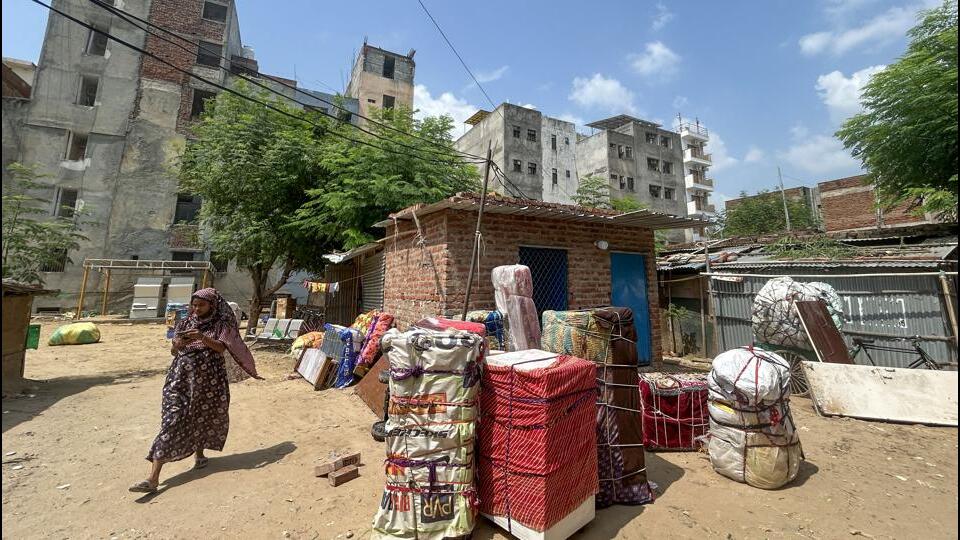
The drive, aimed at identifying undocumented immigrants, has reportedly led to 300–400 families leaving shanty settlements, particularly around South City 2, amid fears of detention and harassment. “Even those with Aadhaar and voter cards are being detained. Police arrive without warning and take people away. Some were even beaten,” a migrant resident claimed, requesting not to be named.
“We didn’t come here to break the law — we came to work hard and feed our families,” said Imran Ali, a 32-year-old construction worker from Murshidabad, who left Gurugram last week and is now staying with a cousin in Delhi’s Seelampur.
“Police came to our settlement late at night. Even though I showed my Aadhaar card, they said it needed to be verified in Bengal. My wife got scared, packed our things, and we left that same night. I lost my job, and we are now surviving on whatever little savings I had. I don’t know when we will go back—or if we even can,” he added.
Congress MLA Aftab Ahmed, a senior Meo community leader, alleged the drive is “unfairly singling out Muslim residents” and “damaging Gurugram’s secular fabric and global image.”
He said even individuals with valid documents have been detained and forced to leave. “This campaign… has turned into a tool for communal victimisation,” Ahmed said, adding he has raised the issue with the state DGP and Gurugram Commissioner of Police, who assured him “no legitimate Indian citizen will be harassed.”
Chief minister Nayab Singh Saini defended the campaign, declaring, “There is no place for Bangladeshi infiltrators in Haryana; they are being removed as swiftly as possible.” He added, “No compromise against India’s unity, sovereignty, and Constitution is acceptable... the nation’s interest will always be paramount.”
In response, West Bengal CM Mamata Banerjee slammed the drive, calling it “linguistic terror” and alleging that Bengali-speaking workers are being deported without proper checks. “I have been increasingly receiving reports of detentions and atrocities… West Bengal Police is receiving requests from Haryana Police for identity verification,” she said, citing Human Rights Watch (HRW) reports accusing BJP-ruled states of systematic deportations.
HRW reports that this has been happening systematically in the BJP-ruled States of Assam, Gujarat, Maharashtra, Rajasthan, Uttar Pradesh, Odisha and Delhi, following a directive by the Ministry of Home, Government of India. Shame!! Now, even international human rights organisations have started taking note of the linguistic terrorism unleashed in India. This must stop at once!!” the CM posted.Banerjee has been attacking the BJP-led Centre, saying that the detention of hundreds of Bengali speaking migrant workers across BJP-governed states was “a language war and linguistic terrorism” waged on Bengal and its people.
TMC MP Samirul Islam backed Banerjee, accusing BJP-led states of “hiding data on Bengali-speaking migrants” and turning “national security into a tool of discrimination.”
“No illegal immigrant will be allowed to stay in Haryana. The verification drive is being conducted strictly within the legal framework to ensure the safety and security of all citizens,” said Arvind Saini, media in-charge of BJP Haryana. “The Congress is raising baseless concerns because their traditional vote bank is being affected. This is not about religion or language—it’s about national interest and lawful residency.”
Senior Congress leader Pankaj Dawar said many of these families have been in Gurugram for over two decades as domestic workers and labourers. “They consider Gurugram their home. But now, their lives have been thrown into chaos,” he said.
Haryana Police, however, denied any communal angle. “The process is based on intelligence inputs and legal procedure,” said Gurugram police spokesperson Sandeep Kumar. “We are ensuring that no Indian citizen is harassed.”
As the controversy deepens, the verification campaign has become a flashpoint in the larger political discourse around migration, minority rights, and state power, according to opposing political leaders. “The situation is not just a local law enforcement issue anymore,” Ahmed said. “It’s a test of how inclusive and just we remain as a society.”


Stay updated with all the Breaking News and Latest News from Mumbai. Click here for comprehensive coverage of top Cities including Bengaluru, Delhi, Hyderabad, and more across India along with Stay informed on the latest happenings in World News.


