
Sign in

NGT plea flags “grave” water crisis across Haryana, cites policy failure

Petition says 9.82 lakh acres affected by waterlogging, salinity; seeks court-monitored panel for time-bound plan to fix imbalance.

Published on: Apr 28, 2026, 09:42:12 IST
Share
Share via
  • facebook
  • twitter
  • linkedin
  • whatsapp
Copy link
  • copy link

A petition filed before the National Green Tribunal (NGT) has flagged a “grave and continuing environmental crisis” in Haryana, marked by widespread waterlogging, soil salinity and severe groundwater depletion.
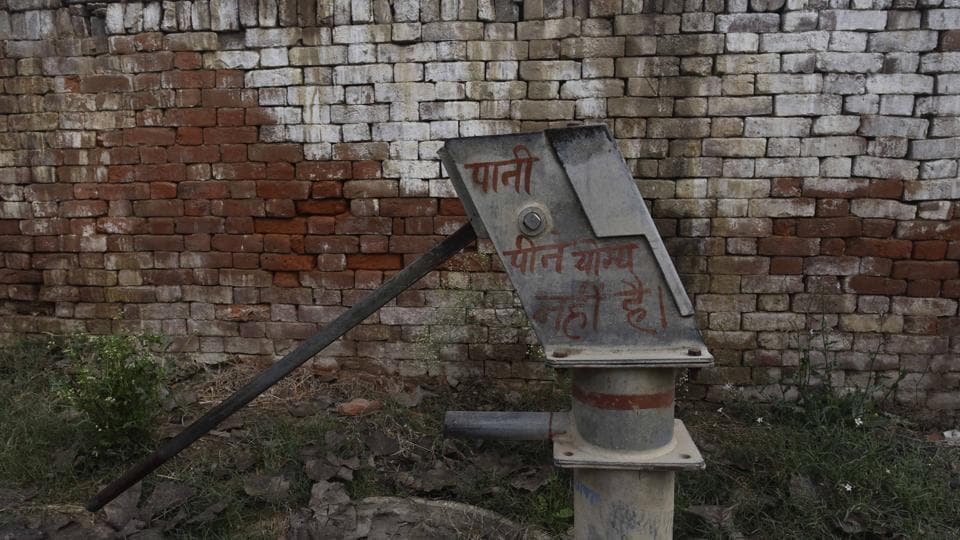
(Representative image) Over 60% groundwater units over-exploited; plea links crisis to irrigation practices, seeks expert panel for long-term corrective steps. (HT Archive)

Filed before the tribunal’s principal bench by Jai Singh, a farmer from Bhiwani district, through counsels Gaurav Arya and Naveen Bamel, the plea states that nearly 982,000 acres are affected by waterlogging and salinisation, while over 60% of groundwater assessment units are categorised as “over-exploited”. Around 174,000 acres fall in severely affected zones where the water table is as shallow as 0 to 1.5 metres, the petition claims.

The application traces the crisis to structural failure in water management dating back to the Green Revolution, citing reliance on water-intensive crops, excessive irrigation and unregulated groundwater extraction. Central and western Haryana face rising water tables, rendering farmland unproductive, while southern and eastern regions face sharp depletion. “The State today stands environmentally divided between land that cannot absorb more water and aquifers that cannot sustain further extraction,” it states.

The petition highlights crop losses, declining soil fertility, financial distress and migration, arguing short-term measures have failed to address root causes.

Prabhakar Kumar, COO of Rudrabhishek Techno Consultancy, which works on sanitation and water projects among other things, said soil salinity, waterlogging and groundwater depletion are interconnected and pose risks to agriculture and drinking water. “Waterlogging brings salts to the surface, damaging crops, while over-extraction lowers aquifers and affects water quality,” he said. Kumar added that poor drainage, unplanned urbanisation and weak water management are worsening the crisis, and called for a data-driven approach with improved drainage, protection of natural channels and better monitoring.

Advocate Gaurav Arya said: “Haryana is facing a paradox where one region is drowning due to excess water while another is running dry. This imbalance is the result of decades of unscientific water management and requires urgent, data-driven correction. “ Advocate Naveen Bamel added: “Despite ample data and government awareness, there has been no integrated solution on the ground. We have sought a court-monitored scientific committee to ensure accountability and implement long-term remedial measures.”

Invoking Article 21 and principles of sustainable development and intergenerational equity, the plea urges the tribunal to constitute a multidisciplinary committee, including experts from the Central Ground Water Board, to prepare a time-bound action plan.The tribunal will take up the matter on Thursday.

  • Leena Dhankhar
    ABOUT THE AUTHOR
    Leena Dhankhar

    Leena Dhankhar is Senior Editor and Bureau Chief, Gurugram, at Hindustan Times, where she has spent over 17 years chronicling the transformation of one of India's fastest-growing urban regions. From starting her career as a crime reporter to leading the Gurugram bureau, her journalism has been defined by investigative reporting, in-depth storytelling and an unwavering focus on public interest. Over nearly two decades, she has reported extensively across crime, politics, civic governance, elections, real estate, environment, courts, sports, education and entertainment, covering Gurugram, Faridabad, Nuh and Palwal. Her reporting has exposed several major scams and systemic failures, including insurance frauds, waste management irregularities, illegal arms manufacturing units in Nuh, illegal mining in the Aravallis, organised crime networks and governance lapses affecting millions of residents. Known for her investigative work and exclusive stories, Leena has reported on high-impact national issues, including the Nicaragua charter flight carrying Indian migrants that was turned back amid allegations of human trafficking, exposing the growing network of illegal immigration rackets. Her work has also focused on gang wars, prison administration, juvenile crime, women and child protection systems, the functioning of the Juvenile Justice Board and Child Welfare Committee, and environmental challenges such as pollution, waterlogging and deteriorating civic infrastructure. Beyond hard news, Leena has extensively documented Haryana's rich heritage, forests and wildlife, bringing attention to the state's historical landmarks, biodiversity, conservation efforts and ecological challenges through immersive reportage and feature writing. Her journalism has consistently gone beyond breaking news. She has documented Gurugram's rapid urbanisation through long-form narratives and enterprise reporting on issues ranging from pothole-ridden roads, flooding and waste management to the changing social fabric of India's Millennium City. She also writes widely read feature columns, including The Outsider, Changemaker, and Concern for Gurugram, profiling people, places and ideas shaping the city's identity. Leena is the author of Gurugram School Murder, published by Juggernaut Books, a deeply reported account of one of India's most high-profile school murder investigations. She is currently working on her second book, an investigative work exploring some of India's most significant scams and fraud investigations. Beyond print journalism, she has expanded her storytelling through public speaking and digital media. She is a TEDx speaker and has produced podcasts exploring Gurugram's transformation, civic challenges and untold stories. Her work reflects a commitment to narrative journalism that combines rigorous reporting with compelling storytelling. A law graduate with an MBA in Human Resources, Leena brings a multidisciplinary perspective to her reporting, particularly on governance, public policy and legal affairs. She has travelled extensively across India to pursue investigative assignments, often reporting from remote locations and conflict-prone areas in search of stories that matter.Read More

Catch every big hit, every wicket with Crickit, a one stop destination for Live Scores, Match Stats, Infographics & much more. Explore now!.

Stay updated with all the Breaking News and Latest News from Mumbai. Click here for comprehensive coverage of top Cities including Bengaluru, Delhi, Hyderabad, and more across India along with Stay informed on the latest happenings in World News.