
 E-Paper



JNU issues biometric smart cards, teachers raise privacy issue
The teachers’ body claimed that there was no deliberation about the necessity of such cards.


Days after Jawaharlal Nehru University (JNU) began issuing smart ID cards to the non-teaching staff, which would store their biometric data, students and faculty members have raised questions over the decision. These cards will also be used for marking attendance.
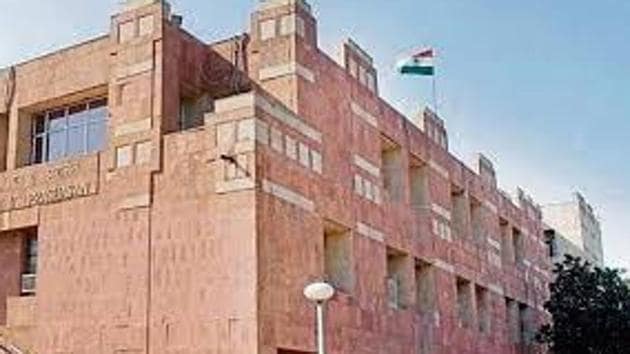
The JNU teachers’ association (JNUTA) on Thursday said the issuance of “all-in-one-smart cards” would “coerce employees, faculty and students to give their biometric data in violation of their fundamental right to privacy.”
A senior JNU official dismissed the allegations, saying the smart cards would prove to be useful . “Using one card, students can access libraries, schools, and hostels. It can be used for multiple purposes,” the official said.
The teachers’ body claimed that there was no deliberation about the necessity of such cards. They apprehended that the cards will soon be issued to the faculty and students as well since the university had said that each “user of the university will be provided with an easily identifiable smart ID card over a period of time.”
The controversy over biometric attendance at JNU had erupted after the administration on July 17 last year had made it mandatory for the teachers to mark their attendance at least once on a biometric machine and made 75% attendance the minimum requirement for students to sit for exams and to avail of various fellowships and scholarships.
On July 23 this year, the university issued a notification in which it released the details and schedule of the enrolment process of smart card for non-teaching staff, in what it described as the phase one of the project. The university asked all non-teaching staff, excluding administration blocks, to get their fingerprint registered, submit their original ID card at the designated counter, and obtain the smart card. The varsity also said the decision was a part of “computerisation and digitization of various activities of the university”.
The teachers’ association, howerver, alleged that the system was being rolled out without proper consultation. JNUTA president Atul Sood said, “There is a pattern behind these issues. The basic teaching-learning modalities of the university are being modified through a mechanism which does not go through institutional process and no comprehensive discussion takes place.”
Sood explained that teachers and students then keep running around responding to these circulars which change structure of university. “This way, stakeholders of the university are being consumed in unproductive activity and then there’s a perception that JNU students and teachers protest about everything.”
“The notification states that the biometric card is an “all-in-one” card. It does not specify precisely for what all purposes would the card be used. This is vague and open ended, and includes the possibility of biometric data being used for any unstated purposes without the consent of the person,” JNUTA said in a statement.
Questions are also being raised over the point that the smart card will also be used as a library card. “Teachers and students—and not the non-teaching staff to whom the notification is addressed—are the main users of the library. This suggests that the university is seeking to impose these biometric cards even for students and teachers for use in the library,” JNUTA added.
Registrar Pramod Kumar insisted that the cards were necessary. “As per UGC norms, teachers have to spend five hours in the university. How will the administration ascertain this it if there is no system in place to check this?”
In an executive council meeting held on Tuesday, elected representatives said the matter of biometric attendance of faculty members was listed under the agenda items and was discussed despite dissent by representatives. Stakeholders are now waiting for the minutes of the meeting to see if biometric attendance for faculty members is made mandatory.
JNUTA general secretary Avinash Kumar pointed out that the order came even as the issue of collection of biometric information for the purpose of faculty attendance is under legal challenge and the matter is sub-judice in Delhi High Court.


Stay updated with all top Cities including, Bengaluru, Delhi, Mumbai and more across India. Stay informed on the latest happenings in World News along with Delhi Election 2025 and Delhi Election Result 2025 Live, New Delhi Election Result Live, Kalkaji Election Result Live at Hindustan Times.


