
 E-Paper



50 yrs of Emergency: ‘That time was fraught with corruption, electoral misconduct’
Thousands--largely politicians and students--were sent to jail across the country, including Uttar Pradesh, during Emergency. Ram Dutt Tripathi was one such person. He recollects his activities and life in those times

 Prefer HTon Google


This year marks 50 years of Emergency that was set in motion by the then Indira Gandhi government on June 25, 1975, and was withdrawn on March 21, 1977. Its imposition gave Indira Gandhi to rule by decree and entailed curbing of civil-liberties to a great extent.
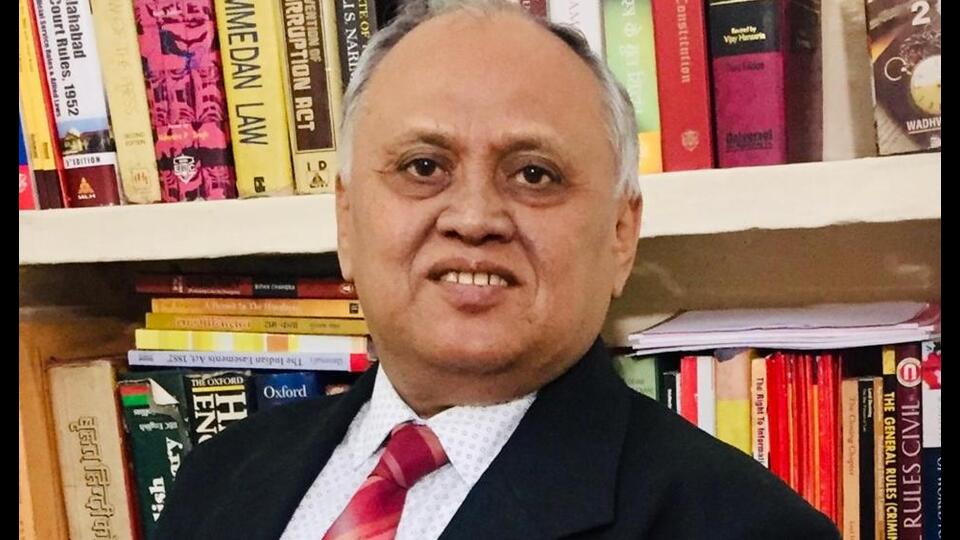
Thousands--largely politicians and students--were sent to jail across the country including Uttar Pradesh. Ram Dutt Tripathi was one such person. He recollects his activities and life in those times.
Tripathi, now 72, was a law student and a student leader in Allahabad (now Prayagraj) who was among those imprisoned during the Emergency. “I was arrested along with two of my associates on September 14, 1975, after months of evading arrest,” says Tripathi who was 22 back in 1975.
His imprisonment ended with the Emergency’s end on March 21, 1977. Tripathi, according to him, was arrested from Gandhi Ashram in Varanasi. “The police had been looking for me while I was underground and had frequently been changing my hiding places. I along with two associates Santosh Bharati and Vimal Kumar was at Gandhi Ashram, when I suppose someone tipped-off the police. An officer came there. When the officer realised that we intended to escape, he took out his revolver. We surrendered and were sent to the Varanasi Central Jail,” he recalls.
Going back to the day when the Emergency was declared, Tripathi says: “I learnt about it a bit late. Late in the morning of June 26, through radio. On that day, I suppose newspapers did not come out in Allahabad. On learning about the imposition of the Emergency, I thought to meet “Guruji”--Dr Banwari Lal Sharma (an eminent mathematician) of Allahabad University--to ask him what we should do next. When I reached his place, I learnt that he was already arrested and sent to jail. But he had left for me a small handwritten note saying: “Continue bringing out Nagar Swaraj (a fortnightly magazine), continue the Aandolan (the movement).”
Tripathi now recollects the days before the Emergency, saying: “The time was fraught with corruption, electoral misconduct and malpractices, unemployment, price rise. JP (Jayaprakash Narayan) in 1973 had given a call for “Youth for Democracy”. He had been getting restive with the current situation.”
Talking about his involvement in the “movement”, Tripathi says: “I had joined Allahabad University as a student. Some teachers, including Dr Banwari Lal Sharma, had a teachers’ group. They had Sarvodaya Vichar Prachar Samiti. It used to have discussions and debates on current issues in which I also took part. There was a Tarun Shanti Sena. I became a member of it and I was made managing editor of Nagar Swaraj magazine.”
Tripathi hails from Kitganj village—60 km from Allahabad. His father was a small farmer.
“When UP assembly elections 1974 were approaching, I got involved in the movement and campaigned for clean politics and elections. But our efforts had little effect. The Congress won the polls and Hemwati Nandan Bahuguna became the CM. But the movement gave me and my associates a social and political training,” he says.
“Just then, the Nav Nirman Andolan—a socio-political movement—began in Gujarat. JP went there and participated in it. Then the Aandolan reached Bihar where JP led it. The Bihar Aandolan had influence on UP for being closer geographically. JP’s movement turned confrontational with the government. He even faced lathichrage in Patna,” Tripathi adds.
“On June 12, 1975, the Allahabad high court’s decision came (that held the then PM Indira Gandhi’s election from Rae Bareli Lok Sabha seat null and void and barred her from elections for six years. The SC upheld the HC decision on June 24). And on June 25, the Emergency was declared,” he recalls.
“It was only by the evening of June 26 that we realised the gravity of situation and understood that after the Guruji’s (Banwari Lal Sharma) arrest, my name too was on the police list. I was also a member of Yuva Chatra Sangharsh Samiti. And also a member of the Chatra Yuva Sangharsh Vahini (Nirdaliya), which JP had formed (JP, during a visit to UP, had asked us to take care of the movement in UP while he was busy with the movement in Bihar). I escaped to the Rambagh railway station (near Allahabad) and spent the night there. And we kept on changing places,” Tripathi says.
“My family members were very upset with me. Barely a month before the Emergency came in, there was my ‘gauna’ (when the bride moves to her husband’s home). And now I was a fugitive. And in an attempt to get to me, the police even arrested my 17-year-old younger brother,” he says.
When asked what he did during his underground days between the declaration of Emergency on June 25 and his arrest on September 14, Tripathi says: “Moving from one place to another to escape arrest, trying to establish communication with the fellow associates who were not yet arrested to garner a movement around the Independence Day--that is August 15, printing pamphlets and messages on a cyclostyle machine to spread the movement. I travelled to different places, including Delhi and Rajasthan.”
“But ultimately, I was arrested in Varanasi on September 14. I spent around nine months in Varanasi Central Jail and then was transferred to Naini Jail. There was this provision to allow us to take exams. So, my studies too continued. Kalyan Singh and Azam Khan too were lodged in Varanasi Central Jail while when I was at Naini Jail, Rajnath Singh, Ram Naresh Yadav, Janeshwar Mishra and Murli Manohar Joshi were there,” he adds.
Eventually in January 1977, Indira Gandhi declared elections and the Janata Party won it. Emergency ended on March 21 and I was free again,” Tripathi recalls.
“I was not affiliated with any political party. And the Congress government was dislodged. Now there was no movement. So, I decided to become a journalist. I joined a Hindi daily in Allahabad. Then, when an edition of a prominent Hindi daily was to be launched from Lucknow, I joined it. They sent me to Lucknow as part of an advanced team. I worked at this paper for ten year in Lucknow, then joined another paper in Lucknow,” he shares.
“In 1992, Mark Tully, the then South Asia Bureau Chief of the BBC, offered me to join the bureau to be stationed at Lucknow and cover a large part of northern India. I worked with the BBC till 2013 and retired. However, I continue to be an independent journalist since then,” Tripathi says.


