
 E-Paper



AU students learn to identify, thwart cyber security threats
Students of Allahabad university (AU) got tips during a workshop that covered different modules related to cyber security, its threats, types, cyberbullying, hacking and basic tactics of cyber security


The director of Institute of Professional Studies, Allahabad University, Prof Mona Khare, on Tuesday, stressed the need of imparting cyber security training to young minds in this era of digitalisation.
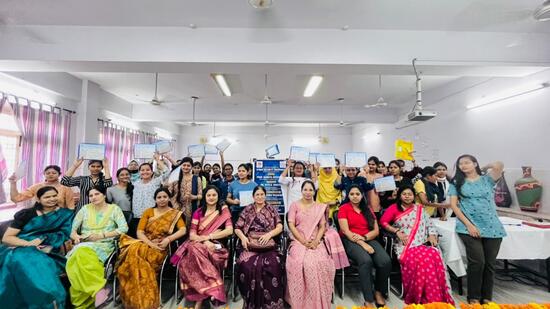
She said it is vital that efforts are made to expand the overall cyber security knowledge of the youngsters through workshops and sessions.
Prof Khare was speaking at the valedictory session of a two-day workshop on “Cyber Security Awareness — its application and implication”.
The workshop was organised for the students of the department of family and community sciences of the central varsity under financial assistance from the unassigned grants of AU.
The workshop covered different modules related to cyber security, its threats, types, cyberbullying, hacking and basic tactics of cyber security. Vibhav Srivastava and Rupal Rao from Vapsoft Technologies Pvt Ltd, Prayagraj, were the trainers of the workshop.
In the morning session, the participants were imparted knowledge about different types of hackers (grey hat, white hat and black hat hackers) and the steps to prevent hacking. They learnt various ways to protect their system against cyber predators and also measures to detect and safeguard their systems against cyber fraud, informed workshop convener Ritu K Sureka, assistant professor, department of family and community sciences.
On the first day of the workshop, the students were trained on the need and importance of cyber-security, consequences of cyber-attacks on individuals, systems and cyberspace, types of cyber threats, identifying cyber predators and ways to protect systems against them. The students were also made aware of cyber harassment and stalking on social media and identifying scamming and trolling through social media connections. “Blocking and reporting cyberbullying was also an integral part of the session,” said Priyanka Kesarwani, organising secretary and assistant professor, department of family and community sciences.
The workshop was inaugurated by Prof Shekhar Srivastava, dean faculty of Science, AU.


