
 E-Paper



CSIR-CIMAP sets up India’s first sustainable aroma cluster near Lucknow
It also demonstrated to farmers the use of innovative farming technologies to maintain stable and economic productivity levels while also protecting soil health and biodiversity


The CSIR-Central Institute of Medicinal and Aromatic Plants (CIMAP) launched India’s first of its kind ‘Sustainable Aroma Cluster’ in Bhagauli village of Barabanki, on Thursday. In the process, it demonstrated to farmers the use of innovative farming technologies to maintain stable and economic productivity levels while also protecting soil health and biodiversity.
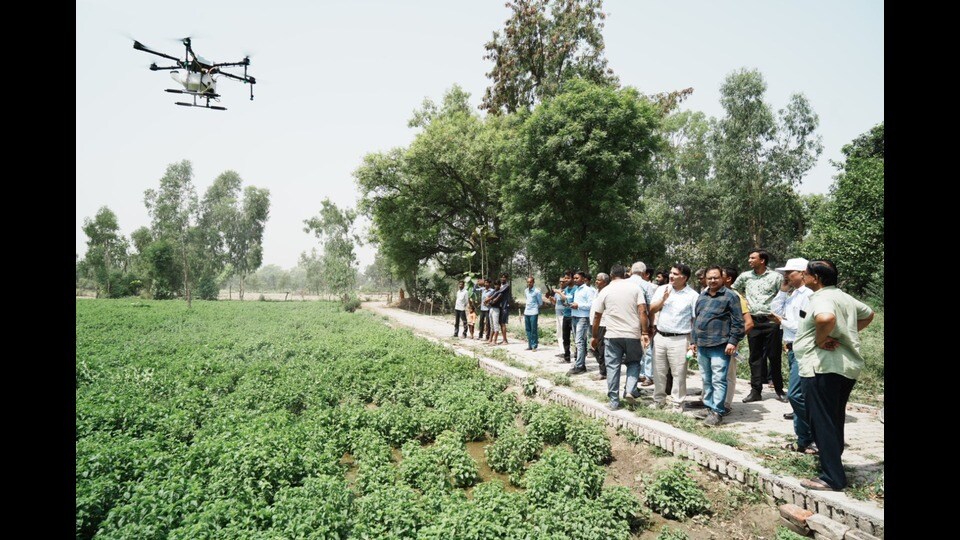
“CIMAP created a sustainable aroma cluster with support from Sant Sanganeria foundation and Ultra International Ltd on the land of 30 farmers by cultivating aromatic plants in an environmentally friendly manner. The cluster will serve as a model for the implementation of sustainable agricultural practices and will aid the country and PM Modi’s vision in meeting its zero-carbon emission targets,” said Prabodh Kumar Trivedi, director, CSIR-CIMAP while launching the cluster.
“In the cluster, CIMAP has planted a high-yielding mint variety (CIM-Unnati) that is resistant to biotic stress, such as plant pests and diseases, and tolerant to abiotic stress, such as drought, untimely rains, salinity, heat, cold, and heavy metals. Thus, the cluster will act as a model for farmers across the state and country,” he added.
CIMAP scientists also demonstrated to farmers how drones can be used to precisely and efficiently spray fertilisers and insecticides. They were shown how manual irrigation wastes water and how manual pesticide spraying harms both the individuals involved and the environment. Farmers involved in this cluster were also provided soil health cards.
Solar-powered units to extract mint oil were also inaugurated on the occasion. “The institute has used an improved agri-technique called Early Mint Technology in the development of the cluster. The technology saves 20-25% of irrigation water and reduces weed infestation. Besides, it helps in early maturity of the crop enabling farmers to have a second harvest. Farmers use new technology, farm mechanisation and chemicals for getting maximum crop yield to meet the ever-increasing demand, but it may affect soil as well as human health in the long term, Trivedi said.


