
 E-Paper



More green cover, good traffic mgmt.: Saharanpur fares better on AQI front
The AQI in Saharanpur remained between 100 to 190 in the past 10 days, while it crossed 400 in Delhi, 350 in Ghaziabad and Meerut and 250 in Shamli, Bulandshahr and Baghpat districts. Environmental experts and pollution control officials attribute the better air quality in Saharanpur to its location, large green cover, proximity with Shivalik range forests, bigger rural area and a few other factors.


MEERUT While most of the cities in the national capital region(NCR) are struggling with poor air quality due to heavy layer of smog in the atmosphere, Saharanpur ‘s air quality index has remained quite low in comparison to other neighbouring cities in the region.
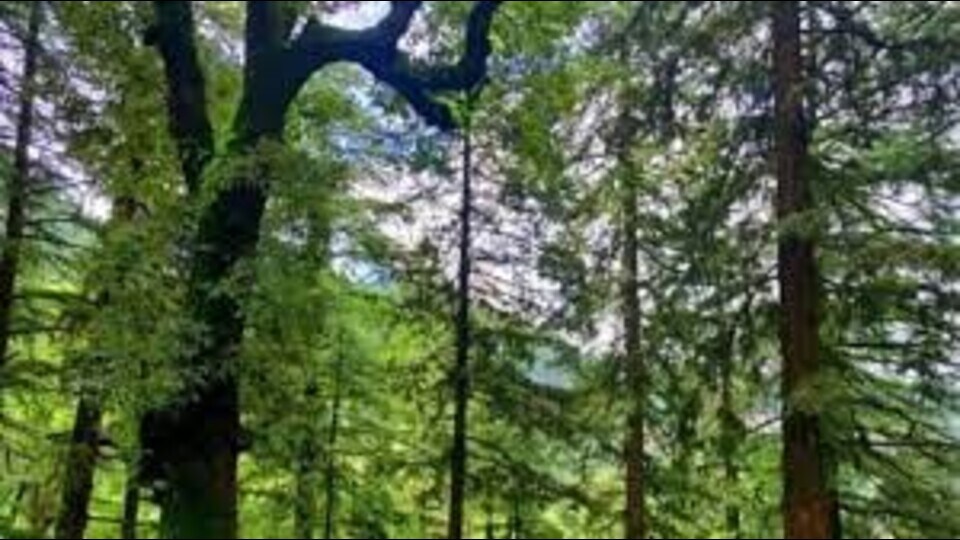
The AQI in Saharanpur remained between 100 to 190 in the past 10 days, while it crossed 400 in Delhi, 350 in Ghaziabad and Meerut and 250 in Shamli, Bulandshahr and Baghpat districts.
Environmental experts and pollution control officials attribute the better air quality in Saharanpur to its location, large green cover, proximity with Shivalik range forests, bigger rural area and a few other factors.
Saharanpur is situated on the Delhi- Dehradun highway and is nearly 150 kms from Delhi. It is also known as the gateway of Uttar Pradesh from Haryana and Uttarakhand.
Ankit Singh, regional officer of pollution control board in Saharanpur, said that the climatic condition of the district was slightly different from other adjoining districts as it was located at a little higher altitude and possessed green cover of Shivalik forest ranges.
He said that traffic management in the city was better which caused less jams and the big green cover of army’s Remount and Veterinary Core ( RVC) added more green value to the city. Singh said that the district also had less polluting units, barring a few paper industries, a distillery and sugar mills. Mining was confined to Yamuna river bed so it had limited effect on the atmosphere.
Sabir Ali Khan, patron of Saharanpur Wood Carving Manufacturers Association, said larger green cover always played a significant role in controlling pollution and Saharanpur was lucky in this regard. He said the city’s Company Garden was full of trees and spread over in a large area. “It works like lungs for the city by increasing oxygen”, said Khan.
He also appealed to his colleagues to use less domestic wood and try to switch over to imported wood. “We need to increase the green cover by planting more saplings and trees”, said Khan.
Another local resident Riyaz said that the Indian Tobacco Company (ITC) had its establishment in a large area on the outskirts with a good green cover which helped in maintaining oxygen level in the city and controlled pollution.
The district has jungles spread over 3,32,229 hectares, covering over 9 per cent of the total area . There are more than 8 lakh two and four-wheelers and more than 200 brick kilns and 50 smoke emitting units. But perhaps the large green cover helps contain pollution, so the air quality is better in comparison to other adjoining districts, say residents.


