
 E-Paper



Much awaited UP Bar Council elections begin: 333 candidates in four-phase poll
The first phase of the election is being held in districts beginning with the letters A, B and C, with advocates casting their votes on January 16 and 17.


Voting for the much-awaited four-phase election of the Bar Council of Uttar Pradesh began on Friday. A total of 25 members will be elected from among 333 candidates in the fray.
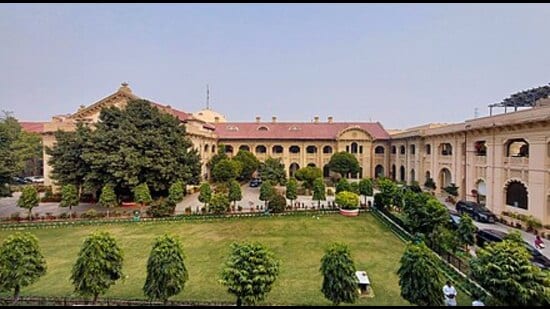
The first phase of the election is being held in districts beginning with the letters A, B and C, with advocates casting their votes on January 16 and 17. On January 16, Friday, polling commenced at 10 am and continued until 5 pm.
The second phase of voting will take place on January 20 and 21 in districts starting with the letters D to J. The third phase is scheduled for January 27 and 28 in districts beginning with the letters K to M, while the final and fourth phase will be held on January 30 and 31 in districts starting with the letters P to V.
After the completion of polling, all ballot boxes will be sent to Prayagraj by February 3. The date for counting of votes will be announced later.
In Lucknow, polling will be conducted during the third phase on January 27 and 28 at the high court campus.
Clarifying the voting process, the Bar Council stated that each advocate is entitled to vote for 25 candidates. On a single ballot paper, voters can cast votes for up to 25 candidates of their choice.
Earlier, voting was conducted only at the district level within district court complexes. This time, however, elections are being held at three levels within each district. The main polling centre has been established at the district court complex, where most advocates from the city will vote. Additionally, local booths have been set up at sub-divisional courts for the convenience of advocates.
Around 2.5 lakh voters
A total of 2,49,808 advocates holding Certificates of Practice (CoP) are authorised to vote in this election.
All polling stations will be under CCTV surveillance, and only authorised advocates will be permitted to enter the premises.
Nomination fee
The nomination fee for the Uttar Pradesh Bar Council elections is higher than that for parliamentary, legislative assembly, and presidential elections. Each candidate was required to pay a nomination fee of ₹1.50 lakh, along with an additional ₹25,000 for the voter list covering 80 districts, collected by the Bar Council.
During the campaign, lawyers are being distributed new law books, diaries, calendars, and other items. Civil court premises across the state are also covered with banners and posters.
These elections are being monitored by a high-powered committee constituted by the Supreme Court. The committee is chaired by former chief justice of the Jharkhand high court, justice Ravi Ranjan. Its members include former Allahabad high court judge SR Masuri and former Delhi high court judge Rekha Palli.
The state’s election officer is former Allahabad high court judge Arvind Kumar Tripathi, while former judge Surendra Singh has been appointed as the observer.
Districts where voting is being held on January 16–17:
Agra, Aligarh, Allahabad, Ambedkarnagar, Amethi, Amroha, Auraiya, Azamgarh, Baghpat, Bahraich, Ballia, Balrampur, Banda, Barabanki, Bareilly, Basti, Bhadohi, Bijnor, Budaun, Bulandshahr, Chandauli, and Chitrakoot.


