E-Paper



UP aims to become AI infra hub with 10 GW data centre plan by 2030
The State Transformation Commission (STC) has shortlisted one company to undertake a detailed survey for identifying suitable locations after presentations by three global consulting firms. In the first phase, the state plans to develop 6 GW of capacity, requiring an estimated investment of around ₹1 lakh crore per GW.

 Prefer HTon Google


Uttar Pradesh has begun work on an ambitious plan to develop 10 gigawatts (GW) of data centre capacity by 2030. The state will first identify and secure suitable locations before inviting private developers, a strategy aimed at accelerating investments and positioning UP as a major hub for artificial intelligence and cloud infrastructure.
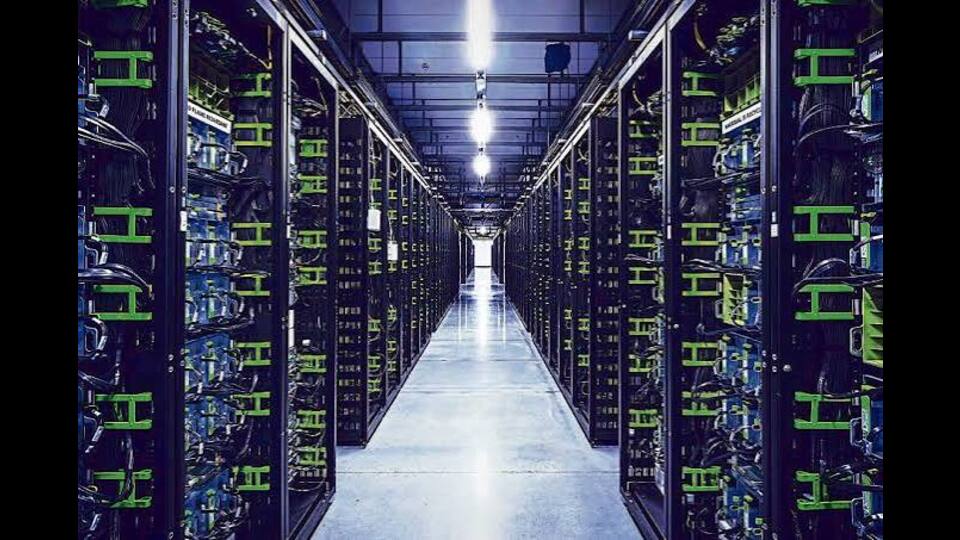
The State Transformation Commission (STC) has shortlisted one company to undertake a detailed survey for identifying suitable locations after presentations by three global consulting firms. In the first phase, the state plans to develop 6 GW of capacity, requiring an estimated investment of around ₹1 lakh crore per GW.
Unlike the conventional model where private developers first identify land before preparing project proposals, UP has decided to complete the site-selection process itself, a state government official informed. Officials believe this will eliminate one of the most time-consuming stages of data centre development and make projects investment-ready.
Three global consulting firms, McKinsey & Company, Kearney and Boston Consulting Group (BCG), submitted proposals on identifying suitable locations. The STC is reviewing the presentations before finalising the survey agency, officials said.
“Identifying the most suitable site for a data centre is a highly technical and time-consuming exercise involving extensive geographical and ecological assessments. By completing this process ourselves, we can significantly reduce project timelines and make it easier for investors to establish facilities in the state,” said Manoj Singh, chief executive officer, STC.
The selected agency will carry out geotechnical investigations to determine whether the soil can support massive data centre structures designed to operate continuously for decades. The survey will also assess long-term availability of electricity and water, two critical requirements for hyperscale data centres.
Officials said data centres consume large amounts of electricity while water is required primarily for cooling servers, processors and networking equipment that generate enormous heat during continuous operations.
The state estimates UP contributes nearly 20% of India’s total data demand, officials said. Existing data centre capacity in the state is about 350 MW, besides several smaller facilities operating across districts. Based on projected growth in artificial intelligence, cloud computing, healthcare, education, manufacturing, scientific research and digital public services, the state estimates it will require nearly 10 GW of capacity by 2030.
Notably, India currently has about 1.7 GW of installed data centre capacity, with Maharashtra accounting for nearly 600 MW. Around 1.8 GW of additional capacity is under development across the country.
Officials said India generates nearly 20% of the world’s data but accounts for only about 1.4% of global data centre capacity, indicating substantial scope for expansion. They added that greater domestic capacity would also support data localisation requirements by enabling data generated in India to be stored within the country.
Several projects are already in the pipeline in UP, according to UP government officials. A 10 MW data centre is under construction in Lucknow. In Noida, separate facilities are planned through collaborations involving the Adani Group and Google, and Microsoft. Another project is proposed in Greater Noida by the Hiranandani Group in collaboration with the European Organisation for Technical Assessment (EOTA).
Officials estimate that developing 6 GW of hyperscale AI data centre capacity could require six or more campuses, depending on the availability of power and water, and more than 3,000 acres of land.