E-Paper


Henry Ford’s Fair Lane once sat on more than 2,000 acres; after his death, the Michigan estate became a historic landmark
Henry Ford and his wife Clara lived at Fair Lane in Dearborn until their deaths. The estate later became a National Historic Landmark.

 Prefer HTon Google


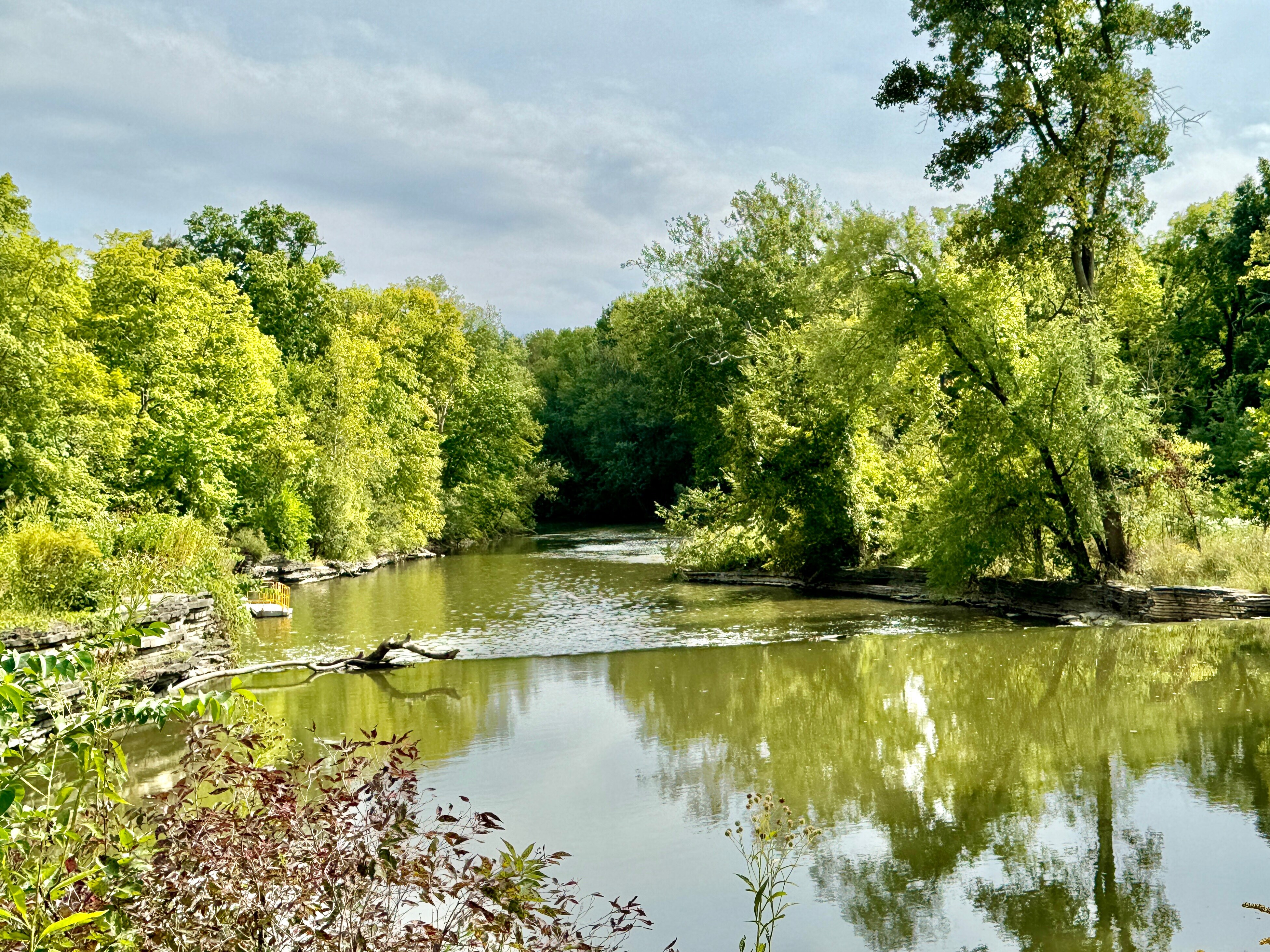
By the time Henry Ford started purchasing land around the Michigan side of the Rouge River in the early 20th century, he was creating a large-scale setting for his country home. He owned more than 2,000 acres by 1909, surrounding the area known today as Fair Lane in Dearborn. It comprised forestland, farmland, and river land. The National Park Service nomination for the property describes it as a natural bird and game sanctuary for the Ford family.

The area comprising the Fair Lane home and gardens during the Fords' residence covered approximately 1,260 acres, according to the National Park Service. Of this area, 1,180 acres consisted of woodlands, farms, and orchards, while 60 acres were devoted to gardens and landscaping and 17 acres to lawns.
Mansion with surrounding gardens and engineering
The construction of the primary mansion began in February 1914 and was completed in 1915. The Fords moved into the house in 1916. The architectural plans were initially drawn by the Chicago-based architectural firm of Van Holst and Fyfe, with architect Marion Mahony Griffin contributing to the Prairie-style design. However, disputes led to the termination of the relationship, and the Fords hired Pittsburgh architect William H. Van Tine to revise the plans. The final construction combined elements of the English and Scottish Baronial styles with Prairie-style architecture.
Constructed from Indiana limestone and concrete, the two-story mansion measured 200 feet in length and contained 31,770 square feet of floor space. It had 56 rooms, 15 bathrooms, and eight fireplaces. The library could store more than 4,000 books, while the sun porch served as the favorite dining and guest-receiving room of Henry and Clara. They were fond of watching birds, which is why a telescope and bird manuals were kept in the room, according to the historic property records.
The house was one of many structures Ford built on the estate. The four-level powerhouse, completed in 1915, had two water-powered generators and supplied electricity to the estate. Other structures included a garage, Ford's laboratory, servants' quarters, a pony barn, a potting shed, a greenhouse, and underground cellars. The powerhouse was connected to the mansion through a passage, and Thomas Edison, a close friend of Ford, laid its cornerstone in August 1914.
The gardens and grounds of the estate were designed by landscape architect Jens Jensen from 1914 to 1920. The estate had six main gardens: peony, iris, English, blue, trail, and rose. Additionally, the estate included a rock garden, an artificial lake, and a hillside grotto. The 2.5-acre rose garden was created in 1925 and 1926 with around 12,000 plants in 350 varieties. In the early 1950s, the garden had 11,500 roses in 300 varieties, including hybrid tea, climbing, and pillar roses.
Ford family house to historic landmark
Henry Ford passed away at Fair Lane in 1947, and Clara lived at the estate until she died in 1950. On December 17, 1956, Ford Motor Company donated 210 acres of the estate and $6.5 million to the University of Michigan to establish an educational center in Dearborn. The Dearborn Center opened on September 28, 1959, initially offering programs in engineering and business administration. The university retained the mansion for institutional use and operated it as a conference center. Most of the Ford family's furnishings and collections were moved out of the house.
The Michigan Economic Development Corporation states that Fair Lane has been listed on the State Register of Historic Sites since 1958. In 1966, the estate received National Historic Landmark designation and was added to the National Register of Historic Places. Its historical records identify William H. Van Tine as the architect responsible for the mansion's revised design and Jens Jensen as the landscape architect who designed the grounds.
According to the Fair Lane Estate's account of the property's history, the University of Michigan–Dearborn operated the estate and its 72 acres as a museum, restaurant, and event center until 2010. In 2013, ownership of the site was transferred to the nonprofit Henry Ford Estate, which began restoring the buildings, gardens, and other elements of the site. The organization's stated restoration goal is to bring the property closer to its appearance during the period when the Fords lived there.
Even though the original estate covered thousands of acres, the remaining structures still reflect how the Fords lived there. From the mansion to the powerhouse, gardens, and other buildings, the property provides evidence of the use of the estate as a family residence, an engineering lab, and a landscape site.