E-Paper



Joshua Wong, face of Hong Kong's pro-democracy movement, sentenced to another 10 years in jail
Joshua Wong’s 10-year prison sentence marks another major development in Hong Kong’s crackdown on pro-democracy activists, following years of protests.

 Prefer HTon Google


Hong Kong pro-democracy activist Joshua Wong has been sentenced to 10 years in prison for conspiring to collude with foreign forces. His latest sentence comes just as Wong was set to be released in January 2027.
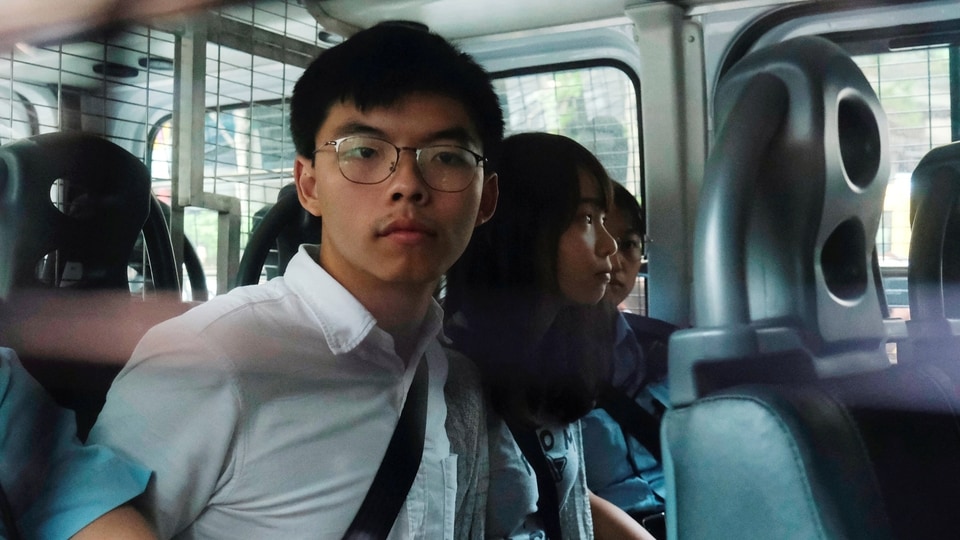
The 30-year-old was convicted under the national security law imposed by Beijing on Hong Kong. The sentence was handed down by the High Court on Thursday and it is one of the harshest punishments imposed under the law.
Wong had already spent almost six years behind bars and was expected to be released in January after serving an earlier sentence.
Wong pleaded guilty to the charge this year; however, the court rejected the defence's argument that his role in the alleged conspiracy was limited. Judge William Tam said the offence was serious, but reduced the actual sentence of 13 years by three years after considering the relevant factors.
The case is part of a wider crackdown on pro-democracy activists following the mass protests that shook Hong Kong in 2019. Wong was one of the most recognisable faces of the movement and gained international attention for his role in student-led campaigns against the authorities.
Also read: Joshua Wong, Hong Kong pro-democracy poster boy facing longer prison stint
Who is Joshua Wong?
Joshua Wong was born to a Christian middle-class family in 1996. He grew up during the political transition period of Hong Kong. Wong was very young when the territory was handed over to China.
His involvement in activism began at an early age. At 13, he joined protests against plans for a high-speed rail link connecting Hong Kong with mainland China. By the age of 15, he had become a prominent student activist.
In 2012, Wong led a campaign against the introduction of a pro-China national education curriculum in Hong Kong schools. The movement, organised through the student group Scholarism, drew 120000 people to the government headquarters. Some protesters also went on hunger strikes. The government eventually shelved the proposed curriculum.
Wong later became internationally known for his role in the 2014 Umbrella Movement. He gave speeches and public appearances which made him one of the leading faces of the campaign.
He also co-founded the political party Demosisto in 2016, which called for self-determination, arguing that Hong Kong residents should have a say in deciding the city's political future.
Unlike some other activists, Wong did not openly demand independence for Hong Kong. Instead, he continued to advocate political reform and greater autonomy.
Background of the Umbrella Movement
The Umbrella Movement emerged in 2014 as thousands of people took to the streets of Hong Kong to demand greater democracy and the right to directly elect the city's leader.
Protesters occupied major roads for 79 days in a campaign also known as Occupy Central. They used umbrellas to protect themselves from police pepper spray, giving the movement its name.
Wong became one of its most visible representatives, alongside fellow student leaders Nathan Law and Alex Chow.
However, the campaign failed to secure concessions from China's leadership or Hong Kong's pro-Beijing authorities.
The movement also came at a personal cost for its leaders. Wong and several other activists faced prosecutions for their participation in the demonstrations.
From street protests to international lobbying
Wong continued his political activities after the 2014 protests. During the large anti-government demonstrations in 2019, he played a less prominent role on the streets but sought support from overseas governments and politicians.
He met political leaders in countries including Taiwan, Germany and the United States. He also urged American lawmakers to support legislation concerning Hong Kong's political freedoms and called for sanctions against China.
Beijing criticised his international outreach, accusing him of seeking foreign interference.
The 2019 demonstrations, which were large and at times violent, became a turning point in Hong Kong's political landscape. Beijing imposed a national security law on June 30, 2020, saying it was necessary to restore stability and order.
The legislation led to the imprisonment of several former opposition lawmakers and activists. Demosisto was disbanded after the law came into effect.
Wong had earlier written that he would "continue to defend my home -- Hong Kong -- until they silence me and eliminate me from this land".
Also read: Azam Khan arrested by ED after release from jail remanded in 14 days judicial custody
Years behind bars and a second national security conviction
Wong has faced repeated arrests and prison sentences for his activism. In 2024, he received a four-year-and-eight-month sentence in a separate national security case linked to his role in an unofficial primary in 2020.
In 2025, prosecutors brought another case against him, alleging that he had conspired with exiled activist Nathan Law and others between July and November 2020 to seek foreign sanctions, a blockade or other hostile actions against Hong Kong or Chinese authorities.
The court considered Wong's interviews with foreign media, social media posts and contacts with overseas officials as part of the case. He pleaded guilty to the charge of conspiring to collude with foreign forces.
His latest 10-year sentence means he will remain in prison well beyond the release date he had expected.
Also read: Kashmiri Pandit activist arrested on cyber terror charges
International criticism and support
Wong's sentencing has drawn criticism from international figures and human rights organisations.
US Representative John Moolenaar, chairman of the House Select Committee on China, called the collusion charge against Wong “baseless” and urged his immediate release.
Amnesty International’s Deputy Regional Director Sarah Brooks said the sentence showed how the national security law had become “a tool to punish dissent rather than to genuinely protect national security.”
However, Hong Kong police defended the sentence. Chief Superintendent Steve Li of the National Security Department called it “proper” and said he would discuss possible next steps with the Department of Justice.
Wong's imprisonment has also changed his relationship with supporters and fellow activists. Friends and former colleagues say he has continued reading, taking university courses and learning guitar while in prison.
His friend Louis Lee, who visits him regularly, said Wong had remained curious and continued trying to understand the world around him. In a letter written in September, Wong reflected on the fear he had experienced in recent years and referred to the Bible verse: "There is no fear in love."
As he was escorted out of the courtroom after Thursday's hearing, Wong waved and nodded to supporters. Some had waited outside for two days to secure a place in the courtroom. They were heard saying: "We'll be waiting for your release."
(With inputs from agencies)