
 E-Paper



U.P. to introduce new MSME policy soon: Minister
The proposed policy, he said, will help in setting up of new industries in the state and facilitate ease of doing business.


The micro, small and medium enterprises (MSME) minister Rakesh Sachan said that the state government will introduce a new MSME policy soon.
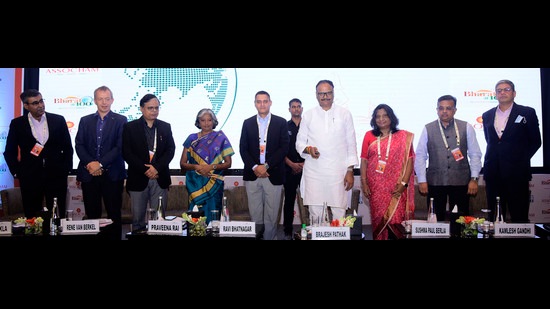
The proposed policy, he said, will help in setting up of new industries in the state and facilitate ease of doing business.
“Besides, a big loan fair would be organised across the state on June 30. Loans will be made available to one-lakh handicraftsmen, artisans and small entrepreneurs. During the last five years 96 lakh entrepreneurs were given loans worth ₹2.5 lakh crore in the state,” he said at the two-day Uttar Pradesh MSME seminar organised by ASSOCHAM on Monday.
He said the state government is taking several steps for the convenience and encouragement of small entrepreneurs and investors. “This includes no objection certificate (NOC) being issued within 72 hours to entrepreneurs investing in the state,” he added.
‘Promote Bio Indigo to reduce carbon footprints’
Shah said this at the two-day Uttar Pradesh MSME seminar organized by ASSOCHAM in Lucknow.
“We have Bio Indigo as a sustainable natural dye option. If we want to reduce the carbon footprint, then Bio Indigo has to be promoted. Instead of using a kilogram of synthetic indigo, using Bio Indigo, the carbon footprint can be reduced by up to 10 kilogram in less cost and effort. Bio indigo has been created to meet the challenges due to which the textile industry is facing increasing pollution levels,” he added.
He also described Bio Indigo as a future cash crop. “If farmers cultivate Bio Indigo, then their income per acre will be much higher,” he said and said the Centre must provide subsidies on natural dye to make it cost effective. “This can reduce carbon footprint impact from textile processing and reduce import of synthetic indigo from China. It will help provide employment to large numbers of farmers,” he added.
“To promote handloom and handicraft like Chikan and zardozi, we must upgrade them to meet international requirements. That will be possible if the government sets up special facility clusters to provide eco-friendly textile processing,” he added.


