E-Paper



UPSCR proposes to transform 19 km of Gomti into blue-green corridor
The project has been divided into two phases between 2027 and 2035. Phase I (2027-2032) proposes the development of an 11.5-km City Forest along Rashtra Prerna Sthal between NH-230 and Acharya Narendradev Marg at an estimated cost of ₹1,100 crore. Phase II (2030-2035) envisages a 7.5-km Wellness and Sustainability Park along the Green Corridor between NH-24 and the Outer Ring Road at a cost of ₹700 crore.

 Prefer HTon Google


A nearly 19-km stretch of the Gomti could, over the next decade, unfold as a continuous landscape of city forests, shaded river promenades, ceremonial ghats, boating jetties, sculpture gardens, biodiversity parks, wellness zones and eco-tourism destinations under a ₹1,800 crore waterfront rejuvenation project proposed in the Uttar Pradesh State Capital Region (UPSCR)-2051 vision document.
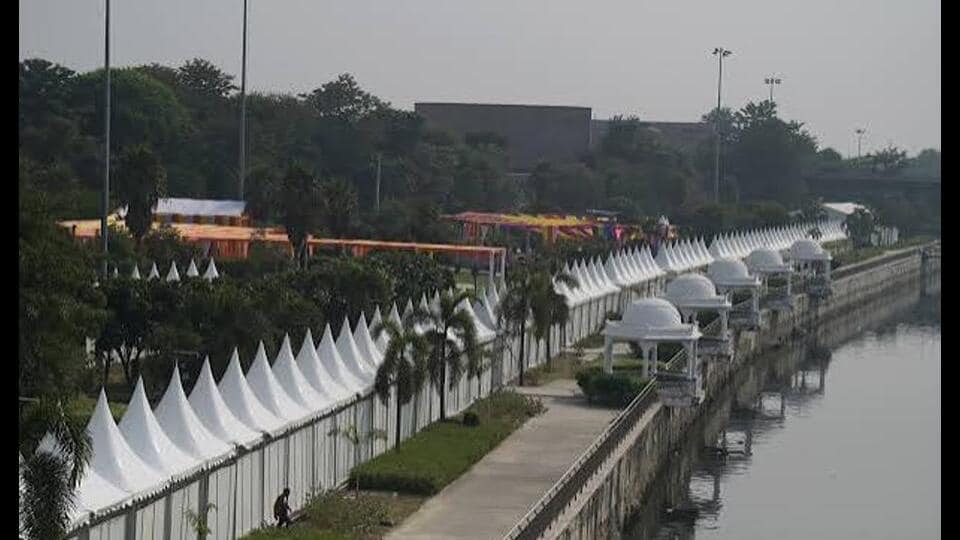
The project seeks to transform the Gomti into Lucknow’s ecological, cultural and recreational spine while extending riverfront development beyond the existing Gomti Riverfront.
The project has been divided into two phases between 2027 and 2035. Phase I (2027-2032) proposes the development of an 11.5-km City Forest along Rashtra Prerna Sthal between NH-230 and Acharya Narendradev Marg at an estimated cost of ₹1,100 crore. Phase II (2030-2035) envisages a 7.5-km Wellness and Sustainability Park along the Green Corridor between NH-24 and the Outer Ring Road at a cost of ₹700 crore.
“Rather than treating the riverfront as a standalone beautification project, the vision is to weave forests, biodiversity parks, heritage spaces and wellness zones into one continuous landscape along the Gomti,” LDA officials said on condition of anonymity, as the proposal is still under consideration.
The blueprint includes biodiversity parks, city forests, green buffers, eco-trails and water quality improvement measures alongside public spaces, tourism infrastructure and recreational facilities, with ecological restoration forming the foundation of the proposed riverfront.
The first phase is designed as a cultural and ecological waterfront, featuring heritage promenades, ceremonial ghats, cultural plazas, sculpture gardens, exhibition spaces, interactive pathways, memory walks, river decks, boating facilities, heritage markets, mela grounds, biodiversity parks, performance arenas and a floating hotel. It also proposes an arboretum, an aquaculture centre and ornamental gardens to strengthen ecological conservation while creating new attractions along the river.
The second phase shifts the focus towards wellness and recreation. Botanical gardens, wellness parks, yoga courts, indoor sports arenas, open playfields, eco-trails, stargazing zones, community parks, glamping sites, entertainment zones, retail-commercial spaces and landscaped river promenades have been proposed along the Green Corridor, creating a continuous network of public spaces beside the river.
According to the proposal, no land acquisition will be required for either phase. Each phase has been planned with a 36-month implementation timeline, allowing construction to overlap between 2030 and 2032. The Lucknow Development Authority (LDA) will serve as the nodal implementing agency in coordination with the Lucknow Municipal Corporation (LMC), which will oversee sports facilities and public space development, while the department of fisheries will be responsible for water pollution control and aquaculture-related components.
The proposal recommends financing the project through a mix of public-private partnerships (PPP), leasing models, social eco-bonds and SASCI funding, reducing dependence on conventional government funding.
If approved, the waterfront rejuvenation project would become one of the largest urban river restoration initiatives proposed under the UPSCR-2051 framework, creating an integrated ecological, cultural and recreational corridor while shaping Lucknow’s long-term urban growth over the next two decades.