
 E-Paper



Uttar Pradesh’s mini Kashi awaits its place in the sun
Every year, the rural belt of Bateshwar comes to life before Diwali during October-November when it hosts the second biggest cattle fair after the one at Sonepur in Bihar.


Known among locals as mini Kashi because of 101 Shiva temples on Yamuna’s banks here, demand is growing to develop Bateshwar town in Agra district as a tourist destination.
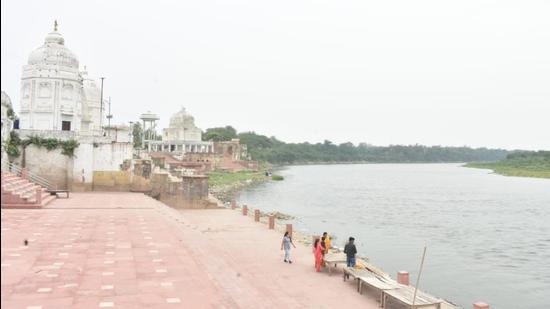
A pilgrimage centre and also the paternal village of former prime minister late Atal Bihari Vajpayee, Bateshwar is surrounded by the Chambal ravines, once notorious for dacoit gangs and is situated about 70 kilometres from the Taj Mahal in Agra city. Some illustrious residents of the town say development of the long riverfront and highlighting Bateshwar’s significance in India’s cultural history will help place it prominently on the tourism map.
Former Uttar Pradesh cabinet minister Raja Mahendra Aridaman Singh, who belongs to the Bhadawar royal family, recently wrote to chief minister Yogi Adityanath seeking development of the riverfront. Bateshwar is part of the Bah assembly constituency, which Singh has represented six times. His wife Rani Pakshalika Singh is the sitting MLA from Bah.
Not just that, Maharaja Badan Singh, ancestor of Aridaman Singh, had diverted the flow of Yamuna by constructing a dam here and got Shiva temples built at the ghats in 1646. With the modification in its course, the river took the shape of a crescent moon in Bateshwar, much like Varanasi, which is about 590 kilometres away in eastern Uttar Pradesh.
His successors maintained the Yamuna ghats, which have 101 Shiva Temples in a series.
“Some of the ghats are in quite a bad shape and proper repair leading to the development of the riverfront is the only solution. There are some repairs going on and the tourism department has forwarded a proposal for a better riverfront at an estimated cost of ₹20 crore,” said Aridaman Singh.
His letter to the CM, written in June, he said Bateshwar’s glory and cultural heritage could be revived with the proposed riverfront, making it a major destination in the area besides the Taj Mahal. “Revival of maha-aarti at the riverfront would be an added attraction,” he wrote.
Every year, the rural belt of Bateshwar comes to life before Diwali during October-November when it hosts the second biggest cattle fair after the one at Sonepur in Bihar. Buyers come even from south India and thousands of devotees take a dip in the Yamuna on the occasion of Kartik Purnima, which marks the culmination of the festivities.
“The fair at Bateshwar dates back to 300 BC when the Mauryas ruled the country and transportation was mainly through waterways. Bateshwar was a major seat of trade and emerged as a major market of the cattle trade. Even the British army used to wait for the Bateshwar fair to buy high-quality horses. Till date, Bateshwar fair has the best market for horses just like the Pushkar fair is considered the best for camels,” said Ram Pratap Singh, a resident of the nearby town of Jarar and the Uttar Pradesh coordinator for INTACH (Indian National Trust for Art and Cultural Heritage).
Former Tourism Guild president Arun Dang said, “We failed to project Bateshwar’s rich heritage with the Shiva temples on the Yamuna riverbank. The region is known as the birthplace of Karna who was born to Kunti. It is land of the Ansuiya, Shabri and Neminath, Lord Krishna’s cousin, who went on to become a Jain Tirthankar. There is an important seat of the Jain religion at Shoripur near Bateshwar. In recent times, Bateshwar came to be known as the parental village of former prime minister Atal Behari Vajpayee but nothing seems to have helped Bateshwar get its due.”


