
 E-Paper



Majha farmers up area under basmati by 20% in hope for better prices
Last year, farmers had fetched between Rs 2,500 and 2,800 per quintal; most say, this year they expected between Rs 4,000 and Rs 5,000 per quintal on higher export demand


Amritsar Farmers in the Majha region, especially from Tarn Taran, Gurdaspur and Amritsar districts, have increased the area under basmati by 20% over last year, hoping to see remunerative prices this year.
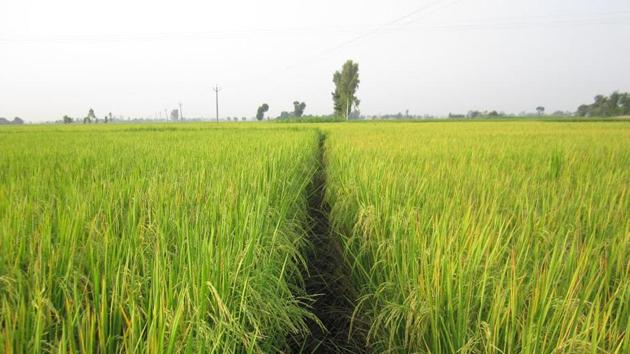
Exporters and officials of the agriculture department are optimistic that basmati will fetch a good prices with demand on exporting countries on the rise, as these want to stock up. Basmati has been transplanted on 2.6 lakh hectare this year and 2.2 lakh hectare in 2019.
“Farmers hope to get remunerative prices this year as the exports to Iran, which is the largest importer of India’s branded and un-branded aromatic rice, are back on track after initially facing roadblocks as US had imposed trade sanctions,” said Kisan Sangharsh Committee (KSC)’s state convener Kawalpreet Singh Pannu.
Last year, farmers had fetched between Rs 2,500 and 2,800 per quintal; most say, this year they expected between Rs 4,000 and Rs 5,000 per quintal.
Agriculture department official claim they had encouraged farmers to increase the area under basmati, as the crop consumes lower water than under varieties. In Amritsar, the area under basmati has dipped 7% from 1.4 lakh hectare in 2019 to 1.3 lakh hectare this year.
Besides Majha, the basmati varieties, 1121 and 1509, is also cultivated in some parts of Hoshiarpur, Muktsar and Fazilka. In Haryana, basmati is largely grown in Karnal and its adjoining districts. Punjab and Haryana collectively contribute to 75% of the exports to various countries including Iran, Saudi Arab, Iraq, Kuwait etc.
Pannu added, “The government should fix the minimum support price (MSP) for the basmati to encourage farmers more. Without MSP, farmers have been fetching only between Rs 2,500 and Rs 2,600 per quintal. This does not even cover the cultivation expenses.”


