
 E-Paper



Mumbai: 16 years on, a father refuses to let the truth be buried
A Nalasopara schoolgirl’s death, long contested as rape and murder by her father, will now be probed by the CBI


MUMBAI: Sixteen years ago, Sneha Patil (name changed), an eighth-grade student from Nalasopara, went on a school picnic to a hilltop temple in the Tungareshwar reserve in Vasai east, not far from home. Of the 150 children on the excursion, she was the only one who didn’t return.
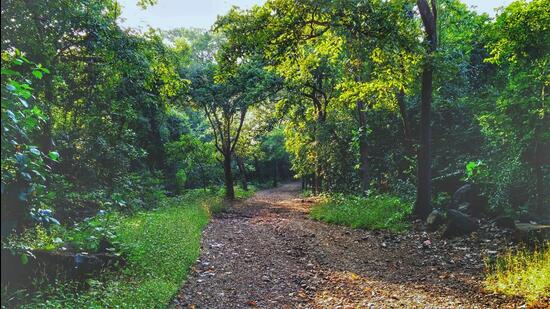
Sneha’s lifeless body was found some distance from the picnic spot, naked, on a rock by a stream. To this day, her parents are still searching for answers about their daughter’s death.
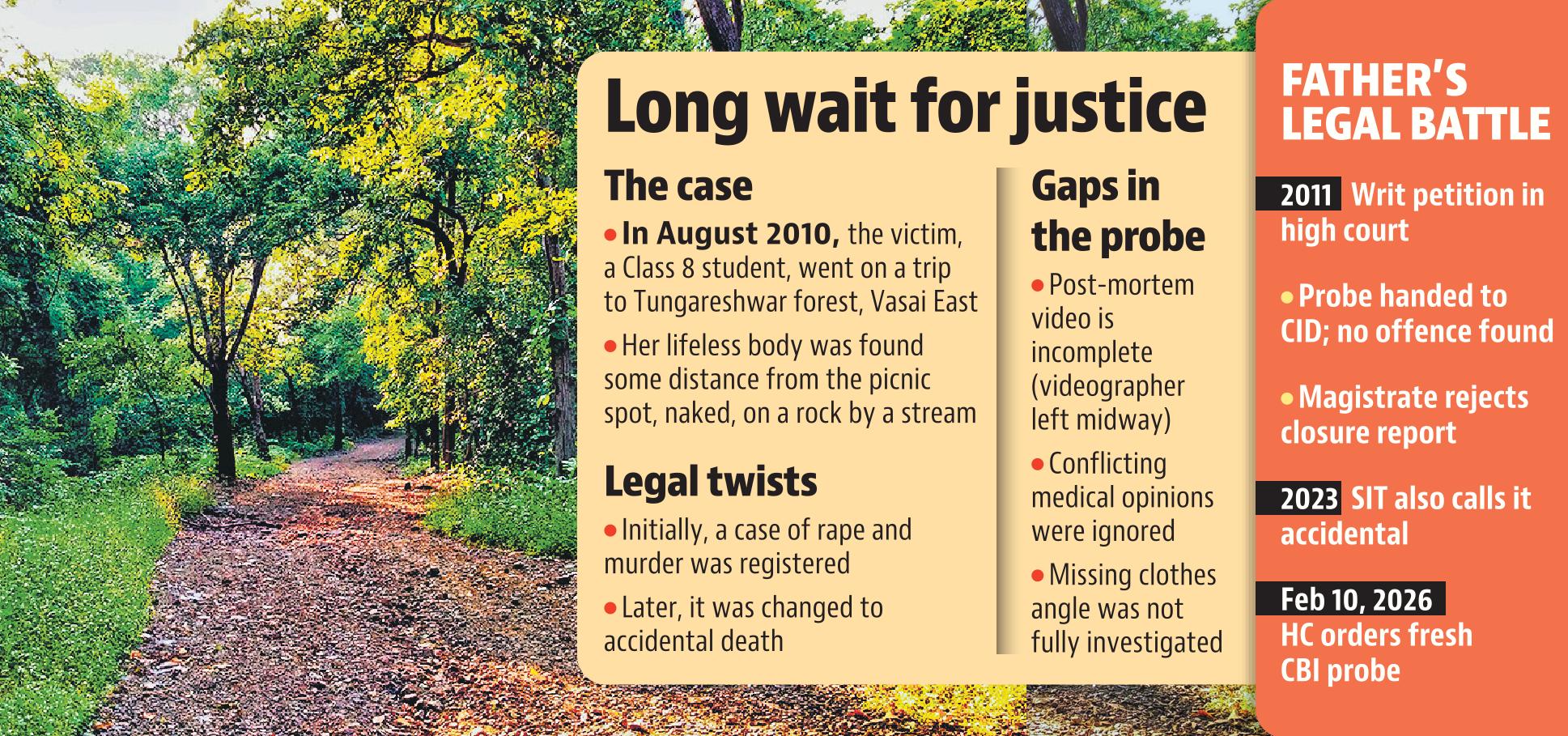
While her death was initially recorded as a possible rape and murder, various police agencies subsequently insisted it was accidental. One of the glaring loopholes in the investigation is the opinion of a panel of doctors, who delivered an “accidental” verdict after viewing an incomplete video recording of the post-mortem. The recording had been interrupted as the wedding photographer hired to film the procedure felt squeamish, switched off his camera midway, and left the room.
“I have been fighting to honour my daughter,” says Rakesh Patil, an autorickshaw driver from Nalasopara. Now there’s a new ray of hope. On February 10, the Bombay High Court ordered the Central Bureau of Investigation (CBI) to conduct a fresh investigation into Sneha’s death, pointing to loopholes in the investigation.
Last Day
On August 26, 2010, Sneha, a student of Holy Cross school in Nalasopara, came home excited about her class picnic. At first, her parents were reluctant to send her, worried for her safety, but agreed to let her go as the children’s attendance was linked to marks.
Thrilled, Sneha packed her backpack with an extra set of clothes just in case she got drenched in the rain. Her father gave her ₹100 ( ₹80 as the picnic fee and ₹20 for snacks).
The next day, 150 school children set out in two buses for Tungareshwar, accompanied by four teachers, including one male teacher. The hilltop temple, surrounded by waterfalls and forested land, is a popular picnic spot and particularly beautiful in the rains. There is no sign of habitation nearby, just a dharamshala visited by holy men and devotees.
After lunch at the dharamshala, the teachers rested and the students were told to play. Instead, according to the statements of teachers and students, Sneha and four other female classmates left the group to trek downhill.
At 3.30pm, when the teachers assembled the students before heading for the buses, they found Sneha missing. During a search, a male passerby mentioned seeing a girl’s body on a rock by a stream, according to the police report.
Sneha’s body was found lying on a large rock, 3km from the picnic spot. There were no visible injury marks or bruises. Police were notified and a constable on patrol duty arrived at the scene. He photographed the body with his Nokia mobile phone.
Based on preliminary information, an accidental death report was registered at the Manikpur police station in Vasai west.
At around 6pm, police broke the news to Rakesh Patil over the phone.
Autopsy at PHC
The post-mortem was performed the next day, at the nearby primary health centre (PHC) at Navghar. It was performed by a panel of three doctors and recorded, as is the requirement, by a videographer arranged by the then superintendent of police, Vishwas Nangre Patil.
“The videographer was a wedding photographer, who couldn’t bring himself to witness the autopsy. So he switched off his camera midway and left the room,” says Yogesh Rawool, advocate for Shena’s father, whose quest for justice has involved years of litigation.
The autopsy report noted the possibility of sexual assault but a vaginal swab revealed no male DNA. There was “no amplifiable DNA” obtained, the report noted. The cause of death was recorded as “haemodynamic shock due to head injury”.
Based on the post-mortem report, police registered a case under Sections 302 (murder) and 201 (causing the disappearance of evidence or giving false information to protect an offender) of the Indian Penal Code against an unknown person. Section 376 (rape) of the IPC was added to the FIR three days later. This was no longer a case of accidental death.
But the investigation took a twist when police sought the opinion of a panel of doctors from the government-run Sir JJ Group of Hospitals. Their verdict: there was no evidence of sexual assault, and the head injuries could have resulted from the body being in the water, where the skull could have knocked against rocks.
Their opinion was based on photos taken during the post-mortem and the incomplete video recording by the wedding photographer. The autopsy report was ignored. The FIR was amended, once more, recording Sneha’s death as accidental.
Turning to the law
“At this point, Rakesh felt they were being deceived by the police,” said Dhanajay Gawde, a local social activist in Vasai, who introduced him to Rawool.
In 2011 Patil filed the first of two writ petitions in the Bombay High Court, challenging the FIR. The court noted that the prosecution could not explain the injuries to the genital area of the deceased as recorded in the autopsy report. It ordered that the case be investigated by the state crime investigation department (CID).
When the CID too stated that no offence had been committed, Patil approached the court again, seeking a fresh investigation. The court dismissed his plea but allowed him to challenge the CID’s report, filed in a lower court. When he did, the magistrate rejected the investigating officer’s closure report.
Armed with the lower court’s order, Patil approached the high court once more but his petition was taken up for hearing only five years later, in 2023. In an order dated July 24, 2023, the court noted that a Special Investigation Team (SIT), like earlier police agencies, had concluded that Sneha’s death was accidental.
“The post-mortem clearly indicated sexual assault and yet none of the police investigating agencies probed the offence from the perspective of possible rape with murder. From day one, the police regarded it as an accidental death,” said Rawool. “Sneha’s body was found on a rock three feet above the stream. How did it get there? It’s all too suspicious,” he said.
Then, on February 10, Patil felt a wave of vindication as the Bombay High Court transferred the case to the CBI. “…we find that there are too many loose ends in the investigation and they (police) proceeded on the only premise of accidental death. They had not even considered the serious possibility of the offence being of rape with murder. No investigation was carried out from that angle at all. Not finding of the clothes on the dead body is also an important aspect which needs to be investigated seriously. Track pant worn by her was found, but the other clothes were not recovered,” the court noted.
“…though a long time has passed, to secure ends of justice for the victim and her family, it is necessary that all these aspects are investigated thoroughly by an independent agency,” the court added.
After 16 long years, it was the validation Sneha’s parents were looking for. “We just want the truth, long hidden by the police, to come out,” says Patil.

Stay updated with all the Breaking News and Latest News from Mumbai. Click here for comprehensive coverage of top Cities including Bengaluru, Delhi, Hyderabad, and more across India along with Stay informed on the latest happenings in World News.


