
 E-Paper



18 years on, HC begins hearing 7/11 blast death confirmation pleas and appeals
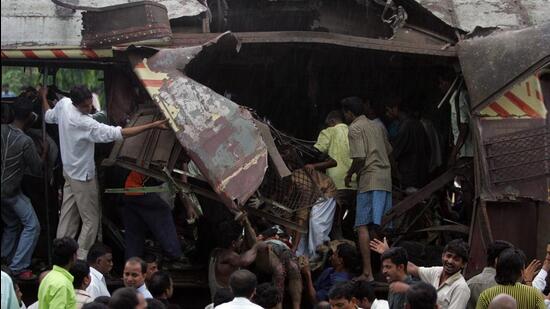
The blasts occurred during the rainy season. Limbs and body parts were scattered and blood was everywhere at the incident spots. Bags and luggage of passengers were dispersed all around. The blast was so intense that the sides of the trains blew up, said Raja Thakare, special public prosecutor


MUMBAI: Eighteen years after seven powerful, sophisticated explosive devices ripped apart first-class compartments of local trains on the Western Line, killing over 200 people and injuring 829 others, the Bombay high court (HC) on Monday began hearing the death confirmation pleas and appeals filed by various accused convicted in the serial blast case.
The special bench of justice Anil Kilor and justice Shyam Chandak was constituted following an application by Ehtesham Siddique, one of the convicts sentenced to death, who sought an early hearing of the matters, through his lawyer, advocate Yug Chaudhry.
The bench directed those who are lodged in various prisons across Maharashtra, be produced virtually during the hearing, which will be held every day during the morning session of the court.
Senior advocate Raja Thakare, who was appointed as a special public prosecutor for the case in September 2023, summarised the events leading to the appeal on Monday.
Detailing the severity of the terrorist attacks on July 11 2006, Thakare said the seven blasts occurred within the span of six minutes in different suburban trains on the Western Line. The first blast rocked Matunga, followed by Mahim, Bandra, Khar subway, Jogeshwari, Borivali, and Mira Road. He said Initially, seven different cases were registered with the local railway police. Given the gravity of the offence, the state decided to transfer the cases to the Anti-Terrorism Squad (ATS) in July 2006. “The blasts occurred during the rainy season. Limbs and body parts were scattered and blood was everywhere at the incident spots. Bags and luggage of passengers were dispersed all around. The blast was so intense that the sides of the trains blew up. Among the injured were people in passing trains and passengers waiting on platforms. Out of panic, people jumped and lost their lives,” said Thakare adding that the primary priority on the day was to transport the victims to hospitals.
Thakare also stated that there were six witnesses whose evidence could be considered direct. “The accused were members of the banned organisation Students Islamic Movement of India (SIMI), and there were three witnesses to the conspiracy. Some of the accused had travelled to Pakistan through Iran clandestinely; there are eight witnesses on this issue. There was foreign funding in this terror act, with five witnesses on that topic. There were also nine witnesses for discoveries in the houses of the accused,” submitted Thakare.
Several sections of the Indian Penal Code, including provisions for murder and attempt to murder, along with the UAPA, 1967, the Maharashtra Control of Organised Crime Act (MCOCA), 1999, Explosives Act, Explosive Substances Act, 1908 and the Prevention of Damage to Public Property Act, 1984 were invoked against the accused.
The counsel representing three of the accused convicted in the case argued that their clients were not seeking the benefit of the doubt but were claiming a gross miscarriage of justice in their appeal. They alleged that the convicts were remanded in custody for nearly 60 days, during which the police refused to record any confessions until the Maharashtra Control of Organised Crime Act (MCOCA) was invoked.
The police allegedly withheld the call detail record, which contained details exonerating the convicts, despite multiple court applications. The defence further claimed that crucial evidence, such as the call detail records (CDRs) that could exonerate the appellants, were destroyed once the applications reached the high court.
As the presence of the convicts through video conferencing could not be secured on Monday, the court directed their attendance for the next day. The hearing is set to continue tomorrow.

Stay updated with all the Breaking News and Latest News from Mumbai. Click here for comprehensive coverage of top Cities including Bengaluru, Delhi, Hyderabad, and more across India along with Stay informed on the latest happenings in World News.


