
 E-Paper



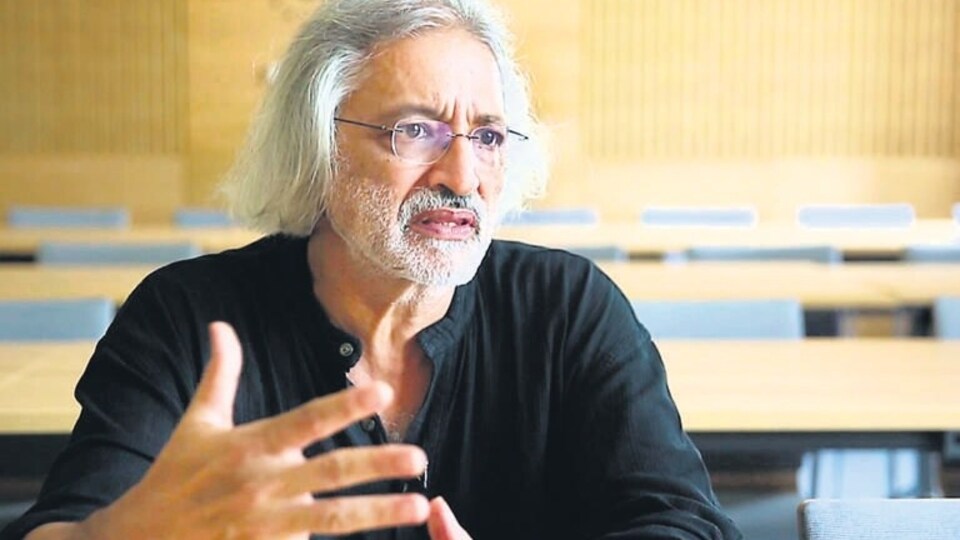
Anand Patwardhan: Demolitions continue because the city makes space only for the wealthy
In 1985, the documentary filmmaker Anand Patwardhan made ‘Hamara Sheher (Bombay, our city)’ which focussed on many slum demolitions in the early 1980s

 Prefer HTon Google


Mumbai: This week, 1,700 slum houses in Shastri Nagar, beside the railway tracks in Bandra West, were demolished. The residents have been promised 300-square feet houses in four towers of an SRA rehabilitation project in its place. The end came after many false starts – the redevelopment of the slum has been pending since 2002. Countless demolitions and knocks at the doors of the Bombay high court and Supreme Court led to the present.
On the other hand, just as the story of one slum comes to an end, the journey has just begun for another -- Jai Bhim Nagar, in Powai. Demolished in early June, the residents of the slum have now approached HC for rehabilitation and compensation.
In 1985, the documentary filmmaker Anand Patwardhan made ‘Hamara Sheher (Bombay, our city)’ which focussed on many slum demolitions in the early 1980s, prominently the Slaughter House slums, next to the railway tracks in Bandra West. Sabah Virani revisits the film and the cycle of demolitions in the city with the filmmaker.
What prompted you in 1984 to film the demolition of slums, including those besides the Bandra station?
I returned to Mumbai in 1982 after studying abroad and the sight of the homes of the needy being demolished affected me badly. It was the dawn of liberalisation, and demolitions were taking place everywhere. The upper class only wanted to make the city attractive for foreign investors; slums were eyesores.
I started by taking photos to help a court case filed by the Lawyers Collective and the Peoples Union of Civil Liberties to recognize the Right to Shelter as a fundamental right, because it flowed logically from the Right to Life. Subsequently, I started shooting with a second hand 16 mm camera bought in the USA. The Supreme Court had granted a stay on further demolitions but the city authorities violated it and continued with the illegal acts.
Is there an event that made you stop in your tracks while filming the documentary?
We encountered angry residents when we visited the Slaughter House slums the first time. The film includes the footage of a woman chiding that we’ve only come to take photos. But as we visited the basti repeatedly over a period of time, where we showed our documentary many times, their attitude changed. The same women were happy to see themselves in it.
When the film won a national award in 1986, I sent Vimal Hedaw, from the Slaughter House slums, to accept it. We distributed flyers that showed how the demolitions continued, despite the award.
What has changed from then to now in Mumbai?
Demolitions continue because the city only makes space for the well-to-do. Even SRA schemes ostensibly to house those in the slums actually are focussed on making apartments for the well-off because that’s where the money is. The poorest are always left out – they inevitably return to the slums or footpaths.
The only thing that has changed is that the officials sound less crass now. In the past, we organised massive demonstrations and marched down at Flora Fountain and Eros in the thousands. You can’t do that with Section 144 now; you can only be “azad” in Azad Maidan.
There was a lot more hope in the bastis than there is now. Shabana Azmi joined the marches, which caught media attention. The middle class sympathised. At the time we were all young and believed we could affect change. A large-scale movement might be possible now, but we are in a different time -- people are much more interested in living their lives.
Shastri Nagar has now been demolished for the last time. In a way, the slum dwellers seem to have won: the BMC has had to keep moving the cut off dates for the demolition from 1976 to 2000, as mentioned in your documentary. How do you see this conclusion?
Very rarely do the poor win any battle and any victory is usually short-lived. In 1986, when we as Nivara Suraksha Samiti fought through protests and a hunger strike and won a small piece of land to resettle the residents of Sanjay Gandhi Nagar, everyone celebrated as it was indeed a rare victory. But in the overall scheme of things, it is statistically irrelevant as the slum populations of urban India will continue to grow as long as there is no justice and no possibility of livelihood in rural India.
Your view on SRA schemes as a solution to slums?
The SRA schemes are vertical slums, without many of the basic services. Bombay has no more utilities to offer, because services like water and electricity are finite. Increasing the vertical height of the city is only increasing its density when we don’t have the resources to provide for the population you’re accommodating.
We can all live a better life than we do if justice is indeed on the menu – the poor by getting better benefits and the rich by realising that their own happiness is empty if it comes at the expense of others.
Over the past 40 years the divide between the rich and poor has become wider; it is just a matter of time when it reaches a boiling point and implode. Alongside, the city is on a path of destruction, given the model of development being followed where cars are a priority. The sea is going to reclaim us.
The last scene in your documentary shows the slum dwellers placing plastic sheets over their houses, preparing for the monsoon. Why did you end with that?
That was to show that whatever happens, life goes on; people don’t disappear. They’re going to continue, finding whatever place they can. Cruelty will continue, but resistance will also remain.


