
 E-Paper



Anatomy of a protest
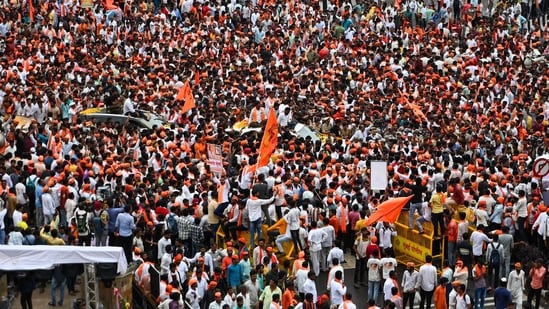
Maratha quota activist Manoj Jarange-Patil’s hunger strike will continue for a third day at Azad Maidan, as talks between him and the govt on Saturday failed.


Supporters of Maratha quota activist Manoj Jarange-Patil, who are in the city from far-flung districts, are fuelled by aspirations for education and a better way of life. They hope to be heard by the people in power, discovered Niraj Pandit and Anshuman Poyrekar.
‘This is a quest to achieve more than just my dreams’
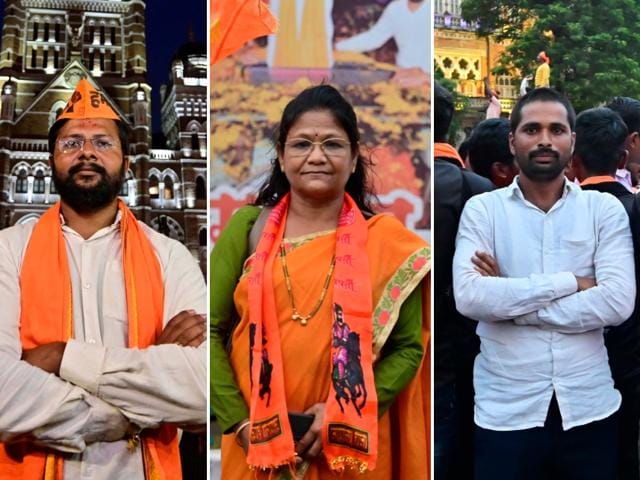
At 31, Suraj Madan carries two worlds on his shoulders -- the weight of his dreams and aspirations of his community. A resident of Keligavhan, a village in Jalna, Suraj’s academic accomplishments are a mark of resilience and determination – a bright student of science in school, he is studying law and is a social activist.
“I wanted to become an engineer. I scored 80% in Class 12, cleared the engineering entrance exam, but I couldn’t afford admission to a government college,” he said. “My father tried his best, but we simply didn’t have enough.” Suraj’s family lives off a small patch of farmland. The family has subsisted on little money.
Thereafter, he enrolled for a degree in Political Science at Savitribai Phule Pune University, where securing accommodation in the hostel became a challenge. “I didn’t get a seat in the social welfare hostel because I didn’t have a reservation,” he said. While his friends lived in subsidised hostels, Suraj paid nearly ₹8,000 a month for basic needs, until on “one vacation I saw my parents struggling to send me money, which broke me”.
He took up small jobs at local supermarkets to pay off some of his own bills. However, after graduation, when he failed to clear various competitive exams for government service, he returned to his farm, crestfallen. In that phase, Suraj discovered old records showing his community listed as an OBC. Aided by these documents at home, he secured a caste certificate, took the entrance exam for law and earned a seat at reputed a college in Jalna.
“That is when I understood what reservation really means,” he said. “It gave me the opportunity I had been denied for years.” Now, at the forefront of the protests, he said, “I am here not for Mumbai darshan. I am here for my people, our right to education and dignity.”
Villagers pooled ₹60,000, which Suraj and others from the village who are participating in the ongoing protests, have used to rent trucks and buy ration. “The stakes are high. This fight is bigger than me,” he said.
‘I want more Maratha women to be educated’
Kamaltai Nimbalkar, 54, is a social worker from Beed, who stands in protest with others from the district, with a determination that has only strengthened over decades.
“This is not the first time we are struggling for Maratha reservation,” said Kamaltai. She was once a member of Maratha Seva Sangh (MSS), an organisation working for Maratha community across state, and participated in protests held in Mumbai in 2008, “when around 4,000 women gathered together for the cause under the banner of Jijau Brigade, the women’s wing of MSS”.
“We organised a Yatra across 3,000 villages in 2010, to spread awareness about reservation for Marathas. At that time, some people from our own community opposed us. But I remained resolute because I believed this fight was necessary,” she said.
Kamaltai’s story began when she was just 13 years old, when “my parents decided to marry me off”. “I opposed it and told them that I wanted to study further. But they said, ‘Even highly educated people are jobless, so how will education help you? Better get married.’”She married young, but her dreams did not die. “I completed my BA degree and began working for the community,” she said.
Over the years, she has seen countless young girls forced to give up education due to lack of funds, she shared. “Many lose their admissions by just a few marks because we do not have reservation. If we get it, more Maratha women and girls can pursue higher education and achieve better positions in their chosen fields.”
Standing amid a swarm of protestors, Kamaltai feels the urgency of their drive ever more. She, as also the others, are on a mission to affect change. “Poor villagers have come in trucks because they cannot afford cars. We are all here because we cannot give up,” she said.
“Today, no one wants to marry a youth from a farming family because he does not have a job,” she said. “I am staying here with the protesters until we get justice. This fight is not just for me, it is for the uplift of the whole community.”
‘Our cycle of sorrow cannot break without govt support’
Santosh Kadam, 30, from Katneshwar village, in Parbhani district, has lived through many struggles to know what lack of opportunities can cost. He lives with his wife and young son in a large joint family. The small piece of farmland that he owns barely sustains all of them.
“Our entire annual income depends on the weather,” Santosh said. “Some years we get a good crop, but there are long stretches when there is nothing.”
Santosh had to abort his education after Class 8 because of financial constraints and family’s responsibilities. “I had dreams too,” he said quietly. “But I had to leave school. Now, I do not want my son or my nephews to face the same difficulty in the future.”
Education, he said, is key to breaking the cycle of distress, “which cannot be fulfilled without the government’s support”.
“We need help to be able to educate our next generation,” he said. “Reservation helps us in many ways. It gives us opportunities to get admission in good colleges and access to scholarships. For people like us, who have limited farmland and low income, these policies are a lifeline.”
This is Santosh’s first visit to Mumbai. He is here with 50-60 villagers from Katneshwar, demanding reservation for their community. “The city is big and impressive, but we are not here to see its many delights,” he said. “We are here for our rights, and we will not leave until we get an assurance of reservation.”
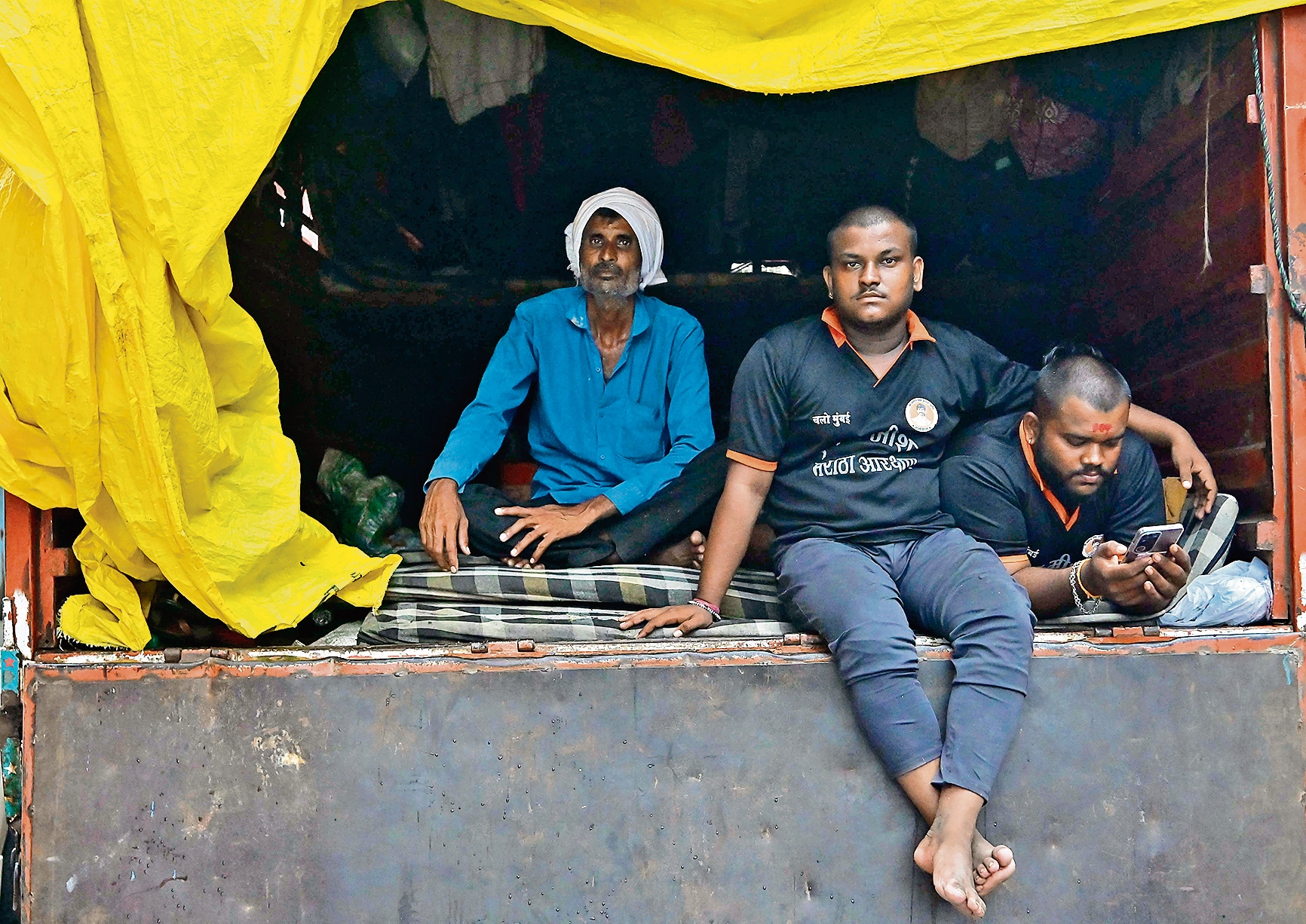
The past two days in Mumbai have not been easy for them either. With no accommodation, they are living in trucks parked near the protest site (Azad Maidan). “We are facing multiple problems here,” he said. “There is no proper food, no drinking water, and no shelter. Yet, we are determined to stay.”
This, said Santosh, is not a fight for a day. It is a fight for the future of the future generations. “We have already missed our chance. I do not want our children to lose theirs.”
‘With reservation, I can take the NEET exam and become a doctor’
Chakradhar Padole, 17, aspired to study medicine, but daily struggles of life in the small village of Jadgaon, in Hingoli district, where he lives with his mother, made that ambition seem like a distant dream. He has studied till Class 10, and now lives off the family’s tiny farmland and the little income the duo can make by selling cow milk.
“I want to study further and attempt the NEET examination,” he said, hopeful yet uncertain. “But I am not sure if I will ever be able to get the proper guidance needed to clear the competitive exam or if my mother can afford the steep fees for classes and higher education.”
For now, Chakradhar has paused his plans for higher studies, weighed down by financial burden, and also the limited opportunities for quality coaching in his village. Yet, he has not given up. He has travelled to Mumbai for the first time in his life, joining the ongoing protest demanding reservation for the Maratha community.
“If we get reservation, it will help me complete my higher education at half the cost, maybe even less,” he said. “Right now, applying as an open category student makes everything unaffordable. With reservation, I can at least try to reach my dream.”
The journey to Mumbai however could not have been possible without the support of a villager who sponsored Chakradhar’s travel and stay. Standing among thousands of protesters, he speaks with quiet determination, aware of what is at stake—not just for himself, but for his entire community. “I am here to get my right to reservation,” he said. “It is not only for me, but for everyone in my community who dreams of a better future.” For Chakradhar, the protest is more than a demand for policy change.

‘I am here, with my friends, to secure the future of the next generation’
Jyotiram Jagdale, 33, from Mangewadi village in Beed district carries the shadow of his aspirations that slipped through his fingers. A Class 12 pass-out, Jyotiram lives with his wife, young son, and parents in a small house. The family survives on a small piece of farmland. However, in periods when the farm fails to yield crops, he works as a daily wage labourer to make ends meet.
“I dreamt of becoming a graduate after Class 12. But our financial condition could not support my aspiration,” he said, remembering many others in the village who were seeking benefits of reservation, being turned away as they were listed in the open category. “We did not get any concession in fees or even hostel facilities.”
In 2010, higher education would have cost him ₹2,000 a month under reservation, but without it, his expenses would have swung between ₹15,000 and ₹20,000, which was way beyond his means. “I had to give up my dream, just like many others in my village.”
This is Jyotiram’s first visit to Mumbai, where he stands alongside around 60 others from his village with a single demand – reservation. “People have been asking me what I have seen in Mumbai. I tell them I am here not as a tourist. I am here for reservation, and I am not leaving until we get it.”
Life in the city over the last two days has been a struggle. “We are facing many problems – lack of sanitation, clean water and food. We ate a bit of khichdi and vada pav the whole of Saturday,” he said.
But he and his friends remain resolute. “We have already lost many opportunities because we never got the benefits that students for the reserved category enjoy. We don’t want our children to suffer anymore.”

Stay updated with all the Breaking News and Latest News from Mumbai. Click here for comprehensive coverage of top Cities including Bengaluru, Delhi, Hyderabad, and more across India along with Stay informed on the latest happenings in World News.


