
 E-Paper



Anger among farmers may hurt Mahayuti's Maharashtra Lok Sabha poll prospects
Farmers in Maharashtra, once BJP supporters, are now reconsidering due to low crop prices, high input costs, and below MSP rates


Mumbai: Nandkumar Akangire, 50, has 15 acres of land at Renapur tehsil in Latur district where he cultivates soybean. In 2014 and 2019 the unusually articulate school dropout says he voted for the BJP. In this election however he is having a rethink. “In the last 10 years, crop prices have not risen by much but the prices of seeds, fertilizers and pesticides have shot up leading to high input cost. Farmers are also giving more money to the government through GST to purchase these fertilizers and pesticides. It’s turning out to be a bad deal for us.”
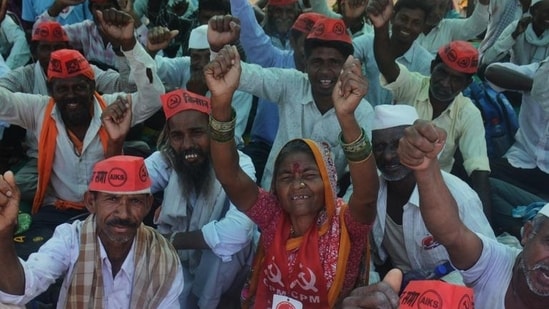
Across 8 constituencies in Marathwada and at least 4 constituencies in western Vidharbha where 80 per cent of Maharashtra ‘s soybean crop is cultivated, there is palpable anger about procurement prices which are now below minimum support price--MSP is at ₹4,600 while farmers are selling soy at ₹4,300 per quintal.
Dilip Raje, another soybean farmer from Renapur with a 30-acre farm holding, supports Akangire’s contention and says, “During the harvesting in October 2023, the prices of soybean per quintal was ₹5,300. We were hopeful that they would climb up to ₹6,000 per quintal which is when we would sell. However, the central government’s decision to extend the concession on oil import duty in January this year, resulted in soybean prices crashing to ₹4,300 per quintal, that’s ₹300 below the MSP. It led to huge losses for us”
The farmers’ loss is transmuting into voters’ anger that is reverberating across the cotton and soybean belt in Vidarbha to the soya-onion belt in Marathwada, Western Maharashtra and North Maharashtra, which is roughly 25 seats out of Maharashtra’s 48 constituencies. The ruling Maya Yuti has since been trying to pacify the famers with a slew of recent measures, including a promise by Devendra Fadnavis to give subsidy to soybean farmers as compensation after elections. In addition, last week the government lifted ban on onion export and also clearing the way for ethanol production from existing stock of B-heavy molasses.
Whether these steps are sufficient or too little too late will be tested on June 4 when election results will be declared. “PM Modi failed to ensure a fair price for our crops so we have no choice but to think differently this time,” says Raje before adding that prices for seeds, fertilizers, pesticides shot up by around 40% in the three years.
Babasaheb Samant, sarpanch of Wadechiwadi village in Madha tehsil says he had voted for the BJP in in 2019 but he is unlikely to do this time. “The GST on purchase of seeds, pesticides and fertilizers has badly impacted the farming community. Neither can we diversify into other businesses like dairy farming and nor are there jobs for our youths,” he says. So angry is the 49-year old sarpanch that he says he’s spending his own money to meet people from neighbouring villages to convince them to not vote for the BJP.
Santosh Yelpale, 43, a farmer at Sangola in Solapur district who cultivates pomegranate on a five-acre farm, too raises the issue of GST. “The Modi government has imposed GST on all agriculture-related products. For procuring fertilizer worth ₹1 lakh we have to pay ₹18,000 as GST. From our hard earned money, Modi is giving us back only ₹6,000 in the name of PM Kisan Samman Nidhi, as annual financial assistance, but retains the rest ₹12,000,” he says.
Ban on onion export caused huge losses to farmers
Onion farmers too are upset with the long ban on onion export. “Until last week, when it was finally lifted, the average procurement rate for onions was around ₹1350 per quintal. Now after lifting the export ban on Monday average price for onion at Lasalgaon reached Rs. 1,700 per quintal. But in the last six months farmers have suffered losses of around 1.5 lakh per acre. This tactics of lifting the onion ban days before election will not fully pacify the farmers,” says Bharat Dighole, president of the Maharashtra onion farmers’ association in Nashik.
Realising the extent of the farmers’ anger BJP leaders have been trying to mollify them in their campaign speeches. Devendra Fadnavis has been underscoring the subsidy for soybean farmers in all his stump speeches. A few them are also trying to divert attention towards more emotive issues. “Forget about the rates of soybean, onions and the demand for Maratha reservation, instead just think of ‘Bharat Mata’,” says Rajendra Raut an independent MLA from Barshi in Osmanabad Lok Sabha constituency who is allied to the BJP.
Abhay Deshpande, a Mumbai-base political analyst, says, “The farmers were positively inclined towards the government on account of the direct cash transfer to their accounts but over the last one year they have suffered losses due to the onion export ban, and below-the-MSP rates for soybean. Now that they are upset, farmers have started to account for things like price hike in seeds, pesticides and fertiliser. They are calculating every penny of tax they are paying to the government and what they are getting back in turn.” All of a sudden, he adds, issues like Ram Temple and revocation of article 370 have taken a backseat and agrarian issues have come front and centre.

Stay updated with all the Breaking News and Latest News from Mumbai. Click here for comprehensive coverage of top Cities including Bengaluru, Delhi, Hyderabad, and more across India along with Stay informed on the latest happenings in World News.


