
 E-Paper



Bar on construction around Juhu wireless station relaxed
Residents of the area, including some whose buildings were demolished but redevelopment was stalled due to restrictions, welcomed the development

 Prefer HTon Google


Mumbai: The union ministry of defence has relaxed the ban on construction around the Juhu wireless station, constructed during World War II, from 500 yards (around 458 metres) to 100 metres. A notification to this effect was issued by the ministry on Monday, paving the way for redevelopment of nearly 200 buildings in the vicinity.
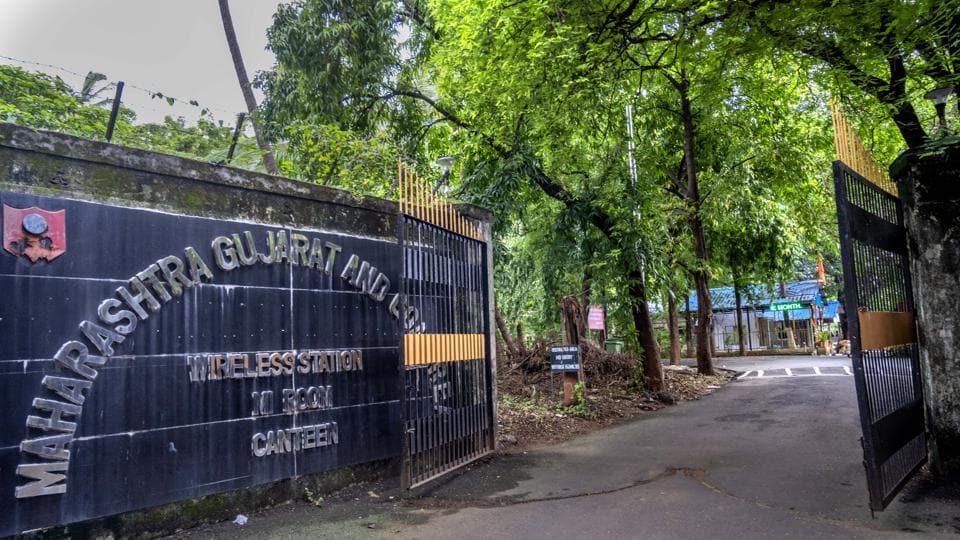
Construction within 500 metres of the wireless station was barred in 1976 as the presence of high-rise buildings may have affected communication.
Residents of the area, including some whose buildings were demolished but redevelopment was stalled due to restrictions, welcomed the development.
Andheri MLA and Mumbai BJP chief Ameet Satam said, “This is good news after a 16-year-long struggle. We had raised this issue at various levels. CM Devendra Fadnavis followed it up and people are very happy. This will pave the way for the long-stalled redevelopment of buildings.”
Town planner and architect Vilas Nagalkar said projects within 500 yards of the wireless station were stuck due to restrictions imposed in 1976.
“Now that restrictions are applicable only up to 100 metres, projects within 100-500 metres will get huge relief,” Nagalkar said.
Bhupendra Lakdwala, who heads the Juhu Wireless Station Victims Residents Association, a nonprofit, said redevelopment of 200 buildings was stalled due to the earlier restriction.
“This notification will provide relief to 90% of the buildings, including five buildings which were demolished for redevelopment in 2011, but redevelopment never took off due to objections raised by the Army,” he said.
Santosh Sawant, a flat owner in one of the five buildings demolished in 2011, said they had chosen a builder for redevelopment back then, but the builder had stopped paying transit rent to the affected residents soon after.
“I launched an agitation in 2011 itself and held several meetings with then defence minister Manohar Parrikar. Even as many of our members got tired and backed out, some of us made trips to Delhi spending our own money to pursue the case. Our MLA Ameet Satam and MP Ravindra Waikar helped us a lot,” Sawant said.
Prakash Madnani, 76, who stays in the five-storeyed Kundan Baug near the wireless station said most of the buildings in the area were old and dilapidated, and the residents were mostly senior citizens.
“Our society spent around ₹50 lakh on repairs, but how long can we spend on weak structures. Now that there is no sword hanging over our head, we have to search for a builder,” Madnani said.
Amit Jagani, a resident of Jayanti Niwas, said the relaxation of restrictions was not merely a policy change, but the realisation of a long-awaited dream for the local community.
“Jayanti Niwas was constructed when A R Antulay was the chief minister and the cement allocation scandal was unfolding. Over the years, our society has incurred substantial expenditure on recurring repairs merely to keep the building habitable,” he said.
The restrictions imposed by the defence ministry had compounded residents’ difficulties, as reputed builders and even residents’ acquaintances were reluctant to take up redevelopment projects. “As a result, residents endured years of uncertainty, financial burden, and significant safety risks,” Jagani said.
Techno legal expert Satyen Prasad warned that the notification in itself would not address the woes of residents.
“Even after the central government issues a declaration under section 3 of the Works of Defence Act, 1903, the implementation process remains incomplete unless the mandatory procedure prescribed under the Works of Defence Rules, 2025 is followed,” Prasad said.
As per the rules, the Collector is required to issue a public notice containing the substance of the declaration and the nature and extent of restrictions. The notice must be published in at least two newspapers, circulated among local bodies and planning authorities, uploaded on the district’s official website, and pasted at conspicuous spots in the locality. Thereafter, statutory processes relating to survey, claims, determination of compensation and other consequential proceedings must be undertaken.
“Until these mandatory procedural requirements are complied with, the restrictions cannot be said to have been lawfully enforced against affected landowners,” Prasad said.

Stay updated with all the Breaking News and Latest News from Mumbai. Click here for comprehensive coverage of top Cities including Bengaluru, Delhi, Hyderabad, and more across India along with Stay informed on the latest happenings in World News.


