
 E-Paper



Court denies anticipatory bail to 2 engineers booked for Mumbra train accident
The accused engineers will file a fresh bail application in the Bombay High Court on Friday, their lawyer Baldev Singh Rajput told Hindustan Times

 Prefer HTon Google


Thane: Two Central Railway (CR) engineers who were booked for culpable homicide over the mishap in Mumbra on June 9, in which five passengers died after falling off two overcrowded local trains, were on Thursday denied anticipatory bail by the additional sessions judge in Thane. The accused engineers will file a fresh bail application in the Bombay High Court on Friday, their lawyer Baldev Singh Rajput told Hindustan Times.
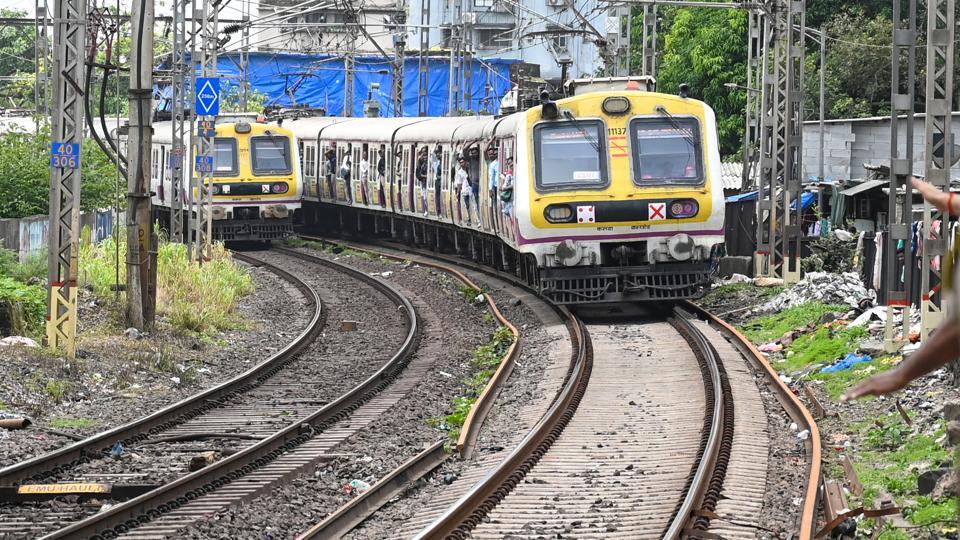
Pradnya Jedge, deputy commissioner of police with the Government Railway Police (GRP), which had booked the two engineers, declined to comment on Thursday’s development.
The two CR engineers – assistant divisional engineer Vishal Dolas and senior section engineer Samar Yadav – are accused of failing to repair a damaged section of the track between Mumbra and Diva despite multiple caution orders issued to them between March and June 2025. They had filed anticipatory bail pleas before the Thane sessions court on November 7, while on November 11, additional sessions judge GT Pawar heard arguments from both sides.
The GRP cited a report by the Veermata Jijabai Technological Institute (VJTI) and alleged that despite four caution orders, the implicated engineers never inspected the site. Some tracks that required welding work were only tended to after the June 9 incident, while the trains involved in the accident were running faster than the 75 km per hour speed limit, the GRP claimed.
The prosecution also contested the CR’s internal expert committee report, which attributed the deaths to the protruding backpacks of commuters on both trains brushing against each other, triggering a fall. No such backpacks were recovered during the GRP’s panchnama, the prosecution said.
The CR, however, submitted CCTV footage purportedly showing backpacks lying on the platform and along the railway tracks immediately after the accident. “The videos clearly showed victims wearing shoulder bags or lying next to them on the tracks,” said a CR official.
The defence also presented clips of 28 trains crossing each other in opposite directions at the incident spot between 7:50am and 11:40pm on June 9 to demonstrate how closely two trains passed each other – allegedly breaching safety norms.
No anomaly spotted on CR’s real-time monitoring system
Railway officials who spoke to HT on condition of anonymity said that while the CR closely monitors and responds to even the smallest faults on its network in real time, no anomalies were reported leading up to the June 9 incident.
“We have a dedicated WhatsApp group of around 150 officers from the Mumbai division, spanning the Central, Western, and Harbour lines. Loco pilots, guards, and track maintenance teams continuously update this group with real-time reports on any untoward incident along their route, including minor jerks, passenger or animal knockdowns, chain pulling, overspeeding, signal jumps, delays, and passenger falls,” an official said.
When railway staff notice any unusual activity or irregularity on or near the tracks, they immediately report the same on the group with details such as time, location (distance as per pole number), bogie number and seat number, officials said. Senior officials then take instant decisions to protect both passengers and railway property, they noted.
HT reviewed messages exchanged on this WhatsApp group and found detailed records of issues ranging from minor faults to major incidents shared in real time.
Officials also countered the VJTI report which said rails at the incident spot had been left unwelded after they were replaced four days earlier.
An average of 500 trains pass through the incident spot every day, a senior CR official told HT.
By the time of the accident on June 9, at 9.02am, more than 2,000 trains would have passed through the spot.
“Had the rails been left unwelded, how is it that not a single motorman or guard reported any jerk or unusual movement at that location on the WhatsApp group,” the officer asked. “Even after the accident, several trains passed over the same track without any abnormality.”
He also said that if any suburban local exceeds the prescribed speed limit, the onboard system automatically activates the brakes and reduces the train’s speed, and the mechanism is operational across the entire suburban rail network in the Mumbai division.

Stay updated with all the Breaking News and Latest News from Mumbai. Click here for comprehensive coverage of top Cities including Bengaluru, Delhi, Hyderabad, and more across India along with Stay informed on the latest happenings in World News.


