
 E-Paper



Effluents, sewage pose a serious threat to waterbird species across Maha wetlands
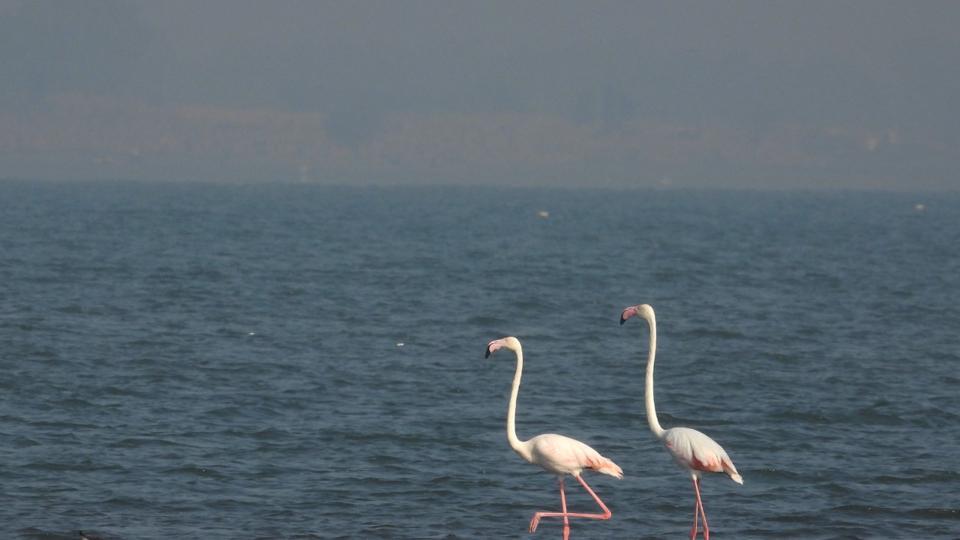
The birds found in these six wetlands are near-threatened Black-tailed godwit, Greater Flamingo, Ferruginous Duck, Common Pochard, Curlew Sandpiper and Little Stint


Mumbai: Water pollution from agricultural runoff, effluents, and sewage pose a consistent and serious threat to six key wetlands in Maharashtra where as many as 112 species of waterbirds from 18 families have been found, according to a study conducted by the Bombay Natural History Society (BNHS).
The six significant inland wetlands which are part of the Central Asian Flyway (CAF) for the study conducted between October 2021 and April 2022 were Nandur Madhmeshwar Wildlife Sanctuary in Nashik (Ramsar Site), Jayakwadi Bird Sanctuary in Aurangabad, Gangapur Dam in Nashik, Ujjani Dam in Solapur, Hatnur Dam in Jalgaon, and Visapur Dam in Ahmednagar.
The birds found in these six wetlands are near-threatened Black-tailed godwit, Greater Flamingo, Ferruginous Duck, Common Pochard, Curlew Sandpiper and Little Stint.
For migrating birds travelling via the Central Asian Flyway (CAF), Maharashtra is home to a multitude of both natural and man-made wetlands that serve as staging places and wintering grounds. Flyways are utilised by birds to reach breeding, stopover, and wintering grounds during their annual cycle.
The Convention on Migratory Species has designated nine migratory flyways worldwide (CMS). One of them is the CAF, which covers migratory bird routes via 30 nations, with India constituting the majority of those routes.
The Bombay Natural History Society (BNHS) is carrying out the project, elucidating the status of migratory waterbirds in ornithologically important wetlands of Maharashtra: Central Asian Flyway, and it recently submitted its first-year report (July 2021-June 2022) to the Mangrove Foundation. The Mangrove Foundation has commissioned this five-year project to the BNHS at a cost of ₹2.77 crore.
“Protecting these wetlands will help us achieve our sustainable development goals and commitments to the global community on Central Asian Flyway that Prime Minister Narendra Modi had announced during the Convention on the Conservation of Migratory Species (CMS COP 13) in Gandhinagar in February 2020,” said Virendra Tiwari, additional principal chief conservator of forest, Maharashtra Mangrove Cell and executive director, Mangrove Foundation.
Six significant inland wetlands in Maharashtra, including the Nandur Madhmeshwar Wildlife Sanctuary in Nashik (Ramsar Site), Jayakwadi Bird Sanctuary in Aurangabad, Gangapur Dam in Nashik, Ujjani Dam in Solapur, Hatnur Dam in Jalgaon, and Visapur Dam in Ahmednagar, were chosen for this study to better understand the seasonality and site usage pattern of migrating waterbirds.
Maximum species diversity of 58 waterbird species and the highest count of 20,977 waterbirds were recorded from Ujjani Dam in April 2022, the press note issued by the mangrove protection cell said.
The study determines the role of these wetlands in supporting migratory as well as resident birds, with special reference to rare and threatened species. During the said project, BNHS has carried out various surveys such as a Bird Monitoring survey, Bird trapping. Bird ringing and colour banding. “A concerted effort was undertaken to document threatened and near-threatened species, CAF priority species, and CAF conservation concern species. Six species that are prioritised in India’s CAF National Action Plan were also noted during the study period, along with two species that are vulnerable and seven species that are near-threatened,” the study said.
Of the species listed under CAF, of conservation concern, 16 species were reported during the study period at the selected sites. Black-tailed godwit, Greater Flamingo, Ferruginous Duck, Common Pochard, Curlew Sandpiper, and Little Stint were a few of these birds.
Common pochard and River tern were two of the species observed falling under the ‘vulnerable’ category as defined by the International Union for Conservation of Nature (IUCN). Maximum numbers of River terns were seen at Ujjani (306) and Jayakwadi (259). Asian Woollyneck,
Painted stork, Black-headed Ibis, and Oriental Darter were a few of the near-threatened species spotted. A large number (2041) of the near-threatened Black-tailed Godwit were seen in Ujjani.
Stay updated with all the Breaking News and Latest News from Mumbai. Click here for comprehensive coverage of top Cities including Bengaluru, Delhi, Hyderabad, and more across India along with Stay informed on the latest happenings in World News.


