
 E-Paper



‘If you burn us out every day, there won’t be anyone left to hold the scalpel’: UDF’s Dr Lakshya Mittal
The United Doctors Front has filed a petition in the Supreme Court saying the Centre’s guidelines on working hours for resident doctors are being flouted


MUMBAI: Resident doctors in India are routinely forced to work up to 100 hours per week, often with shifts of 24–36 hours, which is in clear violation of the Union health ministry’s guidelines under 1992 Uniform Residency Scheme. So claims a public interest litigation (PIL) filed by the United Doctors Front (UDF) in the Supreme Court in April, with the petitioners set to push for an urgent hearing this month.
The petition emphasises widespread non-compliance with the 1992 guidelines, which mandate a maximum of 12 hours of continuous duty per day and 48 hours of work per week. The matter assumes significance against the backdrop of recent cases such as the rape and murder of a postgraduate trainee doctor at the RG Kar Medical College and Hospital in Kolkata in August last year. The victim had gone to rest in a seminar room after a 36-hour shift, which is where she was allegedly raped and killed.
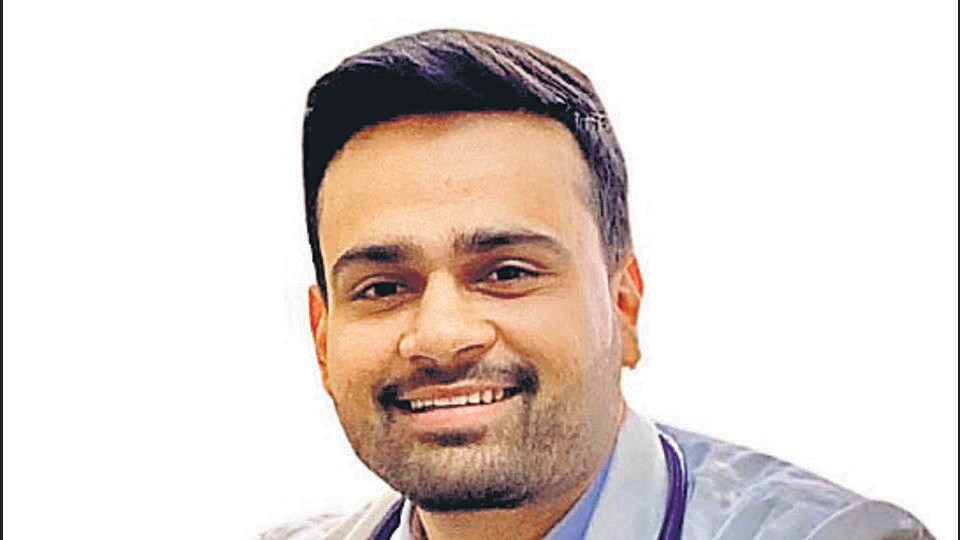
Speaking to HT, Dr Lakshya Mittal, the national convenor of the UDF, a charitable trust that advocates for the rights of medical professionals in India, laid bare the human cost of an outdated system and explained why it is dangerous not just for doctors but also for patients.
You have filed a public interest litigation in the Supreme Court over the issue of long duty hours of trainees and interning doctors. What exactly are you asking the court to do?
The problem dates back to a deeply flawed legacy. In the early 20th century, Dr William Halsted, a pioneer of residency training, promoted working for long hours—without sleep or food. But he did this under the influence of cocaine and morphine. We’ve somehow turned this distorted model into tradition in India, expecting students to perform similarly—without the drugs, but with all the exhaustion.
In 1992, following directives issued by the Supreme Court, the Union health ministry issued guidelines, capping duty hours of doctors to 48 hours a week. Yet, senior faculty members, who themselves once endured 36-hour shifts, never let go of the “we suffered, so must you” mindset. This was aided by a shortage of medical and support staff, making it easy to dump everything on resident doctors—from clerical work to paramedical duties.
A 36-hour duty is not accidental; it’s a calculated move. If you assign a resident a 24-hour shift, you must give the next day off. But with the 36-hour duty, they can be given one night’s rest and called again the following morning. This system saves the hospital’s manpower costs—but at what cost to doctors and patients?
Shockingly, even resident doctors were unaware of this rule until we at UDF began investigating rising suicides and dropouts. A small team of doctors, parents, activists, and journalists unearthed the 1992 directives. When we filed an RTI, the health ministry claimed it was “too old to retrieve”. That’s not just neglect—that’s concealment.
The National Medical Council (NMC), which replaced the Medical Council of India in 2019, was legally bound to enforce this rule. Instead, it issued vague guidelines with terms like “appropriate working hours” and “adequate rest.” As a result, PG residents are still clocking 70–100 hours a week. Our demand is simple: implement the 1992 rule as it stands or repeal it officially and transparently. You can’t run a democracy where laws exist only on paper.
You have conducted a survey. What were the findings?
Our online survey received 1,031 responses from MBBS interns and PG residents. The findings mirror the NMC’s own National Task Force report. We didn’t need numbers to tell us what suicides and resignations are already revealing. Between 2018 and 2022, 122 medical students died by suicide. Over 1,100 PG students dropped out. This is a crisis.
You’ve said that long duty hours endanger both doctors and patients. Can you explain the link more clearly?
This is the heart of our concern. No human being—doctor or otherwise—can safely function beyond eight hours of work without rest. That’s the global standard for labour, aviation, and human rights. Why not medicine?
When doctors work 36 hours straight without food or sleep, they suffer from extreme fatigue, lose focus, and inevitably make mistakes. Patient safety is compromised—period. One Harvard study found that medical errors rose by nearly 36% among interns working traditional long-hour schedules. Even the Supreme Court called 36-hour shifts “inhuman” in the RG Kar case.
We’ve seen the human cost of this. A PG student in Kolkata, exhausted after 36 hours of duty, fell asleep in a seminar room—only to be raped and murdered. That tragedy speaks louder than statistics.
Yet, regulatory bodies like the NMC have ignored these warnings. The medical establishment continues to run on the backs of sleepless, mentally drained residents, putting everyone at risk. This isn’t just an occupational issue. This is a public health emergency.
Even though there are clear rules under the residency scheme and Post Graduate Medical Education Regulations (PGMER) guidelines, they don’t seem to be followed. What’s causing this gap? Who is responsible?
The answer is simple: apathy and lack of enforcement. The NMC, state medical councils, and medical college administrators all share the blame. There’s no audit, no monitoring, and no punishment for violations. This creates a culture where breaking rules is easier than following them.
You’ve also raised the issue of caste discrimination and poor working conditions for students from marginalised communities. What steps do you want authorities to take?
We’re glad the Ministry of Social Justice has acknowledged this issue. But we need urgent action. A special grievance redressal cell must be set up to handle caste-related complaints. We’ve lost too many students like Dr Payal Tadvi and Dr Preethi. Without institutional support, students from marginalised communities will continue to suffer silently, or drop out.
What do you say to those who argue that doctors must be prepared for emergencies, which means long hours are unavoidable?
That’s a myth used to justify daily exploitation. Doctors always rise to the occasion. We proved that during Covid—we didn’t count hours when lives were at stake. But you can’t use emergencies to justify everyday abuse. No IAS or IPS officer is forced to work 36 hours continuously. Why should doctors? We don’t walk out mid-surgery. But if you burn us out every day, there won’t be anyone left to hold the scalpel.

Stay updated with all the Breaking News and Latest News from Mumbai. Click here for comprehensive coverage of top Cities including Bengaluru, Delhi, Hyderabad, and more across India along with Stay informed on the latest happenings in World News.


