
 E-Paper



Kurla, the new hotbed of measles
Mumbai: Community health workers in Nehru Nagar, Kurla East, were on high alert on Thursday after they found a few kids suspected to have measles in an SRA building


Mumbai: Community health workers in Nehru Nagar, Kurla East, were on high alert on Thursday after they found a few kids suspected to have measles in an SRA building. They went around the entire building, alerting parents of young children for the umpteenth time. Many houses in the building had neem leaves scattered around the entrance – an indication of the parents’ suspicion that their kids may have come down with measles. Bathing children in neem water is a ritual that many communities follow.
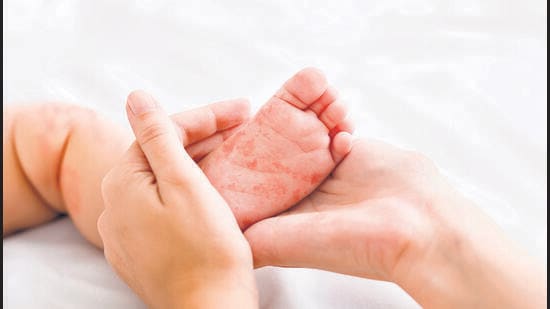
The health workers soon reached the house of Sakina Noor Mohammed Gor whose eight-year-old daughter had fever with rashes, with high chances of this being due to measles. Sakina also has a two-year-old son. Neither of the kids has ever been vaccinated. Her husband has often told health workers to skip his house, as he doesn’t believe in the efficacy of vaccines. “Nobody from our family has ever been vaccinated, and we are all just fine,” he reasoned. Even when the health workers insisted that Sakina come down a couple of flights of stairs in the same building in a flat where the vaccines were being administered, she said she would wait for her husband to return from work and discuss the issue with him.
As per the BMC’s statistics, the highest caseload of measles after Govandi (M East ward) is from Kurla (L ward). In fact, data released by the state health department says that there have been five outbreaks in Govandi and three outbreaks in Kurla so far. Outbreaks are clusters in close proximity of each other with a significant number of infection cases.
In Kurla too, there is very high vaccine hesitancy and refusals by parents despite community health volunteers and accredited social health activists (ASHA) going from home to home to convince parents to vaccinate their children against measles. In some cases, the health workers are able to convince them, like in the case of a three-year-old who on Thursday got his first measles vaccine that is normally administered at nine months of age. However, there are many who still shut their doors on the health workers’ faces, and make various excuses even though kids in their neighbourhood have been hospitalised. The scenario is not too different on the other side of the ward in Kurla West.
As 30-year-old Meenaz Sheikh stood outside her home in the narrow lanes of Jarimari slums holding her one-year-old son Iman, civic health volunteers told her to take the infant to the nearby baalwadi for vaccination. Sheikh replied that the baby already had fever and so could not take the vaccine. This is not the first time Sheikh has had an exchange of this kind with volunteers.
Further ahead, 32-year-old Majid Khan was sitting on his doorstep with his two-year-old son while his wife and one-year-old daughter rested. While the son’s vaccinations are in sync with the recommended schedule, the daughter’s have fallen behind. “We are not even aware of the schedule. When the health workers come and ask us to get the children vaccinated, we go to the health centre,” he said.
Elsewhere in the area, a migrant worker said she did not want her child to get vaccinated because the last time they gave her a shot as per the immunisation schedule, the child developed a swelling. The health worker asked the mother whether or not she got a swelling or mild fever when she was vaccinated during pregnancy. The mother replied in the affirmative but still remained unconvinced by the health worker’s logic.
In many of the houses, the parents said they did not have the immunisation card that tracked their children’s vaccination status. Many a time, these are migrant workers who change houses frequently and only carry bare essentials with them to the next place. At such times, volunteers ask whether the child has received a vaccine at a certain time after birth or whether the vaccine was administered on the arm or leg. This helps them deduce the child’s immunisation status even in the absence of the card, so that they can fill the vaccination gap where required.
Dr Ravindra Hange, medical officer of the ward, acknowledged that there were many parents who refused to get their children vaccinated sometimes on the pretext that the child was already unwell. “We try to motivate and convince such parents to the best of our ability,” he said. “Some children below three years of age remained unvaccinated during the pandemic due to various fears. We are trying to cover all these kids through additional vaccination camps over and above the regular ones.”
Stay updated with all the Breaking News and Latest News from Mumbai. Click here for comprehensive coverage of top Cities including Bengaluru, Delhi, Hyderabad, and more across India along with Stay informed on the latest happenings in World News.


