
 E-Paper



Maharashtra to table bills to ensure OBC quota in local body polls
The state is hoping that it can plan the schedule of redrawing the boundaries and in the meantime get the empirical data collected to ensure restoration of the reservation.

 Prefer HTon Google


Days after the Supreme Court rejected the interim report submitted by the Maharashtra State Backward Classes Commission recommending up to 27% quota for other backward classes (OBCs) in local body elections, the Maharashtra Vikas Aghadi (MVA) government will table two bills in both houses of the legislature on Monday, which are aimed at taking over powers for delimitation of wards in civic bodies.
The state is hoping that it can plan the schedule of redrawing the boundaries and in the meantime get the empirical data collected to ensure restoration of the reservation. However, the uncertainty over the polls to local bodies looms large even as most of them are going under administrators in the next few days as their five-year term ends.
With opposition Bharatiya Janata Party announcing its support, the state plans to get the bills passed without a discussion on the same day. The MVA also expects the bills to be approved by the Governor immediately keeping the interest of the OBCs in mind.
“We are tabling two bills to make amendments to the laws governing rural and urban local bodies. The bills – Mumbai Municipal Corporation, Maharashtra Municipal Corporations, Maharashtra Municipal Councils, Nagar Panchayats and Industrial Townships (Amendment) Bill 2022 and Maharashtra Grampanchyats and Maharashtra Zilla Parishad and Panchayat Samitis (Amendment) Bill 2022 – will be tabled in both the houses. They are expected to be passed without a discussion,” an official from the rural development department (RDD) said.
The bills will enable the state to take away the powers to complete the delimitation and formation of wards, which are currently with the State Election Commission (SEC). They will give the leeway to the state to collect empirical data mandatory to restore the OBC quota in local body polls. The process, which is under way for municipal corporations and district councils which have seen a rise in the number of wards because of the increase in population over the past one decade, may be cited as the reason to delay the elections. The state has cited a similar exercise done in Madhya Pradesh.
The state government has also appointed a dedicated committee under former chief secretary Jayant Banthia to collate the empirical data on the political backwardness of OBCs.
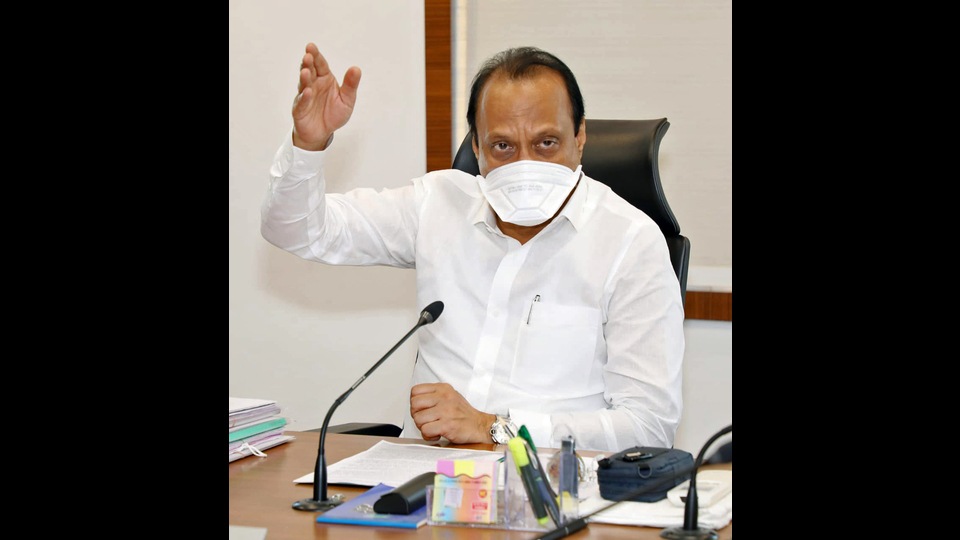
On Saturday, deputy chief minister Ajit Pawar said that they were postponing the elections to the local bodies for three months. “We will need three months to complete the compilation of the empirical data in the format suggested by the SC. It will be completed by talking to experts and senior officials before approaching the apex court again (for the quota). Till then, the local bodies will have administrators appointed,” he said.
According to state government officials, the SC in its Thursday order directed the SEC to conduct polls to five municipal corporations in which the elections were overdue after having completed their term in 2020. “The apex court also asked the SEC to hold polls to remaining 10 corportaions, 25 district councils, and other bodies in the next six months,” the RDD official said.
Officials of the SEC, however, contested the state’s claim.
Kiran Kurundkar, secretary, SEC, said, “We have not officially received any communication from the state government about the bill or taking away our powers. If we get any such communication, a decision will be taken after consulting legal experts.”
A SEC official, requesting anonymity, said, “The SC also directed us to conduct the polls to all these local bodies without OBC quota. The SEC has been conducting polls and holding delimitation and formation of wards for the last three decades as per the 72nd and 73rd constitutional amendments in 1990s and formation of the SEC in 1994. Taking away the powers of delimitation and formation of wards is difficult, and it cannot stand the legal scrutiny.”
He added that the delimitation and formation of wards in municipal corporations has almost been completed, while it is in its last leg for district councils.
Ulhas Bapat, a constitutional expert, said, “Anything which is a constitutional obligation is binding on the state government and the SEC. The delay in conducting the administrative process cannot be the reason for postponing the elections.”
“The SC also directed us to conduct the polls to all these local bodies without OBC quota. The SEC has been conducting polls and holding delimitation and formation of wards for the last three decades as per the 72nd and 73rd constitutional amendments in 1990s and formation of the SEC in 1994. Taking away the powers of delimitation and formation of wards is difficult, and it cannot stand the legal scrutiny,” an official said requesting anonymity. He added that the delimitation and formation of wards in municipal corporations has almost been completed, while it is in its last leg for district councils.
Polls to 14 municipal corporations, including Mumbai, Thane, Navi Mumbai, and Nagpur, as well as 25 district councils, 208 city councils, 14 nagar panchayats, and 284 panchayat samitis are due in the next few weeks. If the bill is passed, it is expected to delay the elections by at least a few months.
Meanwhile, eight municipal corporations will have administrators appointed in the next few days. The five-year term of the municipal corporations in Thane and Nagpur ended on March 4 and 5, while the term of the civic bodies in Mumbai, Solaupr, and Amravati is concluding early next week. The corporations in Nashik, Pune, and Pimpri Chinchwad are completing their term on March 13 and 14. Similarly, 24 district councils are finishing their term on March 20.
The SEC has directed the state government to appoint administrators for these bodies. The administrator gets absolute powers in the local body. In municipal corporations, commissioners are appointed administrators, while in district councils, chief officers take over the responsibility.
Sachin Rajurkar, general secretary, Rashtriya OBC Mahasangh, has raised doubts over the intention of the state government.
“The state has announced to table a bill on the lines of the one passed by Madhya Pradesh but the neighbouring state had done this with the permission of the apex court. Is the state going to inform the SC after passing the bill? Even if it gets five-six months after passing the bill, is there conviction to complete collecting empirical data within that period? The state government is fully responsible for the quashing of the quota and the delay in collating the empirical data. It has also been giving us stepmotherly treatment by not extending the other schemes and benefits given to the Marathas,” he said.


