
 E-Paper



Marine Drive and the way of the world in ‘Legoland’
Can walking be an act of empathy? Viji Venkatesh has been working with cancer patients for the better part of her life


Can walking be an act of empathy? Viji Venkatesh has been working with cancer patients for the better part of her life. First she worked with the Cancer Patients Aid Association and then with the Max Foundation which sources and supplies free drugs to those with chronic myeloid leukemia.
Some years ago, this rare form of cancer was a death sentence. But Novartis found a drug that can turn it into a disease that can be lived with, and then in a mind-boggling act of generosity, agreed to supply it free to patients who could not otherwise afford it. Although new patients are not being admitted to the Max Foundation roster—there are generics now which are cheaper—there are still 18,000 patients across India who need it to keep going. These are the people who keep the 70-year-old Amma from Thane walking.
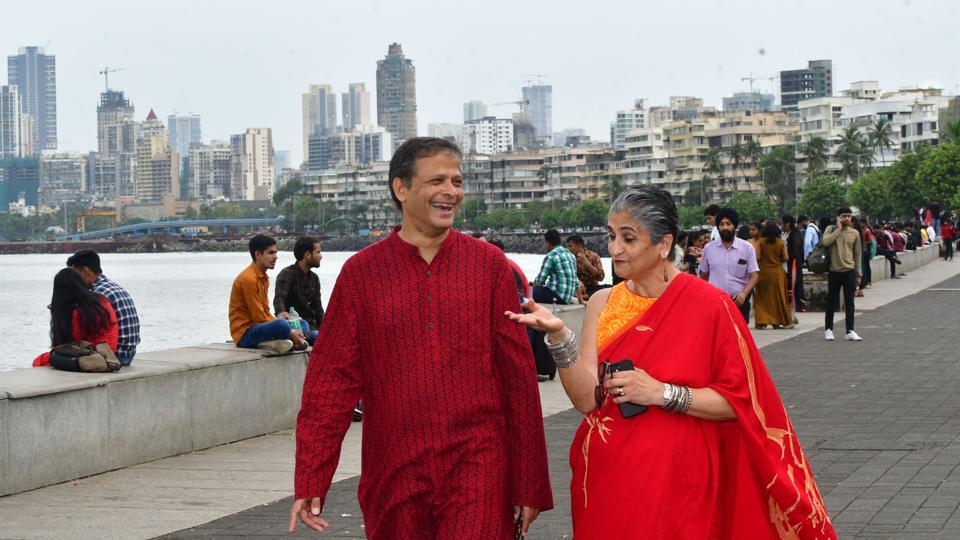
I first met Viji Venkatesh when she was the store manager at Crossword. We got to be friends immediately and when I discovered that she lived in Worli and commuted to Mahalaxmi, I said: “Wouldn’t it be easier to find work closer to home?” “Easier,” she said “but so much more boring.” And so every morning, Viji sets out at 7:15 in the morning and arrives at Marine Drive in an hour. Then she walks, takes selfies, ‘eats the air’ and rejuvenated, plunges back into her schedule.
“I know that I am privileged. I can go for this little walk because I have a car and a driver. But I want to remind myself that the patients I work with are not so privileged. Take Mohammed (name changed) who lives in Nanded. He must walk some miles to the nearest highway. Then he catches a phutphutti, transfers to a state bus, then a train and finally he walks to our Worli centre for his medicines. I cannot replicate this entire journey with the additional burden of disease but when I do some of the walk, I learn in my body, what it means to be Mohammed and to travel so far for the medicines that will keep him going.”
On the morning of our walk, the sky is grey and overcast. “Do you mind walking?” I ask because Viji is in a bright red sari—the Navratri colour of the day and the sky is grey with auguries of rain. “Not at all,” she says and I am glad.
I believe that there are two myths that Mumbaikars subscribe to when they’d rather not be walking. “It’s not walking weather,” they say, as if it ever is walking weather (10 to 12 degrees Celsius). “I am not dressed for it,” they say as if you must have running shoes and slithery shorts on before you use your legs.
Viji and I cut a quiet dash, in kurta and sari, walking through the uncertain September weather, the rain peppering down sometimes, the sun peering out sometimes. The sea is our companion, whispering in the breaches of our conversation. How little we care about the sea. It is always there for us and so we are never there for it.
The only Mumbaikars who sit and face the sea on Marine Drive are the young lovers and they are not doing this to commune with this great surge of water and energy. They do not face the sea so much as they are looking into each other, desperately presenting their backs to the rest of the city. For the rest, we hasten past the sea, erasing it from our consciousness.
But even worse has been done already. Take the Haji Ali Stretch. I hate what this Coastal Road has done to the Haji Ali Dargah. Earlier, I would take every opportunity to walk down from Peddar Road to the Haji Ali corner and watch as the sea came surging up and around the dargah. On one side, the cool greens of the race course; on the other side, the sea. It was always a heart-soothing stroll. Now we have a huge barrier of ugly girders and a pavement that has been reduced to a thin strip. Nowhere is the city’s contempt for the pedestrian as clear as it is here. At some places you cannot pass another person coming in the other direction. Only a rope holds the traffic at bay. It is tragic that the city could not see that its sightlines were being destroyed and one of its show-stoppers was being brutally erased. I leave you to imagine what impact this change has had on the psyche of the community.
On the day that we were walking on Marine Drive, the air was clear and clean. The rain had washed it thoroughly and suddenly you could see every tower etched against a dramatic sky. “Legoland,” says Viji. “I think of it as Legoland.” “A city built of itself, by itself.” “A city built on hope,” says Viji. “Early in my career, we lived in Vashi and I worked in Agripada. There were times when I would leave early in the morning in my starched cotton sari and get into the train compartment with the fisherwomen. Once, I almost fell over one but she caught me, held me up and we became friends for life. But even at that hour in the morning, I saw the city working, moving, thrusting forward. That hasn’t changed.”
(Thank you all for the emails and messages you sent jerrywalksmumbai@gmail.com. I can’t reply to each one of you though that is also the plan and some of your suggestions will be taken up. See you in your area soon. Meanwhile, in the words of Inderjeet Singh Tulsi, ‘Jeevan chalne ka naam, chalte raho subah-shyam…’)
Stay updated with all the Breaking News and Latest News from Mumbai. Click here for comprehensive coverage of top Cities including Bengaluru, Delhi, Hyderabad, and more across India along with Stay informed on the latest happenings in World News.


