E-Paper



Meet the man who saves Mumbai from disasters
G20 Disaster Risk Reduction Working Group toured the civic body-run disaster management cell last week. Director Mahesh Narvekar tells us what they learnt about

 Prefer HTon Google


Every crisis brings with it some heroes. But there is only one hero for every crisis in Mumbai — and that is where Mahesh Narvekar comes in.
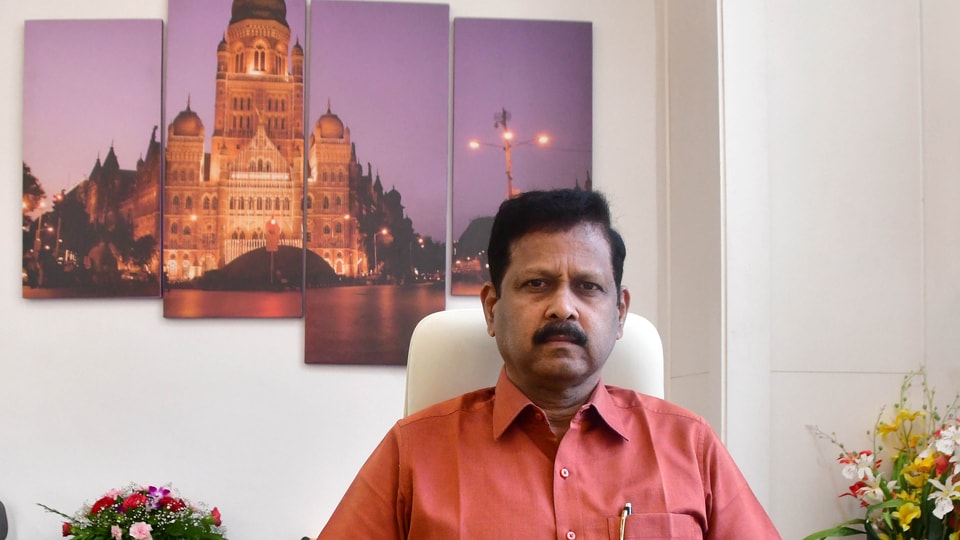
Narvekar, 61, is the director of the disaster control cell of Asia's richest municipal corporation, the Brihanmumbai Municipal Corporation (BMC) and who has been at the helm of tackling disasters that have hit the city in the past 15 years, including cyclone Nisarga that hit the city in 2020, where the municipal body helped evacuate close to 20,000 people from low-lying areas in the metropolitan region, including Colaba, Worli Koliwada, Gorai and other western suburbs.
Last week, the G-20 Disaster Risk Reduction Working Group met in Mumbai and more than 120 members were taken on a tour of the civic body's disaster control room.
Narvekar said that the G-20 delegates had evinced an interest to visit this emergency operation centre of Mumbai because of the complexities surrounding the city.
“Handling disasters in Mumbai is always a challenge. Mumbai is also moderately vulnerable to many hazards. In the past, in the last three decades, we have witnessed many natural and manmade disasters like deluge, floods, building collapse, terrorist attacks, bomb blasts, communal riots, Covid pandemic. We have witnessed multiple hazards since 1999 when we first established our disaster control room,” he said.
Narvekar said that the 2005 deluge was first managed from that very control room – but that was before his time. After serving as a protocol and liaison officer in the BMC for 42 years, he joined as the deputy chief of disaster management in 2008. He was promoted to helm the disaster cell within a few years.
During the 2005 deluge — when the city witnessed a downpour of 994mm in 24 hours that left at least 5,000 dead — the disaster control room’s equipment and workforce were limited, with no EPABX system to route and filter calls.
Since 2008, the control room has introduced a GIS system, digital mobile radios as well command and control applications that have enhanced the response of the civic body. It has also hired more people — crucial to tackle the volume of daily calls the cell receives, as well as to manage unprecedented disasters of the sort that took place on 26 November 2008, when terrorists attacked the city. At that time, it was the civic body’s disaster cell from where the coordination for medical assistance was happening: from hospital arrangements to connecting with blood banks as well as the removal of debris.
Emerging technologies like the Doppler radar, now have changed the game completely, Narvekar said.
“During the Nisarga cyclone, we got a warning eight hours before. So, early warning tools or an early detection system are developed over a period of time by various organisations which is the crux of our success. Also, we have a good communication system to reach out to citizens for evacuation. Once you inform the community about the risks they face, they are willing to go to safer locations. Fortunately, we have a group of people with whom we conduct periodic meetings and so we have developed this system.”
The theme of BMC's disaster control room for the G-20 summit was ‘Early warning and early action.”
“The idea is to ensure how best we can operate when we receive an early warning and disseminate information to the last mile community in a short span of time. The city has 50 per cent [of its residents living in] slums. Reaching out to them is a challenge. We have decentralised our disaster management department and each of the 24 administrative wards has a control room. We have mapped all the hazards on the Geographic Information System (GIS) base map. Correspondingly for all the hazards, we have detected what is the vulnerability, the risk and the response,” he said.
Citing an example Narvekar said that if he had to evict people vulnerable to floods or cyclones, he would decide on which shelter he should move them to.
"Before I move them to a shelter, I decide on the transport arrangement. I also need to provide logistic support like medical assistance, food, and doctors in a short span. The method and strategy I use are showcased to them. Because we have already collected the database, we have created the layers on the base map and then we use multiple channels of communication like social media, public address systems, NGOs, e-sms systems, and television channels. There are multiple means of communication by which we reach the ‘last mile' citizens. Early action and early warning means if you are shifting all vulnerable populations to a safe place one should do it in a minimum time span so that loss of life will be minimum,” he said.
Mumbai's monsoon brings with it loads of anxieties and worries. Currently, with the monsoon around the corner, the BMC's disaster cell has already sensitised people living around landslide-prone areas and dilapidated buildings and the high tide dates for this monsoon are already on their radar. The Indian Meteorological Department (IMD) has predicted that Mumbai will get 96 percent of average rainfall this year.
Citing another example Narvekar said that whenever the Mithi River level goes up, they evacuate residents of Kranti Nagar, a slum situated on the banks of the creek, instead of waiting for it to flood.
“So, those kinds of early warnings are successfully used over a period and they are technologically driven which are system generated. That was the area of interest for the G-20 delegates, and they have expressed absolute satisfaction with the way we work.”
In February, under Aapda Mitra/Sakhi training programme, BMC and National Disaster Response Force (NDRF) trained 1,000 citizens at community level in disaster prevention, mitigation and management.
“We are not response-centric, we are preparedness and prevention centric. We do not wait for a disaster to happen. When we get a warning, we act. If the emergency operation centre of any organisation is techno-savvy and disciplined, managing any disaster is simple,” Narvekar said.
Given that the control room has seen everything from terror attacks to serial bomb blasts (Zaveri Bazaar in 2011), fires (Mantralaya, 2012 and Naval Dockyard, 2013) as well as cyclones and landslides, which disaster was the most challenging for Narvekar to handle?
"Any natural disaster is more challenging as it is not under our control. Like an earthquake, where there is no mechanism of prediction,” he said.
During the Covid-19 pandemic, the disaster control room was in charge of directing people to beds in hospitals, and sending ambulances to patients and hearses. Almost half the control room team had tested Covid positive at one point.
“We have 40 operators and other officers — in all, 75 people work in the control room,” Narvekar said. This does not include the number of contractual hires that the BMC makes when needed. There are at least 10 people present in the control room in any of the three shifts in 24 hours.
As the disaster cell learnt to cope with the pandemic, the monsoon struck. Any rainy season sees the control room field at least 10,000 calls a day. During Covid, this went up to 15,000-20,000 daily. “We have 30 lines where calls go through ward control rooms. We had outsourced this to people on a contract basis when our staff contracted Covid,” he said.
Narvekar is motivated to do this job because he gets to save the lives of people.
‘Because of my timely action, lives are getting saved and what can be more rewarding than that? Especially during Covid when I used to arrange for beds, relatives would message me and give me credit for saving the lives of their parents or children and it makes it all the more worthwhile. Early mobilisation of resources to rescue and save lives gives tremendous satisfaction,” he said.
Currently, plans are afoot to assess the most affected and vulnerable population for every hazard by working on a 'multi-hazard vulnerability reassessment project.'
‘So, for every hazard, we are finding out which is the most affected vulnerable population? Early action differs from community to people. Like the early action for a resident from a high rise will be different from the one living in a slum. So, to that level we are now working on it," he said.
Narvekar, a Chemistry graduate from National College in Bandra, completed his postgraduate diploma in disaster management from Indira Gandhi National Open University (IGNOU). He is a resident of Vile Parle East who lives in a modest home with his wife and daughter, a medical doctor.
Ask him how his day begins and he said, “My day never ends. I barely sleep. One room in my home is like a mini disaster cell where I take calls so as to not disturb my family. During the pandemic, I used to sleep at 4 am. I used to carry my phone to the washroom while bathing to not miss calls from my seniors. I was infected myself and quarantined in a Centre while my daughter was monitoring me.”