
 E-Paper



‘Mela Chiraagaa’n’ to light up Sufi poet Shah Hussain’s Kafi verses
“‘MC’ is an attempt to discover the journey of this ‘malaamati faqeer’ who shunned high sounding titles, questioned dualities and found the beloved in the cadence of his ‘charkha’ (loom),” explains Radhika

 Prefer HTon Google


MUMBAI: Diwali may be nearly 150 days away, but Mumbai is all set to have its own ‘Mela Chiraagaa’n’ (MC) – festival of lamps - on June 8, 2024, at the Royal Opera House. Presented by Haroof and Avid Learning, this confluence of poetry with music has been woven with a narrative in English celebrating Saanjha Punjab’s treasured Sufi poet Shah Hussain aka Madhoo Lal Hussain (1538 – 1599), who pioneered the legacy of Kafi poetry in Punjabi. It has been conceptualised by Sufi vocalist and composer Radhika Sood-Nayak.
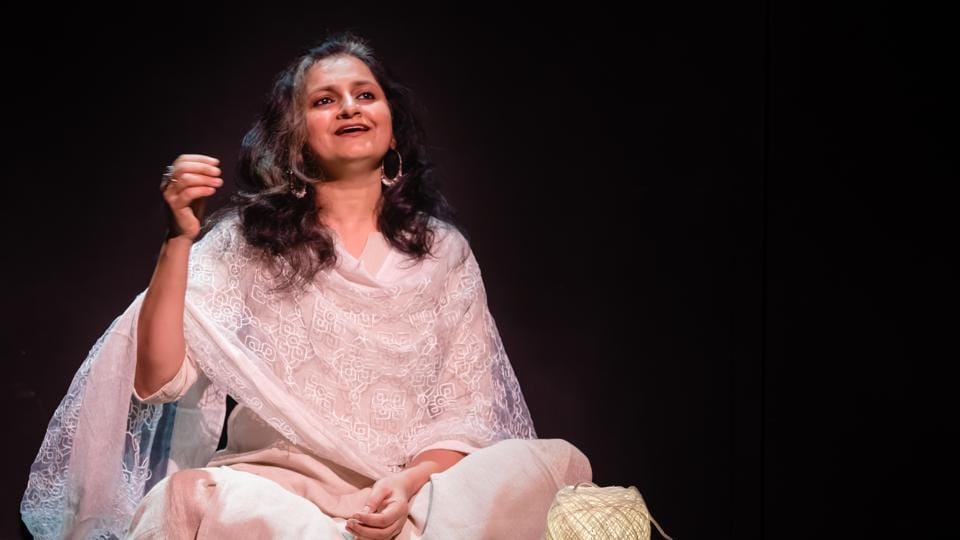
“‘MC’ is an attempt to discover the journey of this ‘malaamati faqeer’ who shunned high sounding titles, questioned dualities and found the beloved in the cadence of his ‘charkha’ (loom),” explains Radhika, who will also lend her voice at the concert. She points out that the name of the concert is drawn from the actual namesake festival at Lahore. “Until combined into one festival, ‘MC’ by Maharaja Ranjeet Singh, who led a procession from the Lahore Fort to this shrine, the Muslim urs and the Hindu mela were held separately at the shrine where the tombs of Shah Hussain and his lover are located in what is now Shalimar Gardens, Lahore.”
Pointing out how even death hasn’t made them part she recites: “Maye ni mayein kinnu aakhan / Dard vichoray da haal ni / Dukhan di roti, soolan da saalan / Aahein da baalan baal ni / Jungle belay phirann dhoondandi / Ajjey na payonn laal ni.” (Oh Mother of mine, who should I tell of my torment of separation?/ As I dip this bread of despair, in a curry of thorns/ it ignites a fire of sorrow within / Far have I wandered forests and deserts/ But that ruby stone -- the beloved – eludes me.)
What first seems to indicate Hussain’s infatuation with God, takes on another hue when one learns of his encounter with Madho Laal, a Brahmin Hindu boy from Shahdara, riding a horse over river Ravi which dramatically changed his life then on. Overcome with feelings of love and enchantment, a besotted Shah Hussain is said to have accompanied the youngster back to his hometown. The duo became so inseparable that villagers began to refer to them as one. It helped that the intense bond between the two lovers saw Shah Hussain change his name to Madho Laal Hussain in honour of his sweetheart.
“Beyond their close relationship, Shah Hussain and Madho’s union represents the Indian subcontinent’s innate syncretism,” says Radhika. “Hussain’s work is magnet which still draws people cutting across region, religion, caste, sexuality and now even the geopolitical cartographic lines.” She adds: “What seems devotional in the poems is also open to being interpreted as an expression of Hussain’s love for his young lover.”
Incidentally, much of this transpired during the rule of Mughal emperor Akbar, who relocated the Mughal capital from Delhi to Lahore (1584–1599). Prince Saleem, who subsequently reigned as Jahangir, instructed an official to regularly shadow and record whatever Shah Hussain said or did. Some claim this was deference, while others blame it on the Sufi’s enormous following and his blatant rejection of religious orthodoxy, and insist this was to keep an eye on him.
While Radhika trained in music from early (“I began unwillingly due to my mother’s cajoling but soon music had me in its embrace for good”) on, it wasn’t until 2015 that she would learn of the weaver-poet Hussain’s work. “I had gone to the Kabir festival to sing on Prahlad Tipaniya-ji’s (folk artiste) invitation, where my late dastango friend Ankit Chadha gave me my first text of Shah Hussain’s work to read. I was blown away at what all and how much he says with such economy of words.”
The Covid pandemic and the twin lockdowns in its wake saw her engagement with Hussain’s poetry increase manifold. “I joined several online groups in both the Punjab of the rising sun and the Punjab of the setting sun which celebrate the ‘faqeer nimaana’ (Shah Hussain’s artistic signature moniker which appears in the last line in the South Asian poetic tradition). Those interactions helped me discover whole new layers and meanings even in the works I’d already read,” she says.
That is when she began setting Hussain’s work to music. “I wanted the music to be a mere vector taking this poetry to audiences who haven’t experienced it before. If it whets their appetite and sets them off on a path to discovering Hussain, what he stood for and symbolises it will be our best tribute,” she says adding, “Hussain’s poetry can at once be sparse in language and dripping richness in meaning. My compositions ensure music doesn’t drown or overwhelm the poetry. Content leads and form follows, just like his poetry where less is more.”
She connects it to why she works with and presents the concert with only two musicians. “We all agree on keeping the music minimum. Our prowess is in keeping the spotlight firmly on Hussain’s work.”
While Radhika is Punjabi (fluent in Gurmukhi), her musicians are Bengali and Maharashtrian. Guitarist Neil Mukherjee underlines how feelings of love, oneness, compassion, kindness, etc. are universal. “This collaboration introduced me to the poetry of Bulleh Shah, Shah Hussein and Kabir, which resonated with me deeply,” he says. “One can only lament how the wisdom of these works has fallen on deaf ears leaving humanity mired in hate and violence.”
Percussionist Vinayak Netke echoes Mukherjee. “We’re both dependent on Radhika to explain the poetic nuances and she is very open to suggestions from us on the musicality. This camaraderie has helped keep the synergy of ‘MC’ going,” he says.
BOX
What is Kafi poetry?
The term ‘Kafi’ describes the semi-classical musical genre of Sindh and Punjab that incorporates works of Kafi poets such as Bulleh Shah and Shah Hussain. Though mostly devotional, it also walks a rather fine line between devotion and love. Kafi has links to South Asia’s Sufi tariqah of Islam, and performed solo or in groups by dervishes or faqeers as a way of worshipping their murshid (spiritual mentor).


