
 E-Paper



Money matters: Inside the high-stakes BMC elections
The candidate immediately contacted a vendor and arranged the supply. Such requests, he said, have become routine. Ignoring them carries the risk of voter crossovers. “Especially now, after parties have split and alliances are opportunistic, residents want to bargain for what works best for them,” he admitted

 Prefer HTon Google


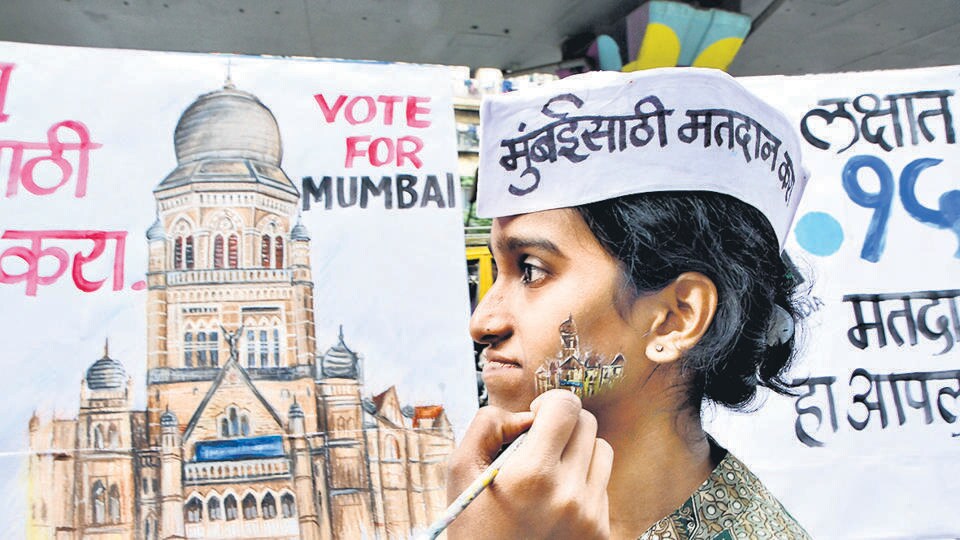
MUMBAI: After nine years (nearly four of them without elected corporators), Mumbai votes today to elect its corporators in the country’s richest civic body. The 2026 elections were expected to bring to the fore long-pending civic issues and invite scrutiny of political parties and candidates on their ability to govern a complex, issue-laden metropolis like Mumbai. Instead, ground reports, interviews with candidates and ward-level observations across the city suggest a different reality.
Conversations on the ground across slums, middle-class neighbourhoods and gated societies have increasingly centred on one factor - money and favours. The role of money in municipal elections is not new. What these elections have revealed, however, is the growing scale, visibility and normalisation of its use. Across wards and classes, money appears to have become an integral part of electoral strategy and voter behaviour. What was earlier confined to select pockets now cuts across the city, taking multiple forms and operating with greater openness.
Different forms and modes
The most direct form remains ‘cash for votes.’ In one of Mumbai’s oldest informal settlements, residents said that all major candidates had sent cash ranging from ₹1,000 to ₹1,200 for each voter. Candidates also spoke of having to spend large amounts of cash to “take care of specific demands” before polling day. During a conversation with a candidate in an eastern suburb, he received a call from a local mandal requesting 50 kg of green peas for a religious event. The candidate immediately contacted a vendor and arranged the supply. Such requests, he said, have become routine. Ignoring them carries the risk of voter crossovers. “Especially now, after parties have split and alliances are opportunistic, residents want to bargain for what works best for them,” he admitted.
These expectations are not limited to economically vulnerable neighbourhoods. A senior former corporator from the western suburbs said that a housing society with over 120 voters demanded ₹3 lakh to complete some of its pending works before agreeing to vote. “They said they would not come down to vote if their work was not done,” he recalled. Several rounds of negotiations and a “settlement” followed.
Money was also seen flowing into providing experiences and material inducements ahead of polls. In the weeks leading up to election, tour operators across Mumbai reported managing hundreds of pilgrims on trips organised by local politicians. Movie screenings, sponsorships for small community events and festival-related distributions were widely seen. Ahead of Makar Sankranti, in parts of Bhandup, residents spoke of truckloads of pressure cookers being unloaded as gifts for women at a haldi-kumkum event sponsored by a candidate.
Local party workers also describe paid attendance at sabhas as more prominent this time. Political parties are finding it difficult to mobilise stable grassroots cadres amid frequent party splits, shifting alliances and fluid loyalties. “The true karyakarta is almost dead. Support is now completely transactional,” said a long-time party worker from Dadar. A related development is the increasing circulation of party workers themselves. Candidates reported the poaching of karyakartas affiliated with rival formations either to neutralise their mobilisation on polling day or to redirect their organisational skills to the highest bidder.
Another disturbing trend reported across multiple wards is the alleged payment to members of specific caste or religious groups to abstain from voting. Rather than converting opponents, this strategy focuses on suppressing turnout in constituencies perceived to favour rival candidates. It marks a shift from vote-buying to turnout management, where electoral outcomes are shaped by controlling participation.
The appeal of money in municipal elections has to be located in the city’s material conditions and the changing nature of urban politics. More than half of Mumbai’s population lives and works in precarious conditions engaged in informal employment, without income security or assured housing tenure. For many residents, elections represent one of the few moments when interaction with political power is direct and negotiable. Electoral support becomes a resource that can be exchanged, even temporarily, for cash or favours.
This logic is no longer confined to the urban poor. Better-off residents increasingly observe cash transfers and inducements in informal settlements and seek parallel compensation such as painting buildings, arranging refreshments or settling minor civic bills in return for their votes.
Impact on electoral integrity and urban governance
When newly elected corporators move rapidly from modest homes into bungalows, upgrade vehicles and enter redevelopment or construction-related businesses, voters across classes see that political power generates huge personal gains for those elected while their own lives remain largely unchanged.
Redevelopment-driven displacement, migration and rising property values have weakened long-term neighbourhood relationships that once sustained political loyalty. As social ties fragment, political engagement becomes more transactional. Campaigns rely less on ideology or party affiliation and more on financial capacity, intermediaries and short-term inducements. The cumulative effect is a reconfiguration of democratic practice at the local level. Elections increasingly seem like an auction which can be easily “managed” through monetary might. In this emerging grammar of urban democracy, the underlying message is difficult to miss- money is and will most likely remain the epicentre of elections in the city and the country in the years to come.
Dr Sanjay Patil is a Mumbai-based researcher who works on Maharashtra Politics and Urban Informality. His doctoral work looks at the journey of Shiv Sena between 1985 and 2022.
Stay updated with all the Breaking News and Latest News from Mumbai. Click here for comprehensive coverage of top Cities including Bengaluru, Delhi, Hyderabad, and more across India along with Stay informed on the latest happenings in World News.


