
 E-Paper



‘Mumbai’s future depends on the metropolitan imagination’
Architecture needs to respond adequately to changes in the ecology, and architects and planners need to understand the context of the larger political, social, economic and cultural context while designing for transitions and a society in flux, said renowned architect Rahul Mehrotra, professor of Urban Design and Planning at Harvard University’s Graduate School of Design


Architecture needs to respond adequately to changes in the ecology, and architects and planners need to understand the context of the larger political, social, economic and cultural context while designing for transitions and a society in flux, said renowned architect Rahul Mehrotra, professor of Urban Design and Planning at Harvard University’s Graduate School of Design. Mehrotra opened the two-day conclave at the Conscious Collective, an annual soiree by Godrej Design Lab, with a lecture on architecture in a time of flux.
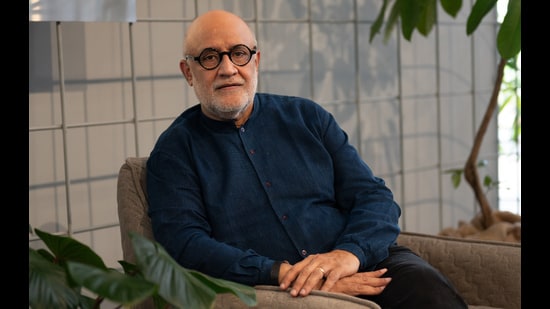
Mehrotra showcased several of his projects, prominently a study on Kumbh Mela and how a city for seven million was created on the banks of the Ganga, a low-cost housing settlement project for elephant mahouts in Hathigaon near Jaipur in Rajasthan, a Lab of the Future on Novartis campus in Basel, Switzerland, a library for the School of Architecture at CEPT in Ahmedabad University to show how simple concepts of cross ventilation, minimum use of air conditioning, use of natural forms like water bodies and light could transform buildings and make them living, breathing structures.
HT spoke to Mehrotra after the session. He discussed Mumbai and a historic opportunity it has to create future settlements as it responds to the climate change challenge.
The most critical thing about the future of Mumbai is the way we address the metropolitan region and the metropolitan imagination. That’s the only way we will be able to put planning ahead of growth. Navi Mumbai was the last gesture, where the planners at that time led by Charles Correa, Shrish Patel and Praveena Mehta anticipated that three million people are going to be added to Mumbai and planned for it.
For the first time anywhere in the world, the government had ownership of that land. So the planning opportunity was huge. But, post-liberalisation, the state started receding from planning and started giving it to the private sector. It started selling off that land as SEZs etc. It limits how you can plan because there is private property in the way all the time. It is irreversible now.
The government needs to shift its emphasis – from densifying Tardeo, Peddar Road and other areas to reimagining the metropolitan areas.
Alibaug, for instance, needs a plan. It can be the greatest suburb in the world. All the rich people in Mumbai can have their villas in Alibaug and it can only help the city as those residents won’t be living in penthouses on Peddar Road, but building villas.
I emphasised in my lecture that unless we read the patterns and analyse the context of what’s happening, what are we planning for? We are shooting in the dark otherwise.Imagining the metropolitan region will save Mumbai from climate change. Otherwise, everywhere the city is investing -- all the high-rises in South Mumbai, from Marine Drive up to Worli, that’s going to be under the water.
There are two ways to respond. One is buffering which is aimed at protecting capital. Manhattan is buffering by building dams all around the city. In the long term, you have to manage retreat from the susceptible areas. Animals retreat when they know a tsunami is coming, and run to higher land. So, we have to manage our retreat to higher ground. The higher ground is in the metropolitan area. But, what are we doing there?
Next to Ulwe – we have cut the hills to make an international airport. It was a beautiful hill – if we had built there we would have been saved, because the airport is likely to be under water. These are wrong moves. The state has absolved itself of its responsibility of planning; they are putting in infrastructure, they are building metros, but they are reacting to growth. They are not trying to orchestrate growth.
They should be creating incentives and disincentives, moving growth elsewhere. If you are building a Sewri link, before the bridge is built, you should have a plan for the area near Panvel, otherwise, the land will be eaten up. The same thing happened in Vasai where the politicians first bought the land and then allowed the development plan and became billionaires. I think the same thing is happening in Alibaug.
Cities grow in two ways -- either by opening up the hinterland like Navi Mumbai etc, or they grow by recycling the land within the system. These two have to go in tandem and be strategically and intelligently done. We already lost the option to do that with the Parel mill lands. We have left it to the real estate world.
Our politicians are thinking short term in their election cycles. They are not thinking long-term interest, and developing narratives so that people will also vote them in. Planning has to be avant garde, forward looking. Now it has become rear guard action.
The state should take a team of scientists to Navi Mumbai and map all the areas that would be safe from submergence. The real estate values in those areas will go up. They should build roads, demarcate plots, allocate plots for affordable housing etc. Instead of doing what they are doing in Dharavi – building 30-storey buildings to develop Dharavi. Instead they should build good infrastructure with the Sewri link and allocate a fantastic plot in Navi Mumbai on higher land and tell Dharavi to move there. Because Dharavi is going to be under water.
I think this is where platforms like the one we are on will make a difference. I think the state can’t find a solution. If architects are trying to do it on their own, they are fantasising. We have to create a platform and a forum where inter-disciplinary teams come together and collectively evolve these imaginaries. The government has to be forthcoming and generous.
Architects have to also invest their time and effort and use advocacy. Architects must see themselves as part of civil society and bridge this schism. Only then can they be relevant to the society and make any impact on the built environment.
Stay updated with all the Breaking News and Latest News from Mumbai. Click here for comprehensive coverage of top Cities including Bengaluru, Delhi, Hyderabad, and more across India along with Stay informed on the latest happenings in World News.


