
 E-Paper



Mumbra train accident: Key findings of GRP’s investigation
GRP blames two Central Railway engineers for negligence in the June 9 Mumbra train mishap, citing failed repairs and excessive train speed.

 Prefer HTon Google


Mumbai: The Government Railway Police (GRP), which is investigating the June 9 Mumbra train mishap in which five commuters lost their lives and eight others were injured, has accused two Central Railway (CR) engineers of negligence.
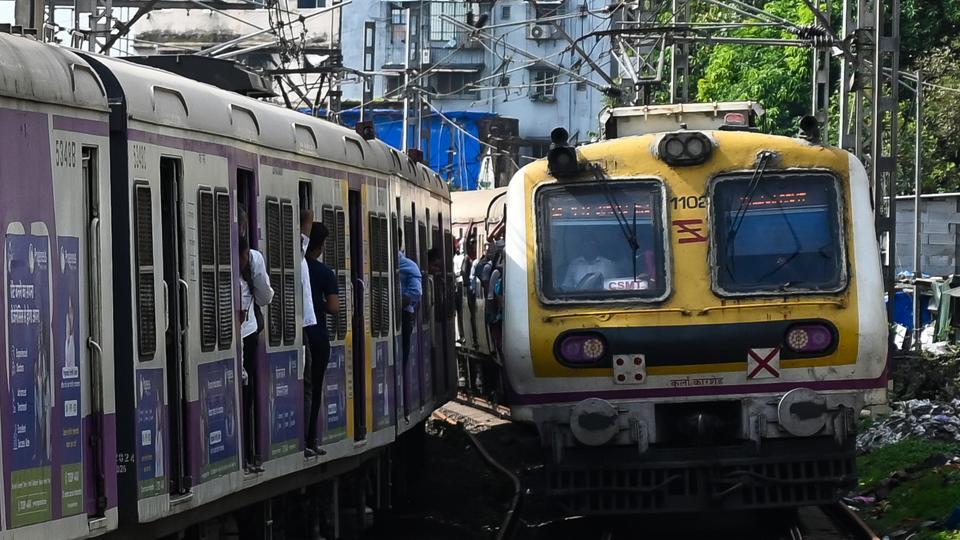
Citing an investigation report by the Veermata Jijabai Technological Institute (VJTI), the GRP alleged in court that the accused railway engineers failed to repair a damaged section of the track between Mumbra and Diva despite multiple caution orders issued between March and June. The prosecution also claimed that the train’s speed exceeded the prescribed limit, and that track welding at the accident site had not been completed.
Here are the key findings of the GRP’s investigation:
1) Heavy rainfall on May 25, May 28, June 5 and June 6 led to choked drains at Mumbra station, flooding the tracks. The ballast under the rails was washed away, the ground subsided, and platform No. 4 subsided. CR engineers Vishal Dolas and Samar Yadav were informed and inspected the site, but did not carry out the required maintenance. This caused the two local trains to come dangerously close, resulting in the accident.
2) After heavy rain on June 6, drains near track No. 4 overflowed, and water accumulated on tracks 3 and 4. Dolas and Yadav, along with a senior divisional engineer, were issued a caution order, setting a 75 kmph speed limit on the affected stretch (Up-Through line between pole Nos. 40/403 and 40/425; Down-Through line between pole Nos. 39/326 and 40/306). However, repairs were not completed, and the speed limit remained at 75 kmph, even though it should have been 69.4 kmph under the Indian Railways’ Schedule of Dimensions (SOD).
3) Between midnight and 2 am on June 5, worn rails on the Up-Through track No. 4 were replaced between Diva and Mumbra (km Nos. 40/300 and 40/00). Welding to secure the new rails was not done properly, leaving a gap between them—one rail was higher than the other. This caused a jerk, tilting the train on track 4 towards the one on track 3, bringing them very close.
4) The distance between tracks 3 and 4 was found to be 4,265 mm. On curves, it should have been 4,265 mm + 241 mm. The reduced distance, along with ballast being washed away from under the rails, allowed the two trains to move too close to each other.
5) Maintenance work disturbed the tracks at Mumbra station, but train speeds were not reduced as per the SOD. The higher speed, combined with the track irregularities, caused the trains to come close and led to the accident.
6) Measurements taken on June 11 recorded the rail gauge (distance between the inner sides of the two rails) at 1,676 mm, and a panchnama (official report) was prepared. After maintenance work, the gauge was measured again on July 24 and found to be unchanged. The standard cross-level height should be 100 mm. However, at the time of the incident, the cross-level of track 3 was lower, and that of track 4 was higher. This unevenness caused the two trains to come close to each other.

Stay updated with all the Breaking News and Latest News from Mumbai. Click here for comprehensive coverage of top Cities including Bengaluru, Delhi, Hyderabad, and more across India along with Stay informed on the latest happenings in World News.


