
 E-Paper



MVA turns 2: Survival of the politically fittest
An unlikely coalition of three diverse parties has put the spotlight on the state government on just one aspect: how will it survive the remaining three years of its tenure


On Sunday, November 28, a most unlikely of political coalitions – the three-party Maharashtra Vikas Aghadi (MVA) government comprising Shiv Sena, Nationalist Congress Party (NCP) and Congress – completes two years in office.
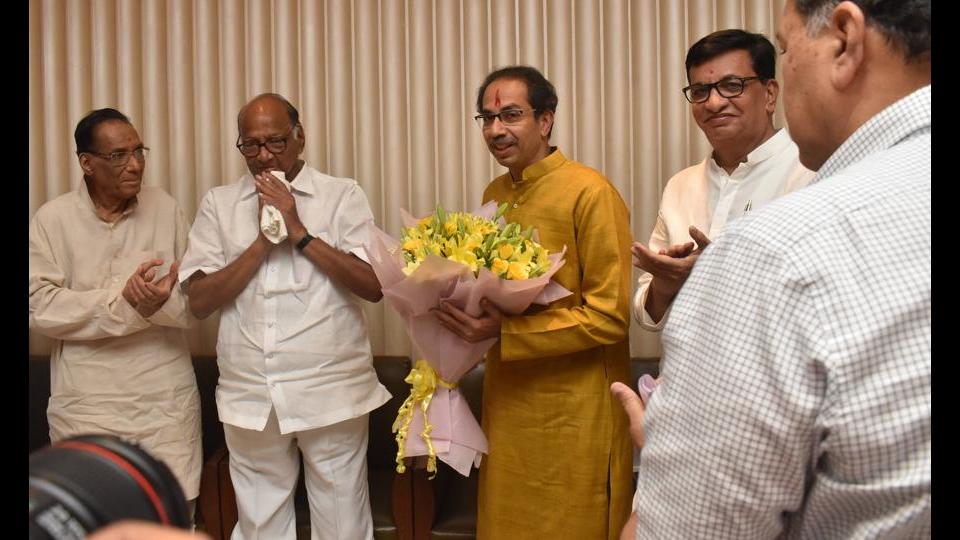
And quite like any unlikely political coalition, its single biggest achievement could well be its survival, with the uncertainty of the next three years not going to make the journey to the 2024 election any simpler. In that sense, its real test begins now.
Of the 24 months, 20 were spent battling the Covid-19 pandemic. In addition, there were natural calamities such as cylones and floods, action by central agencies such as Enforcement Directorate (ED), Narcotics Control Bureau (NCB) and Central Bureau of Investigation (CBI) against MVA leaders, and the frequent friction with Delhi, where the BJP has absolute majority in the Lok Sabha. The latter may have just begun.
Unending uncertainty
On November 28, 2019, Shiv Sena chief Uddhav Thackeray was sworn in as chief minister to head a three-party coalition formed unexpectedly after the BJP and Sena broke their 35-year-old alliance over differences pertaining to sharing of the chief minister’s post. The Sena then joined hands with NCP and Congress to form the MVA and, later, the government once a power-sharing ratio and common minimum programme was agreed upon. The common agenda the three parties shared: keep BJP out.
NCP chief and former union minister Sharad Pawar played a key role in making this happen, and in the process even the Sena played the smaller partner, even if its chief was invited to lead the government. There have been accusations that the other parties – specifically the chief minister -- have been a “puppet in the hands of Pawar.” However, Thackeray seems to have managed to create his own identity.
A Senior Shiv Sena leader said, “The BJP attacks to destabilise the government have been relentless. The financial blockade by the Centre, the continuous scrutiny of our leaders using central agencies, all of this has kept the MVA on tenterhooks.”
Besides, the BJP tried to corner the coalition government over the issues such as actor Sushant Singh Rajput’s death, the Antilia explosives scare, Thane trader Mansukh Hiran’s murder, allegations by former Mumbai police commissioner Param Bir Singh against then home minister Anil Deshmukh, and raids and notices by the central agencies. “This created the impression that Thackeray government will crumble anytime,” the Sena leader said, “but it has somehow survived.”
Facing challenges
Barely three months into its tenure, the MVA government already faced its biggest challenge – a rampaging Covid-19 pandemic that hit Maharashtra with unprecedented ferocity both in the first wave in April to June, and then in the second wave in 2021. It overwhelmed the health infrastructure, crippled state finances and brought development work to a sudden halt. In all of this, the revenue deficit mounted to more than ₹79,000 crore in FY 2020-21.
An IAS officer closely associated with the Covid-19 fight said, “Bed shortage in the first wave hit us hard, and the shortfall in oxygen supply in the second was challenging, too. But we increased the number of beds from 80,000 to more than half a million. We managed to get oxygen from other states and saved lives.
Maharashtra accounts for 20% of the cases and a third of all of the deaths in the country, leading to stinging criticism from the opposition. But leaders close to Thackeray said that he demanded transparency and accountability in data. “In some states, data was manipulated to hide the severity of the spread,” a Sena leader close to the Thackeray family said. “But the CM never allowed his officers to do that.”
The transparency was ultimately praised by Prime Minister Narendra Modi and some independent agencies assessing the state’s Covid management.
Maharashtra also witnessed two major cyclones Nisarg and Taukte, in addition to seasonal and unseasonal downpours leading to flooding, and the consequent displacement of hundreds of thousands in western Maharashtra. The state had to allocate more than ₹30,000 crore as relief, hurting the exchequer further.
BJP leader and finance minister in the Fadnavis government Sudhir Mungatiwar said the Thackeray government has failed on all fronts. “The government kept cursing the Centre for no reason,” he said. “This won’t last long. Nobody, be it worker, farmer, industrialist or the common man, is happy with the government. They have realised the government cares only for the liquor industry. In two years, they have taken five decisions to benefit the liquor industry.”
Political commentator Hemant Desai said the Thackeray government could not achieve much in two years. “The BJP-led Fadnavis had announced projects such as the Mumbai-Nagpur Samruddhi Expressway, Jalyukt Shivar Abhiyaan, both of which the public could relate to, but the MVA has no signature project. Shiv Sena lacks the vision needed to lead a state like Maharashtra, nor does it have the experience. The government has been spending most of its precious time in fighting a perception battle,” he opined.
However, Public Works Department minister and Congress leader Ashok Chavan said, “We have performed well, considering the challenges of the last two years. Centre has adopted a non-cooperation mode, by creating a financial impasse by not releasing the rightful GST dues.”
He added, “BJP leaders in Maharashtra left no stone unturned to destablise our government. In the garb of Sushant Singh Rajput’s death and the Palghar lynching case, they hatched a conspiracy to defame us. People have now realised that BJP’s hunger for power, and our success in recent polls is a good sign.”
The way ahead
The removal of restrictions at the fag end of the second wave meant that the state’s economy could recover a bit, but with the rider that both the opposition and the voting public will put the rest of the tenure under the scanner. A retired IAS officer and a former state bureaucrat, who did not wish to be named for this story, said, “The Samruddhi Expressway, the Metro rail network, the Mumbai Trans Harbour Line, and the Coastal Road were rolled out by the previous government. The Thackeray government has not been able to sustain the pace. In fact, in two cases – the Metro car shed and the Samruddhi expressway first phase deadline – there has been a significant delay.”
To top this, Thackeray and his ministers have to resolve the contentious issue of reservation for Marathas and OBCs. A section of the Maratha and OBC communities feel the MVA has failed to safeguard their interests.
Observers believe that infighting among the three ruling parties is expected to resurface during the local body elections scheduled to be held over the next six months. The Congress has announced it will go solo, while interests of Shiv Sena and NCP are likely to clash in local bodies in Pune, Navi Mumbai, Nashik though they are keen on joining hands. “The three parties may have to part ways in Lok Sabha and Assembly polls in 2024,” a senior Congress leader said. “If they fight collectively, their success rate remains high, but it shrinks the party base.
Chavan added, “There could be differences between the ruling parties as we were joining hands with Shiv Sena for the first time. We might have committed a few mistakes in two years, but corrective measures too were taken. We never were adamant or never acted vindictive against dissident voices.”
Mungantiwar said the three parties had nothing to be afraid of if they had not done anything wrong. “Shouldn’t the Central agencies not take action? If a couple of ministers out of 43 are caught, why should the rest worry? Instead of crying foul, the government should keep working for the welfare of the people every moment they get in the power,” he said.
Desai said the Thackeray government can no longer hold the central government responsible for its inefficiencies or hold the Covid-19 responsible for non-performance. “The remaining three years are going to be really challenging for them. They cannot point at the Centre now for non-cooperation. The three parties will have to have better planning and strategies,” he said.
Stay updated with all the Breaking News and Latest News from Mumbai. Click here for comprehensive coverage of top Cities including Bengaluru, Delhi, Hyderabad, and more across India along with Stay informed on the latest happenings in World News.


