
 E-Paper



One year of Covid: Lessons in lockdown
Five Mumbaiites speak about what the Covid pandemic and the shutdown taught them in their personal and professional lives.


The past year brought us face to face with adversity, loss and loneliness in a way we may have never experienced before. Five Mumbaiites — a restaurateur, a design entrepreneur, a writer, an architect and a businessperson in the fashion industry — speak to Anjana Vaswani about what the pandemic and the subsequent shutdown taught them in their personal and professional lives.
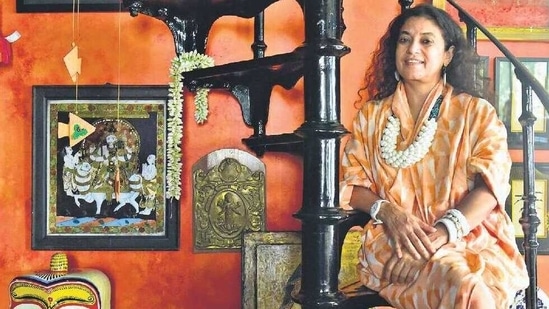
'I can change the world in my microcosm'
SRILA CHATTERJEE | DESIGN ENTREPRENEUR
During the total lockdown, for the first time in my life, I watched shows and really enjoyed some of the docu-series like Narcos, The Last Dance, The Crown. We [Srila and husband Mahesh Mathai] walked every day at high noon when there was nobody on the street. I had never spent so much time at home with Mahesh, my dogs and the staff who were with us. I loved it.
It was a very busy time, too. The world had shut down, but you can’t shut down your responsibilities, with salaries to pay and commitments to keep. I had to reset our business plan [Srila owns Baro, an art and furniture store], so it wasn’t all downtime to sit and reflect. I was intensely busy, building a whole new business [a virtual marketplace for the store] while trying to deal with the fact that there’s a pandemic so you can’t work as you normally would. It was exhausting.
The pandemic highlighted how horribly divided the world is. I feel a lot of anger about how things are being dealt with. It’s no one’s fault, the pandemic, but certainly how you deal with it is in your control. It’s been a disaster. I heard one panel of experts discuss how there is likely to be another [pandemic] in a few years – because that’s the world we’ve created. This is the new reality, so what can you do? You can empower science, get better systems in place for vaccinations, but more importantly, I wish the world would get better legislations in place for wealth to be distributed more equitably.
I can do that within my microcosm: help put lives right and change mindsets, and perhaps try and get more people to ensure that within their microcosms, they build a world that’s better than the one outside.
My life has also become smaller in a sense. To me, it’s maddening that intelligent people buy into ideas like India is doing fantastic because the stock market is booming or [are okay with the idea of] fascism. So I have started to live in a gated community of minds; people who think and feel the same way [as I].
I find it rejuvenating to be in my small world: what I’m doing with the Baro Market, working within the same India but showing the parts of it that I really celebrate: the small brands; the crafts; people working in collaboration. It’s very inspiring.
'People need people'
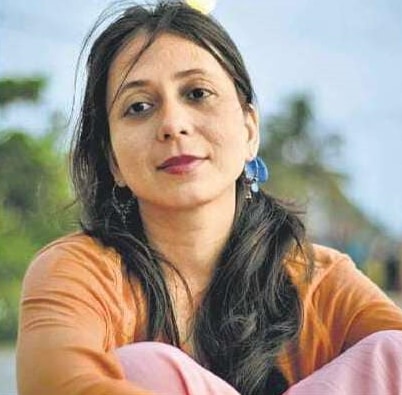
ANNIE ZAIDI | WRITER
As a freelance writer, I’ve always dealt with uncertainty. While the disruption [caused by the pandemic] rattled the upper middle class and the privileged, uncertainty is something that artists and writers live with, as do the poor, whether it’s a consequence of meagre earnings or one illness in the family that drives you below the poverty line. What did hit me hard though was the realisation that this city isn’t built for people to stay home, that unless you’re affluent, home is just a place where you sleep.F
From all over the world, videos emerged showing people singing in their balconies, but most apartments in Mumbai don’t have balconies. It doesn’t cost a builder much to add; it’s just a question of consideration for the person who will use that space. In this city, the wealthier you are, the more access you have to things that really should be free.
The city has no parks and gardens to speak of, unlike Delhi where each neighbourhood has a park, so it’s at least possible to conceive of a situation where, perhaps by arranging time slots so they don’t get overcrowded, everyone would be allowed some access to air. Here, there are entire areas where there aren’t even any pavements. You begin to think if this is the new normal, then what kind of place do you want to live in.
I enjoy the theatre, and I watched one play that was staged online. It was very well done under the circumstances, but nowhere close to a real theatre experience. The physical presence of everyone around you transforms experiences entirely.
Being around people helps you process what you’re feeling and I’ve really begun to see the importance of that. I’ve participated in traditions earlier without really appreciating their purpose, but when the pandemic deprived people of the ability to grieve in traditional ways, to me it accentuated the need for rituals that allowed for a period of public grieving, as opposed to private grieving, which continues under all circumstances. I’ve become more aware of the importance of being around people and the significance of social mechanisms that allow people to participate in each other’s grief and in their moments of happiness, and to reach out to loved ones in their time of need.
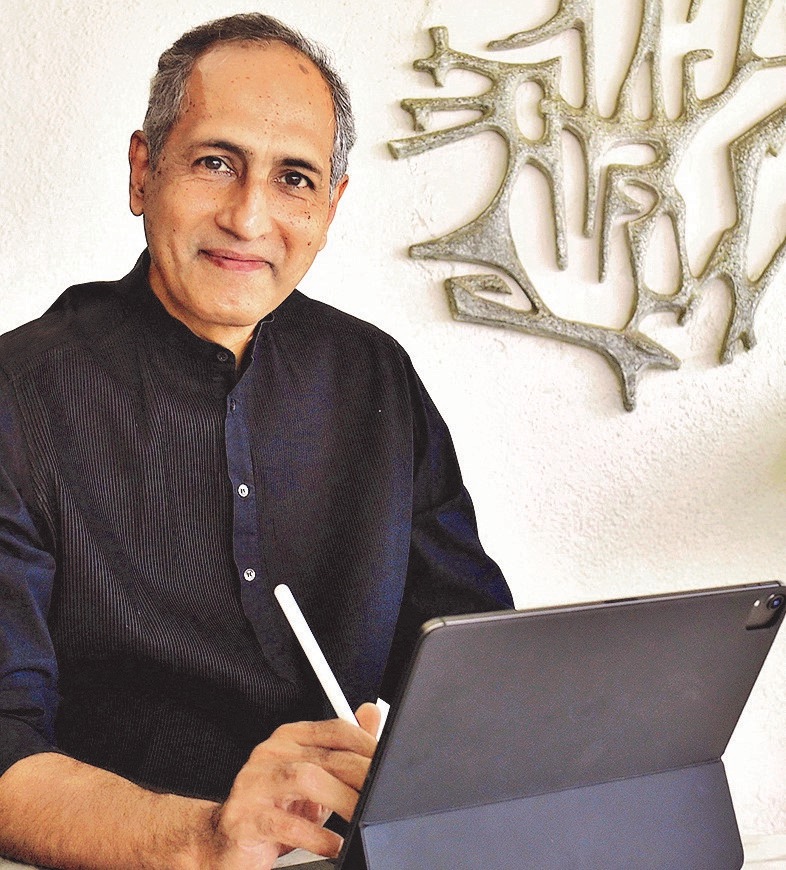
'Remote working is the most efficient way'
RAHUL KADRI | ARCHITECT-URBAN PLANNER
For one, I realised that we can work from anywhere, as long as there is wi-fi. My wife [architect Shimul Jhaveri] and I were at The Club Mahabaleshwar for a week and it occurred to us that we don’t have to be in Mumbai to work. Once a month, we can go see a new place and work from there. People in our team are now working from Goa or Bhopal — they have moved back to their hometowns. It’s made a huge difference for our team members who used to commute from places like Kandivili and Thane. It’s also made a huge difference for our team members who used to commute from places like Kandivili and Thane. People with young children got to spend more time with them — of course, they got fed up too, but that’s a different story.
I started to focus on my health. I started going to bed earlier, and that’s something I’ve been sticking to, except for when I’m at the restaurants. Because I was home and not travelling — which meant that I was not eating at restaurants or consuming so much airline food — I became disciplined about my meals, and that helped me lose weight and get into better shape. I’ve also started doing yoga every morning, which helps combat stress and strengthens the lungs.
Workwise, it was an extremely challenging time but it only helped me realise that the restaurant business is what I do best. Many restaurants shuttered due to the pandemic and the loss in business — two of our properties, Ek Bar in Delhi and Fatty Bao in Kolkata, closed down too — and the buzzword in the food and beverage industry was “pivot”, with everyone talking about what [business] they were going to pivot to.
Many changed business models, some even moved to entirely new streams. We decided to focus on our core business and stick to our philosophy that centred on great relationships with our customers, goodwill and credibility, and this helped us get back on our feet.
Everything we have is pledged in the business. We had never cashed out as we believe in what we’re doing. I felt I am building a nice future for my family and it was a grim thought [that the industry may collapse]. A big realization for me was that one must prepare for what uncertainties the future may hold and put away something for the family. As a company, too, we have been exploring how to make ourselves less vulnerable for the future.
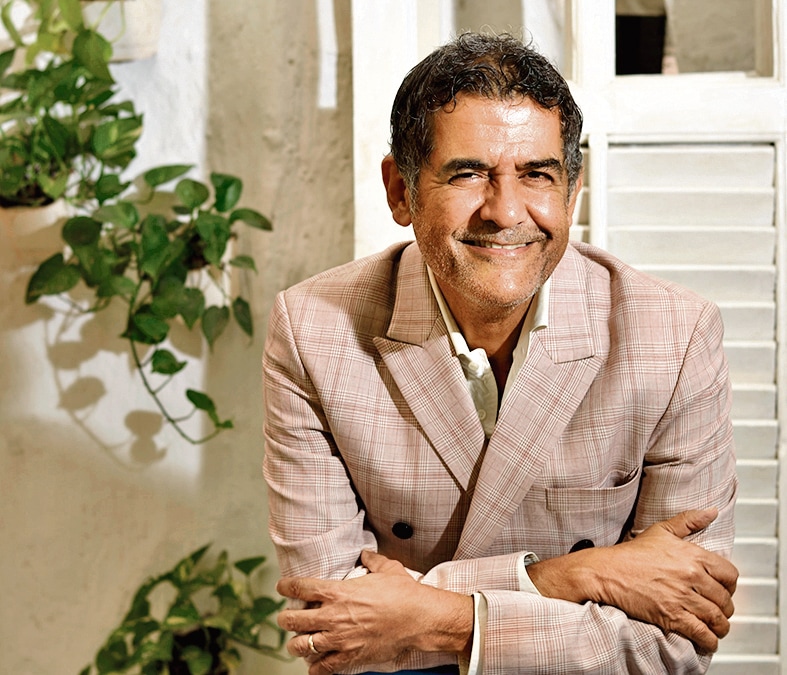
‘Others pivoted; we stuck to our beliefs’
AD SINGH | RESTAURATEUR
The experience of being confined in our homes through the lockdown only reinforced my basic belief that family is important; the pandemic emphasised the importance of loved ones. The lockdown allowed me to spend a lot of time with my children, Zoey and Zen, who are nine and three. Working from home allowed me to get much closer to my daughter than I’ve ever been before.
I started to focus on my health. I started going to bed earlier, and that’s something I’ve been sticking to, except for when I’m at the restaurants. Because I was home and not travelling — which meant that I was not eating at restaurants or consuming so much airline food — I became disciplined about my meals, and that helped me lose weight and get into better shape. I’ve also started doing yoga every morning, which helps combat stress and strengthens the lungs.
Workwise, it was an extremely challenging time but it only helped me realise that the restaurant business is what I do best. Many restaurants shuttered due to the pandemic and the loss in business — two of our properties, Ek Bar in Delhi and Fatty Bao in Kolkata, closed down too — and the buzzword in the food and beverage industry was “pivot”, with everyone talking about what [business] they were going to pivot to.
Many changed business models, some even moved to entirely new streams. We decided to focus on our core business and stick to our philosophy that centred on great relationships with our customers, goodwill and credibility, and this helped us get back on our feet.
Everything we have is pledged in the business. We had never cashed out as we believe in what we’re doing. I felt I am building a nice future for my family and it was a grim thought [that the industry may collapse]. A big realization for me was that one must prepare for what uncertainties the future may hold and put away something for the family. As a company, too, we have been exploring how to make ourselves less vulnerable for the future.
‘Work smarter, turn to sustainability now’
ANITA DONGRE | FASHION INDUSTRY BUSINESSPERSON
The fashion industry can be crazy, fast-paced and overwhelming, and the pandemic highlighted a need to slow down. The months of complete lockdown were spent learning to be still, relaxing, meditating, reading and just being with oneself and the family. I revisited books I swear by, like the entire spiritual series by Parthasarathy, and I felt grateful for so many things like the positivity of the team and the fact that I had invested in a sustainable office building, where, incidentally, we can work without air-conditioning because of the open spaces and the design which incorporates natural cooling methods.
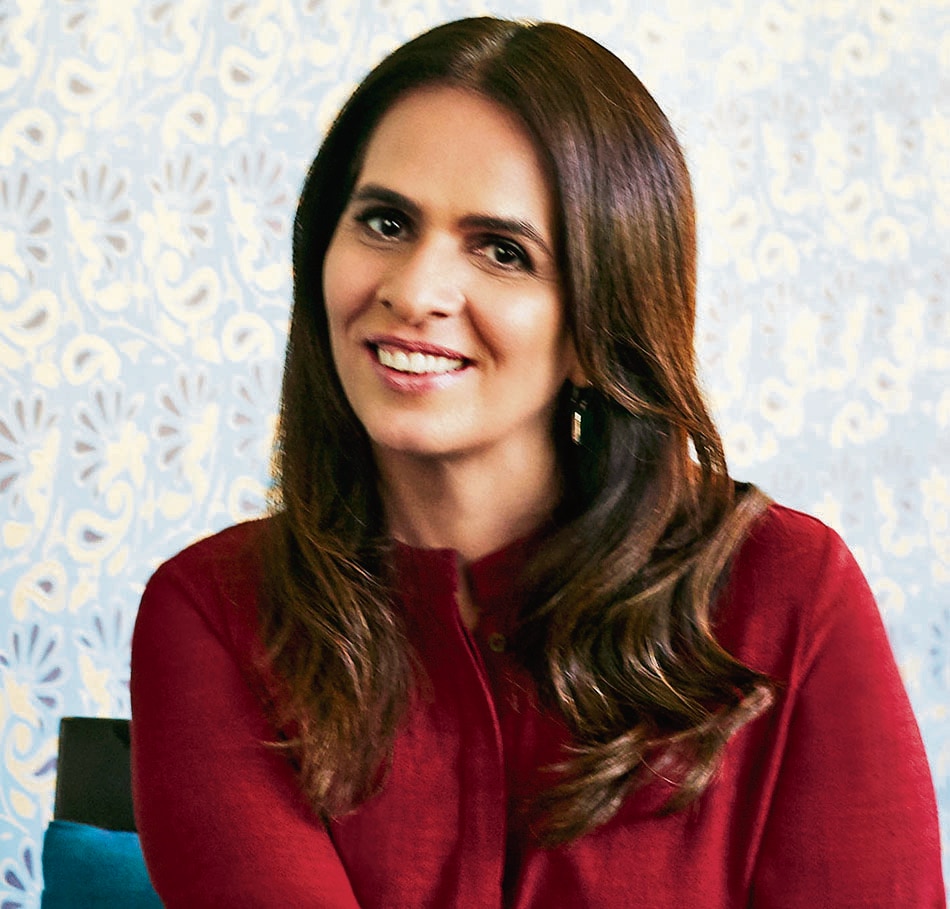
It’s located in Navi Mumbai, near the hills, so it has a resort-like feel, which makes it such a lovely place to work in. There are about 700 to 800 of us working here, and years ago, we organised company buses from different parts of the city so even transport did not pose a problem. I was, however, painfully aware of the difficulties that many others faced. One moment when I felt very low was when the migrant labourers started walking back to their homes; that memory will stay with me forever.
But it’s also important to remember the warmth of the people. So many came forward to help in whatever way they could. As a cancer survivor, who’s over 57, I had to be very cautious, but I offered what assistance I could from home.
The pandemic made us all realise how much we take for granted, but it also underscored the need to respect the finite resources of the earth. The situation demanded that we live simpler lives.
I’ve always eaten my meals at work, so mealtimes with the family made for a lovely change. At one point I decided to make my detergents and floor cleaners at home; I dabbled in cooking, which I rarely do, and really enjoyed sitting in the garden, listening to the chirping of birds, without a single thought in my mind. I want to believe that I’ll make time for these things now. I’ve been working non-stop for so many years that I feel I can work smarter now, rather than harder.

Stay updated with all the Breaking News and Latest News from Mumbai. Click here for comprehensive coverage of top Cities including Bengaluru, Delhi, Hyderabad, and more across India along with Stay informed on the latest happenings in World News.


