
 E-Paper



Mumbai: Road contractor in the dock over poor concrete
Mumbai's BMC has served a notice to a contractor for using substandard concrete in roadworks, as it investigates a failed slump test amid concerns over quality.

 Prefer HTon Google


MUMBAI: A contractor suspected of using substandard concrete to pave streets in Chembur and Mankhurd as part of the city-wide drive to concretise Mumbai’s roads has been served a notice by the civic authorities. While the BMC investigates why this batch failed the crucial slump test, it is hard to say whether this is the only instance of substandard concrete being used in the ambitious drive to rebuild Mumbai’s streets and make them pothole-free.
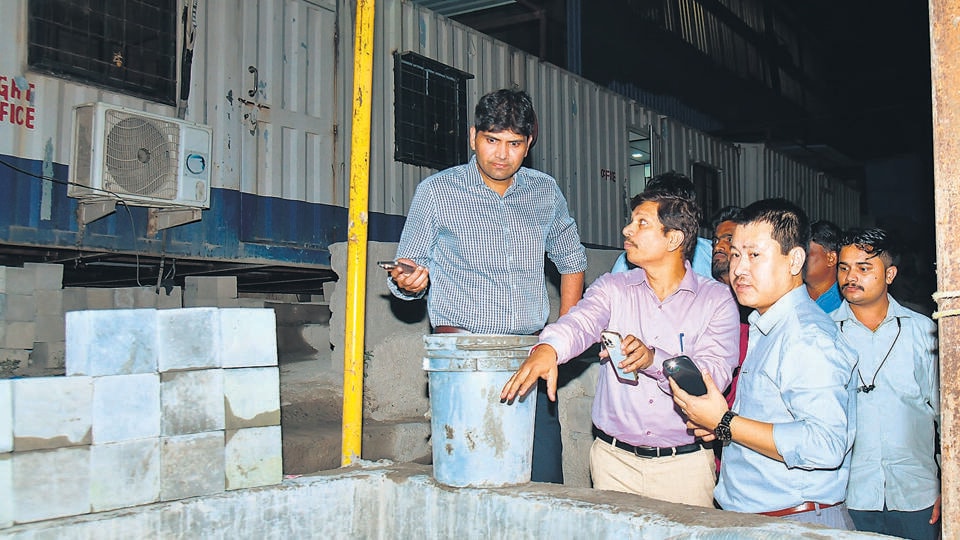
The contractor in question, awarded contracts for streets in the eastern suburbs, was hauled up by the Brihanmumbai Municipal Corporation (BMC) on March 22 during a spot inspection. He has been given a week’s time to respond to the notice, failing which further action will be initiated.
The slump test is crucial in road construction as it measures the consistency of concrete by assessing its workability, cement content and water content. The substandard batch was identified at work sites on Nitu Mandke Marg and Maharshi Dayanand Saraswati Marg.
Abhijit Bangar, additional municipal commissioner (projects), said, “The test revealed that the concrete mixture transported from a ready-mix plant to the site had a higher slump than expected, leading to the rejection of the load. As a result, the ready-mix vehicle was sent back after consultation with experts from the Indian Institute of Technology (IIT) Bombay.”
Phase two of the concretisation drive is underway across Mumbai, in which 377 km of roads will be covered. The deadline is May 31. For this initiative, the BMC is using concrete from various ready mix concrete (RMC) facilities. The batch that failed the inspection had been sourced from the Turbhe facility.
On the night of April 1, Bangar carried out a surprise inspection of the Turbhe RMC facility to evaluate whether it was observing the prescribed Standard Operating Procedure (SOP). It was found to be in compliance with the SOP. “Quality verification should not be restricted to the final product and must encompass the entire production process at the RMC site,” said Bangar.
In addition, Quality Management Agencies (QMA) are stationed at the RMC facilities, to ensure that the SOP is followed. As a second layer of checks, a team from IIT-Bombay coordinates with QMAs.
On his visit to the Turbhe RMC facility, Bangar inspected several components. He reviewed the water quality used for the concrete and found it clean and suitable for use. Ice buckets had been placed in the water to maintain the required temperature during mixing, while the aggregates used in the concrete mixture, including crushed sand and gravel of various sizes, were also inspected. The sprinkling of water on these aggregates was also in line with the SOP, although improvements in the flow of sprinklers were recommended.
Bangar also visited the Turbhe facility’s control room, to observe the process of mixing the concrete.
Key elements such as the quantity of cement, aggregates, micro-silica and fly ash, as well as the water-to-mixture ratio, are precisely calculated and managed via computerised systems. These records are monitored and documented.
The results of various quality tests, such as slump cone, cube and beam casting tests, were satisfactory.
The transit mixer vehicles that transport the concrete were also inspected, to make sure their live tracking system was working. Bangar instructed that a mix design be prepared to reflect the expected vehicle arrival times at the worksite, which would be tracked in real-time through GPS.
Mumbaiites across the city have raised concerns about various aspects of the hugely ambitious concretisation drive, initiated in 2023. While some residents have questioned the quality of work, from excavation to paving, others point out that the pace of work is far from satisfactory. Bangar, however, is confident that all roads where work is currently underway will be completed by the May 31 deadline.


Stay updated with all the Breaking News and Latest News from Mumbai. Click here for comprehensive coverage of top Cities including Bengaluru, Delhi, Hyderabad, and more across India along with Stay informed on the latest happenings in World News.


